REVIEW · ORONGO
Birdman Cult and Caves
Book on GetYourGuide →Operated by Hotumatur Rapa Nui · Bookable on GetYourGuide
A walk along Easter Island’s sacred route never feels like one place. This tour strings together moai culture, volcanic sites, and the birdman cult from Ahu Akivi to Orongo, with stops that explain how the island’s people saw the sky and used stone. I really like the way the itinerary connects art and architecture to the geography around Rano Kau, instead of treating each stop like a photo stop. I also appreciate the focus on native guidance and hospitality, which makes the stories easier to follow. One possible drawback: guide quality can swing, so plan to ask questions and go in ready to adapt to the day’s pace.
You’ll be moving for about six hours, so the “right” way to do this is to accept a steady rhythm. If you’re the type who wants long, quiet hangs at one site, you may feel a bit rushed.
In This Review
- Key things I’d note before you go
- Ahu Akivi to Orongo: why this route feels like a single story
- Price and logistics that actually affect your day
- Ahu Akivi: seven moais and the sky clue
- Ana Te Pahu: ceremonial cave art on the slopes of Rano Kau
- Puna Pau quarry: where the red topknots came from
- Vinapu: megalithic architecture with a Cuzco-style feel
- Rano Kau: volcanic crater views plus the island’s natural “why”
- Orongo: the birdman cult on the rim of Rano Kau
- Guide quality, group pace, and how to get the best from 6 hours
- Who should book Birdman Cult and Caves
- Should you book this tour?
- FAQ
- Where is this tour located?
- How long is the tour?
- What time does the tour start?
- What’s included in the price?
- Are the National Park tickets included?
- What languages are the live guides?
- Is the tour wheelchair accessible?
- What’s the price per person?
- What’s the cancellation policy?
Key things I’d note before you go
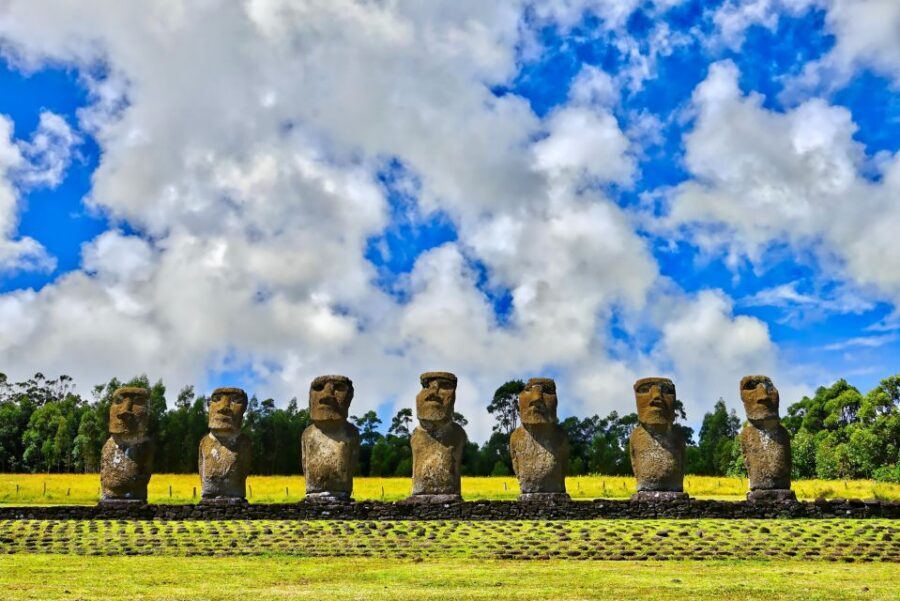
- Ahu Akivi’s seven moais and celestial orientation: you’ll learn why this platform matters.
- Ana Te Pahu ceremonial cave: petroglyphs and paintings you can’t really appreciate from a bus window.
- Puna Pau for the red topknots: see the quarry area tied to the scoria head pieces.
- Vinapu’s megalithic precision: big-stone craftsmanship with hints of wider South American parallels.
- Rano Kau crater viewpoints: panoramic sightlines plus a look at volcanic history and ecosystems.
- Orongo and the birdman cult: ceremonial village setting right on the rim of Rano Kau.
Ahu Akivi to Orongo: why this route feels like a single story
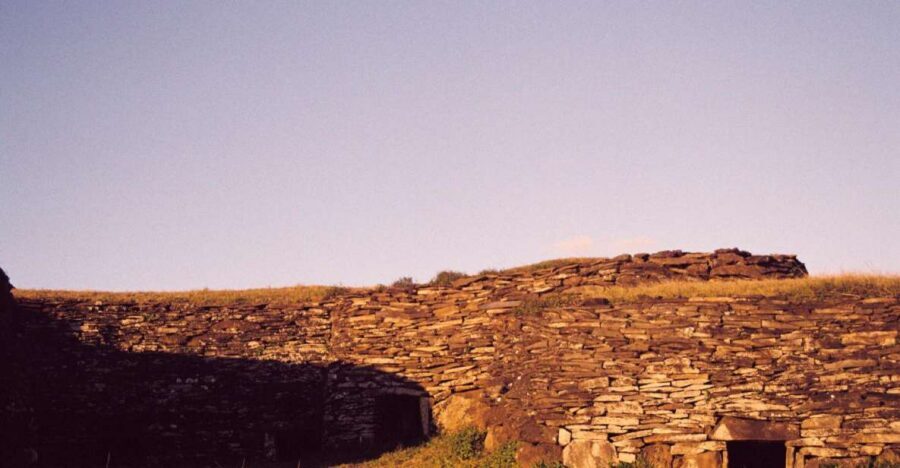
This tour is built like a chain reaction. You start with moai platforms, then shift into ceremonial spaces (a cave and petroglyph areas), then move to the places where stone was quarried and shaped. After that, you land back on the volcano—Rano Kau—so the final stop at Orongo hits with extra weight.
That “story” matters. Easter Island can feel confusing if you see monuments in isolation. Here, the sequencing helps you connect the dots between:
- what the islanders built
- where the materials came from
- how rituals fit into natural features, especially around Rano Kau
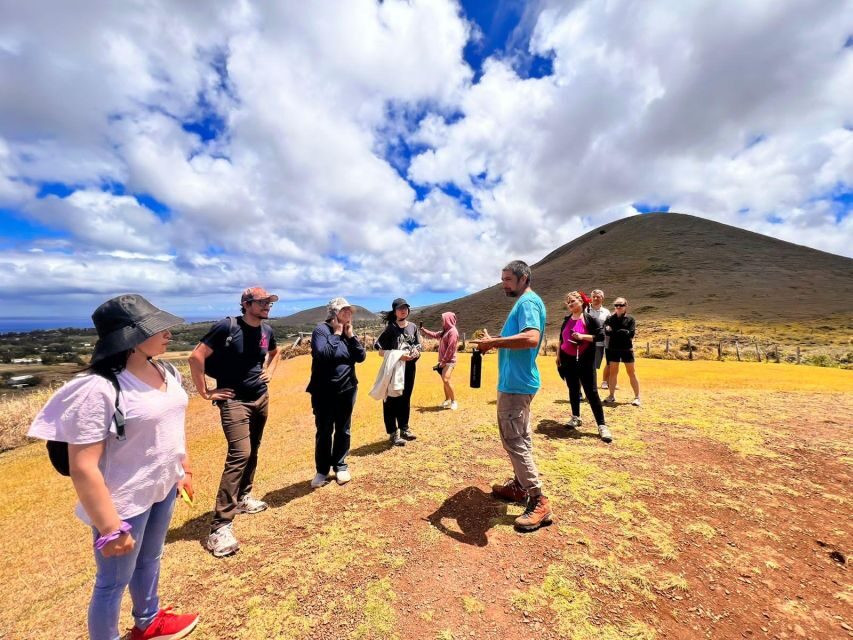
You’ll also get a human element: a live local guide in English or Spanish who can translate the meaning behind what you’re seeing, not just point at rocks. When the guide is strong, this tour becomes far more than a checklist.
You can also read our reviews of more tours and experiences in Orongo.

Price and logistics that actually affect your day
The price is $90 per person for about 6 hours. For Easter Island, that’s a fair setup if you want a guided run through multiple major sectors without worrying about getting from point A to point B.
What’s included:
- transportation
- pick up and drop off
- local guide
What isn’t included:
- the National Park ticket (and the operator doesn’t sell it)
That ticket detail matters. Even if you’re not paying it to this provider, you’ll want to plan ahead so you aren’t stuck at the wrong moment. If you’re budgeting, treat the ticket as a separate add-on and check what you’ll need before you go.
Ahu Akivi: seven moais and the sky clue
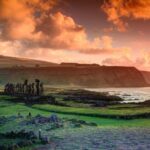
The tour kicks off at Ahu Akivi, a moai platform known for having seven moai. This is a smart first stop because it frames the big theme of the day: moai aren’t just statues. They’re tied to ritual, orientation, and how people related to the horizon.
One of the key ideas you’ll hear here is about celestial orientation—how the platform’s positioning connects to the sky. Even if you don’t memorize the astronomy details, the concept helps you watch the next sites with better eyes. Instead of thinking only about carving style, you start thinking about timing, direction, and meaning.
Practical tip: bring your phone or a small camera, but also take a moment to look at how the platform sits relative to the surrounding terrain. The tour’s whole point is reading monuments in context.
Ana Te Pahu: ceremonial cave art on the slopes of Rano Kau
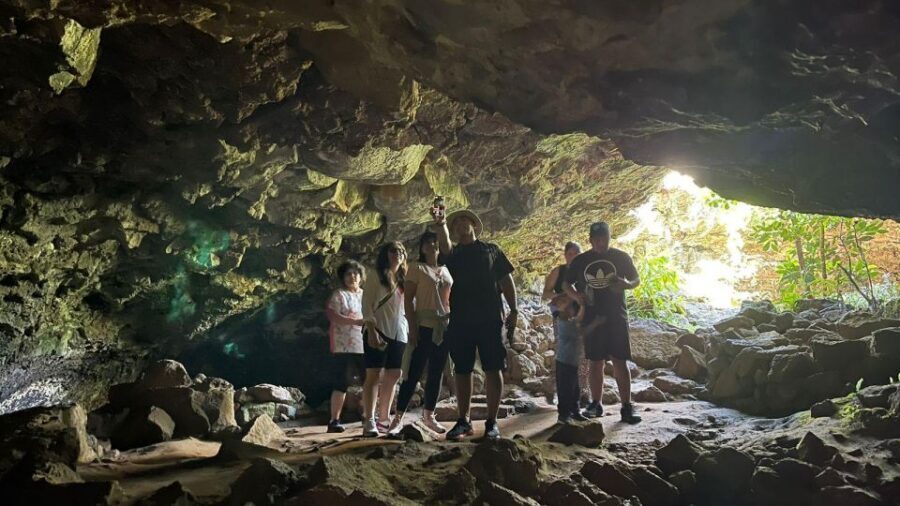
Next is Ana Te Pahu, a ceremonial cave on the slopes of Rano Kau. This stop is valuable because it adds a different kind of evidence. Outside, you get architecture. Inside (and in the cave setting), you get petroglyphs and paintings—visual storytelling from the people who lived there.
What you should focus on:
- how the cave setting feels like a purpose-built ritual space
- what the petroglyphs and paintings depict, tied to island traditions and history
- the fact that this is not just a “pretty cave”—it’s described as ceremonial, so the art is meant to be read in that spirit
One consideration: caves can be harder to photograph well, depending on lighting. If you care about getting shots, take a quick wide image, then spend longer reading what the guide points out.
Puna Pau quarry: where the red topknots came from
Then you’ll head to Puna Pau, where you can see the quarry that supplied the red scoria topknots for many moai. This stop is the closest thing on the itinerary to a “production story.”
Why it’s worth your time:
- you see the source material, not just the finished monument
- you learn how skilled artisans shaped stone in a distinct color and texture
- you get a clearer sense of how much planning went into moai appearance
It’s one thing to admire the red tops. It’s another to understand that they required separate raw material and workmanship. That difference turns decoration into engineering.
If you like craft and sourcing, this is a standout. If you’re mostly into landscapes and views, you might find it less scenic—but the meaning can still be strong.
Vinapu: megalithic architecture with a Cuzco-style feel
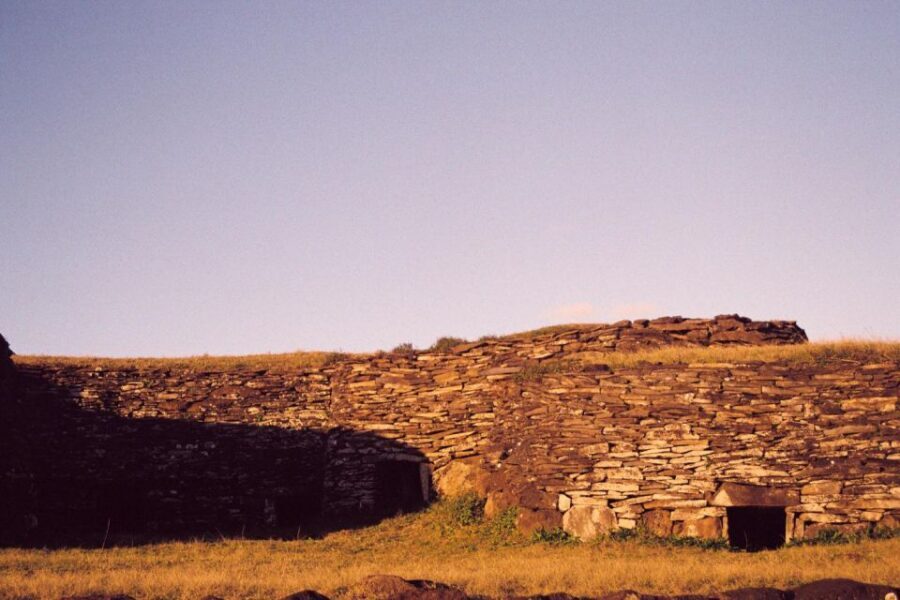
After the quarry, the tour moves to Vinapu, a sector famous for megalithic architecture and precision in stonework. Here, you’ll hear about how the fit and style can feel reminiscent of structures like those in Cuzco, which is a fascinating comparison.
Even if you don’t buy into every connection, the practical takeaway is this: Vinapu helps you see that Easter Island’s builders were working at a high level of stone fitting. You’re not just looking at moai carving skills—you’re looking at large-scale architecture.
How to enjoy it: slow down at the stone junctions and seams. The detail is what makes this place educational rather than just scenic.
Rano Kau: volcanic crater views plus the island’s natural “why”
Now you get to the big natural anchor of the day: Rano Kau, a volcanic crater with panoramic views and a unique mix of ecosystems. This is where the tour shifts from “human-made” evidence to “how the island works” evidence.
You’ll also learn about the geological history of the crater. That matters because it helps you understand why certain ceremonial sites sit where they do and why the volcano plays such a central role in island life.
I like pairing cultural sites with the natural setting because you start to see how the island’s features were used, not just admired. With Rano Kau, that connection becomes clearer.
Orongo: the birdman cult on the rim of Rano Kau
The finale is Orongo, perched on the rim of Rano Kau. This is the stop that ties the whole tour’s title together: the birdman cult.
Orongo is described as a ceremonial village with petroglyphs, and it comes with those big Pacific views that make the setting feel intense. The important part isn’t only that the views are dramatic. It’s that you can physically connect the rituals to the terrain—ceremony placed at the edge of a volcanic world, overlooking the ocean.
When the guide explains the birdman cult, you should listen for how culture and landscape work together here. It’s not random scenery. It’s a stage.
What to do with your time: during this last part, ask one or two focused questions. If your guide is in good form, this is where their explanations will click the most.
Guide quality, group pace, and how to get the best from 6 hours
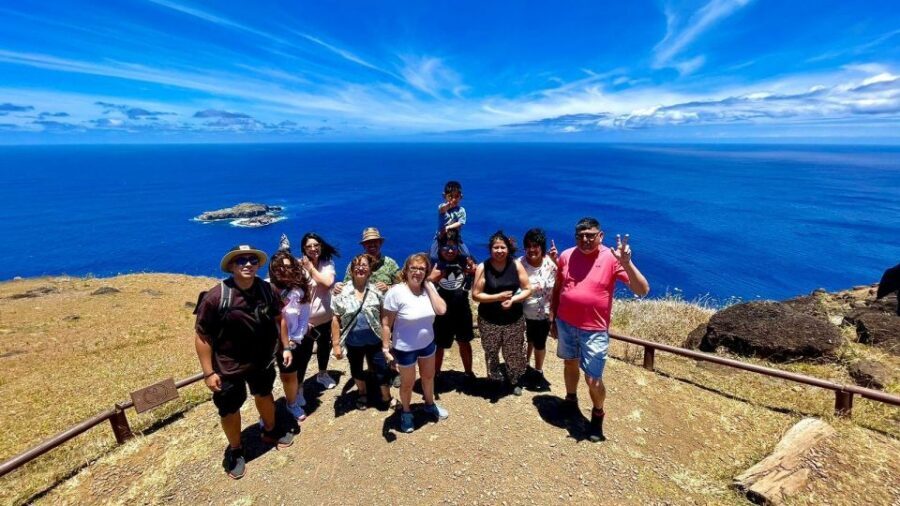
Because this is a multi-stop day, the guide can make a big difference. The tour’s highlights emphasize hospitality and native guides, and that’s a good sign: on Easter Island, context is everything. A strong guide will help you connect the “why” behind the moai culture, the cave art, and the birdman rituals.
Still, one weaker experience in the set involved the guide not landing well. So here’s my practical advice:
- Come with curiosity, not only expectations.
- Ask for clarification if something feels unclear. If you don’t understand the story, you won’t connect the dots.
- Be flexible on pace. At 6 hours, you can’t linger forever, so prioritize what you personally care about most: moai platforms, cave art, or birdman cult sites.
If you’re traveling with someone who has strong opinions (one loves art, one loves views), this tour can actually work well because the stops vary. Just agree on how you’ll divide your attention when you arrive.
Who should book Birdman Cult and Caves
This tour fits you if:
- you want a guided, organized route through major Easter Island cultural and natural sites
- you like the idea of learning the meaning behind petroglyphs, carvings, and stone architecture
- you’d rather spend your time understanding the island than figuring out logistics
It may be less ideal if:
- you’re hoping for a slow day with lots of free time
- you want only the most famous “moai photo spots” and nothing else
It’s also a good match for mixed interests: history-minded people get cave and quarry context, and view lovers get Rano Kau and Orongo at the end.
Should you book this tour?
I’d book this tour if you want the best chance to understand Easter Island in one day. The value isn’t only the price; it’s the way the itinerary builds connections—moai orientation, ceremonial cave art, the red topknots’ quarry source, stone-precision architecture, and the birdman cult tied to Rano Kau.
I’d pass or switch to another option if your top priority is unstructured time or you know you’ll get frustrated by a tight 6-hour pace. Otherwise, this is a solid way to see a lot, learn a lot, and end with Orongo’s birdman setting where the whole day finally clicks.
FAQ
Where is this tour located?
It’s in the Valparaiso Region of Chile, focused on Easter Island sites including Ahu Akivi, Rano Kau, and Orongo.
How long is the tour?
The duration is 6 hours.
What time does the tour start?
Starting times aren’t listed here. You can check availability to see the starting times.
What’s included in the price?
The tour includes transportation, a local guide, pick up, and drop off.
Are the National Park tickets included?
No. The National Park ticket is not included, and the operator doesn’t sell it.
What languages are the live guides?
The live tour guide is available in English and Spanish.
Is the tour wheelchair accessible?
Yes, it is wheelchair accessible.
What’s the price per person?
The price is $90 per person.
What’s the cancellation policy?
Free cancellation is available up to 24 hours in advance for a full refund.