REVIEW · SANTIAGO CHILE
Santiago: Highlights, Parks and Politics Bike Tour
Book on GetYourGuide →Operated by La Bicicleta Verde · Bookable on GetYourGuide
Politics, but make it practical. This 3-hour Santiago bike tour mixes shaded green spaces with downtown sights, then lands you at Palacio de La Moneda and the Gabriela Mistral Cultural Center. I like how it’s not just sightseeing from a distance, but a guided walk-through of how places and politics connect in daily life. I also like the small-group pace and the way the route uses the city’s growing bike lanes. One drawback to keep in mind: there’s no hotel pickup, and it’s not suitable for wheelchair users.
You don’t need to be a sports person. You’re on a beach cruiser with a helmet (Chile requires it), and the group stays small, limited to 10 people. In past tours, guides like Juan Pablo, Isabella, Camille, Valentia, Ales, Hector, and Alfonso have been praised for explaining history with a calm, fair tone and for giving solid local tips after the ride. You’ll even learn some crucial Chilean slang words so you can follow along and sound like you belong.
In This Review
- Key things that make this tour worth your time
- Getting started at Constitución 153 by Plaza Mori
- Forestal and Bustamante Parks: the shady Santiago reset
- Bike lanes you can actually feel: Santiago by bicycle
- Palacio de La Moneda: seeing politics without the lecture tone
- Riding on to GAM: learning the background behind monuments
- The local touch: slang lessons, recommendations, and gelato breaks
- Price and value: what you’re really paying for at $45
- Who this tour suits best (and who should skip it)
- What to bring and when to ride
- Should you book the Santiago Parks and Politics Bike Tour?
- FAQ
- How long is the Santiago Highlights, Parks and Politics Bike Tour?
- Where is the meeting point?
- What does the tour cost?
- Do I need to be a sports person to join?
- What kind of bike do I ride?
- Is a helmet provided?
- What stops are included?
- Do guides speak English and Spanish?
- Is hotel pickup included?
- Is the tour suitable for wheelchair users?
Key things that make this tour worth your time
- Forest-alley riding in Santiago’s big parks: Forestal and Bustamante Parks give you shade and a break from street heat.
- A flat, cruiser-friendly route: This is designed so anyone can join, not just cyclists.
- La Moneda stop, with political context: You get the why behind the symbols, not just the photo spot.
- Bike lanes, Santiago-style: You’ll see how the city is building routes that make riding feel easier.
- GAM (Gabriela Mistral Cultural Center) as a history lesson: Monuments and figures get explained as you pass them.
- Ice cream or espresso, plus local language: A sweet break that also helps the afternoon feel local.
Getting started at Constitución 153 by Plaza Mori
Your tour meet-up is at Constitución 153, next to Plaza Mori, near Baquedano Metro Station. Because there’s no hotel pickup, I recommend arriving a few minutes early and doing a quick check that you’ve got the right meeting point before you start hunting for the bikes.
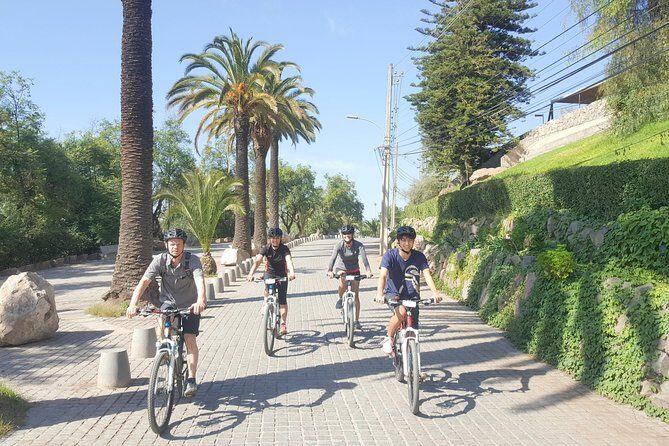
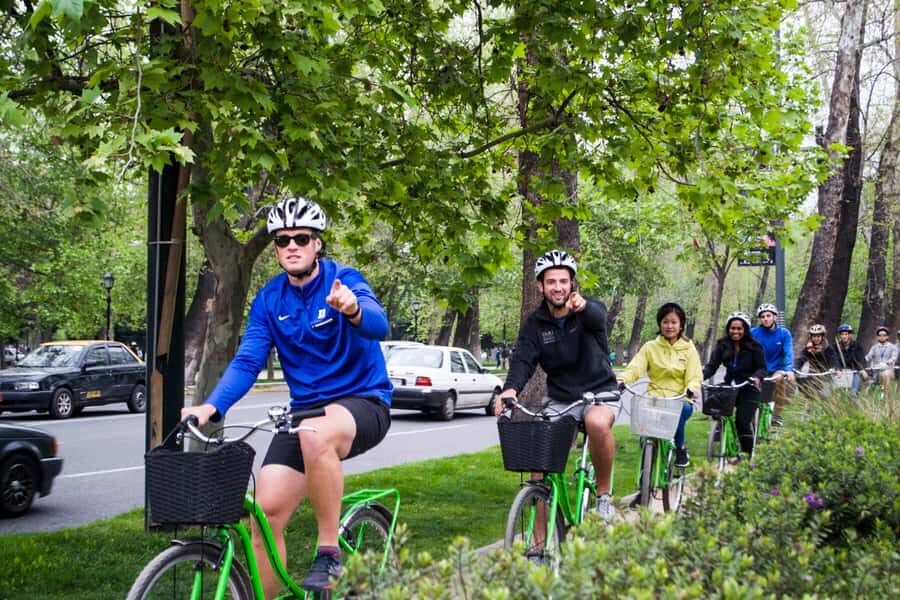
You’ll get a beach cruiser and a helmet. The helmet part isn’t optional, since it’s mandatory by Chilean law. The upside is that it keeps the tour feeling safe and orderly from minute one. If you’re picky about comfort, this cruiser setup is part of the value: it’s an easy, stable bike for an urban ride, not a tense race-machine.
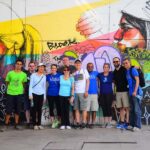
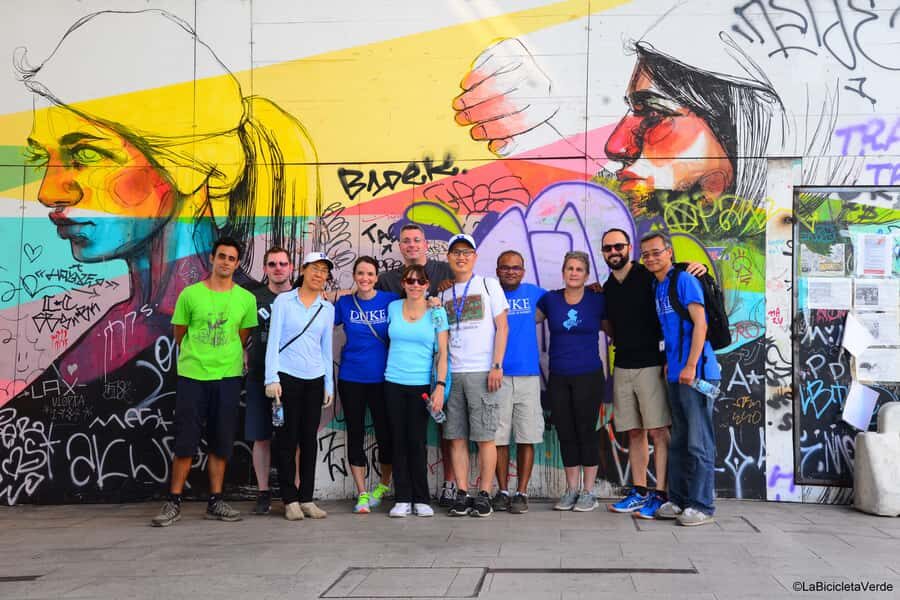
Bilingual guides run the show in Spanish and English, and you’ll be with a small group (max 10). That small size matters because you’ll stop more often and get more direct answers when you ask why something matters.
You can also read our reviews of more cycling tours in Santiago Chile
Forestal and Bustamante Parks: the shady Santiago reset
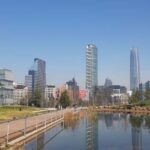
The first stretch takes you into Forestal and Bustamante Parks. This is the moment the tour earns its keep. Santiago can feel big and fast once you’re in traffic-heavy areas, but parks slow everything down. You get trees overhead, calmer roads, and a sense of the city’s everyday rhythm.
I like this park portion for two reasons. First, it makes the ride feel like an afternoon you actually want to be outside for, not a sprint to cover highlights. Second, it gives you an easy way to get oriented in the center of Santiago before you move toward the more political, monumental downtown blocks.
What to watch for: the park architecture and the way the city’s green spaces hold on to character even as skyscrapers and major avenues sit nearby. It’s a practical way to learn what Santiago is made of—without forcing you into long walks in the sun.
Bike lanes you can actually feel: Santiago by bicycle
One of the tour highlights is seeing Santiago’s growing network of bike lanes. This isn’t abstract. You’ll experience what it means when a city starts stitching together safer paths for riders.
When a bike tour mentions bike lanes, I pay attention to how the tour maker chooses the route. Here, the emphasis is on riding through key downtown areas while still keeping the ride manageable. Even if you’re not a confident cyclist, the tour is built to avoid the most stressful situations and keep you on a route that makes sense for an easy, guided afternoon.
A small but smart tip: look out at the lane markings and intersections when you pause. You’ll start to see how Santiago is thinking about movement—where they’ve prioritized bikes and where riders are still making do with regular streets.
Palacio de La Moneda: seeing politics without the lecture tone
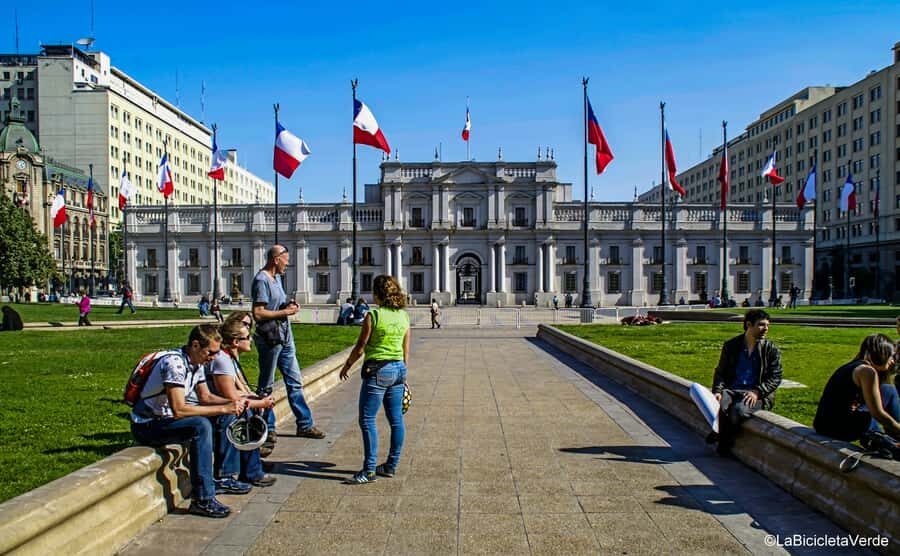
Next up is a stop at Palacio de La Moneda, the presidential palace. This is where the tour shifts gears from scenery to meaning. You’ll learn how Chile’s political history isn’t just a textbook topic—it shapes society and public space.
A detail I value here is the way the guides connect recent moments to the present. One of the strongest themes from guides’ explanations has been the importance of October 2019 for Chileans. Whether you know that history already or not, the stop at La Moneda is a great place to anchor it, because the palace is such a visible symbol of power and national decision-making.
The tone matters too. Several guides have been praised for giving political context without pushing you toward one side. That balance is especially useful on a tour like this, because it keeps the story human: institutions, streets, public reaction, and culture all connect.
If you’re the type who likes photos, La Moneda is also an easy win. But I’d treat the photo as the bonus, not the main event. The main event is understanding why people talk about this place the way they do.
Riding on to GAM: learning the background behind monuments
After La Moneda, you continue by bike toward the historical Gabriela Mistral Cultural Center (GAM). This part is still about movement, but it turns into a slower, more interpretive experience as your guide talks through what you’re seeing.
GAM matters because it adds culture to the political storyline. Instead of stopping at one monument and moving on, the tour uses the afternoon as a sequence: parks for breathing room, La Moneda for power, then GAM for cultural meaning.
What you’ll get from the guide here is context—background on the monuments and figures you encounter as you ride. That’s the difference between watching a city and understanding it. You’re not just passing famous points on a map; you’re being helped to place them in a broader story.
Practical note: keep your eyes up when you’re moving through these downtown segments. You’ll want to catch architectural details, but you’ll also want to stay focused on the ride and your surroundings, since you’re in a working city center.


The local touch: slang lessons, recommendations, and gelato breaks
This tour doesn’t treat language like an afterthought. You’ll learn some crucial Chilean slang words so you can feel less like a silent observer and more like someone following the conversation.
That small language boost can do a lot in Santiago. Even a few words help you catch what people are saying at markets, in cafés, or when you’re asking for directions. It’s also a confidence thing. You start the afternoon feeling like you can manage the city, not just tour it.
Then comes the food break: handcrafted ice cream in various flavors. If you’d rather skip ice cream, you can choose coffee or espresso instead. Either way, it’s the kind of pause that fits the pace of the ride: quick, sweet, and helpful for resetting your energy for the final part of the afternoon.
Guides also tend to share recommendations for what to eat and where to go next. Past guests specifically mentioned getting good suggestions for food and wine, and that rehydration and safety checks were handled so nobody felt lost. That matters on a tour built around short segments and frequent stops—you want to feel watched over without feeling hovered.
Price and value: what you’re really paying for at $45
At $45 per person for 3 hours, this tour’s value comes from the mix of included items and the kind of guidance you get.
You’re not just paying for a route. You’re getting:
- a bike (beach cruiser) and a helmet
- bottled water and sunscreen
- ice cream (or coffee/espresso)
- a professional bilingual guide
- and a small-group format limited to 10 participants
That bundle is what makes the price feel reasonable for a city-center afternoon. Many tours charge similar money for far less: just a guide and a vague plan. Here, the practical stuff (bike, helmet, water, sunscreen) is handled, and the guide time is spent on explanations that tie parks and politics together.
Also, the route includes both green spaces and downtown power/culture landmarks. You get variety without needing multiple tickets or planning.
Who this tour suits best (and who should skip it)
This is a good fit if you want:
- an easy, cruiser-style bike ride without needing to be athletic
- a guided storyline about Chile’s political and cultural context
- a chance to see central Santiago beyond a simple walking loop
You might enjoy it even more if you like your history with street-level context—how public places shape how people think and live.
It’s not suitable for wheelchair users, so if mobility is an issue, I’d look for an alternative format. Also remember you’re riding, so if you’re uncomfortable with city cycling—even on cruiser bikes—this is worth considering carefully.
What to bring and when to ride
This tour is designed for an afternoon in central Santiago, and the details point to what you should pack:
- Camera (the parks, La Moneda, and GAM give plenty of photo moments)
- Local currency if you want to buy something along the way
- your own comfort gear for the weather (sunscreen is provided, but it won’t hurt to have your preferred sun protection)
The ride is meant to feel manageable, but you’ll still want to wear something comfortable for biking and be ready for short stops in open air. If you’re sensitive to sun, plan around peak daylight hours.
Should you book the Santiago Parks and Politics Bike Tour?
I’d book this tour if you want a low-stress bike ride that also teaches you how Santiago works. The best part isn’t the bike itself—it’s the way parks, bike lanes, La Moneda, and GAM connect into one afternoon story.
Book it if:
- you like city history that’s explained as you move through real neighborhoods
- you want a small-group guide who can answer questions
- you’d enjoy learning a few Chilean slang shortcuts and using them right away
Skip it if:
- you need a wheelchair-accessible tour
- you’re uncomfortable riding in a city, even at an easy pace
- you prefer purely scenic sightseeing with zero political context
If you’re on the fence, this is the kind of tour that’s easy to say yes to: $45 buys you a guided ride, the practical gear, and a clear storyline that helps you understand Santiago beyond the skyline.
FAQ
How long is the Santiago Highlights, Parks and Politics Bike Tour?
The tour runs for 3 hours.
Where is the meeting point?
You meet at Constitución 153, next to Plaza Mori, near Baquedano Metro Station.
What does the tour cost?
The price is $45 per person.
Do I need to be a sports person to join?
No. The tour is described as inclusive, welcoming everyone and not requiring you to be sporty.
What kind of bike do I ride?
You’ll ride a beach cruiser city bike.
Is a helmet provided?
Yes, and wearing a helmet is mandatory by Chilean law.
What stops are included?
The tour includes Forestal and Bustamante Parks, a ride to the Gabriela Mistral Cultural Center (GAM), and a stop at Palacio de La Moneda.
Do guides speak English and Spanish?
Yes. The live tour guide works in Spanish and English.
Is hotel pickup included?
No. There is no hotel pickup or drop-off.
Is the tour suitable for wheelchair users?
No, it is not suitable for wheelchair users.