REVIEW · PUCON
Full Day Mountaineering to Villarrica Volcano from Pucón
Book on Viator →Operated by Turismo Montañas del Sur · Bookable on Viator
Villarrica wakes you up fast.
This full-day mountaineering outing takes you up South America’s most active volcano to its open crater, then gives you the fun payoff—snow/ice riding or, depending on conditions, a harder hike back down. I love that the day mixes serious altitude effort with big, real volcanic scenery, not just a scenic bus stop.
What I really liked is how much support you get: full technical gear, certified bilingual guides, and private transportation plus park entry. That means you can focus on moving well and staying safe, instead of hunting rentals or translating safety instructions.
One thing to plan around: access can change with volcano status and snow conditions, so you may not always reach the crater edge or get the full snow-slide experience.
In This Review
- Key Highlights You’ll Care About
- From Pucón to Villarrica: The Morning That Sets the Tone
- What’s Included: Technical Gear and Park Access
- The Volcano Part: Villarrica’s Open Crater and Why It’s Special
- Guided Climbing: How the Bilingual Support Shows Up
- Summit Energy: The Route, the Feel of Snow-Ice, and What You Might See
- The Fun Part: Snow Slides and Why the Season Can Change Everything
- Timing, Group Size, and Your Fitness Reality Check
- Price and Value: What $194.81 Really Buys
- A Quick Reality Check: When Things Don’t Go Perfectly
- Who Should Book This (and Who Should Think Twice)
- Should You Book Mountaineering to Villarrica From Pucón?
- FAQ
- How long is the Villarrica volcano tour from Pucón?
- What time does the tour start?
- What’s included in the price?
- Is lunch included?
- How big is the group?
- What happens if conditions don’t allow the crater or snow slide?
Key Highlights You’ll Care About
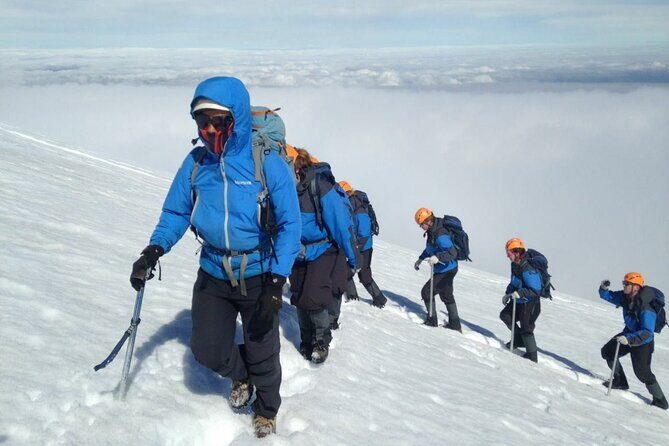
- Open-crater summit experience on one of the world’s notable crater types
- Small group size (max 12) with certified bilingual guiding
- Full technical snow gear included (helmet, ice axe, crampons, and more)
- Snow slide depends on conditions, not just enthusiasm
- Early 6:00 am start with a long, high-energy day
From Pucón to Villarrica: The Morning That Sets the Tone
This tour starts early—6:00 am—and it matters. The day is built around cold, firm surfaces at higher altitude and enough daylight to do a full volcanic route. If you’re used to relaxed vacations, this will feel like someone turned the “serious hike” dial to high.
You meet at Miguel Ansorena 775 in Pucón. From there, you’re taken by private transportation, which keeps your group together and reduces the chaos that can happen when everyone has to figure out rides. You’ll also be back at the same meeting point at the end, which makes it easy to plan the rest of your day in town.
The day runs about 9 hours (approx.), so don’t build in late dinners or long drives immediately afterward unless you enjoy moving on adrenaline. This is a true day hike with mountaineering gear and sustained cold-air effort.
You can also read our reviews of more tours and experiences in Pucon.
What’s Included: Technical Gear and Park Access
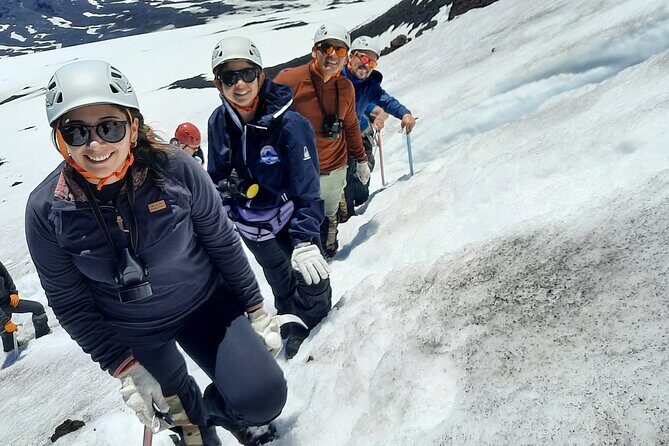
One of the biggest value points here is that the essential gear comes with you. You get mountain equipment such as a helmet, ice axe, and crampons, plus items like a backpack and trouser covers, plus a windbreaker and other winter protection gear.
That inclusion is more than comfort—it’s safety and efficiency. When you don’t have to rent or guess what you need, you waste less time. You also start the hike already dressed for the reality of ice and snow near a volcano.
You’re also covered for the paperwork side of things with tickets to Villarrica National Park and certified and bilingual guides. In practice, that means your route is managed, you have local expertise on conditions, and you’re not trying to solve logistics at altitude.
The Volcano Part: Villarrica’s Open Crater and Why It’s Special
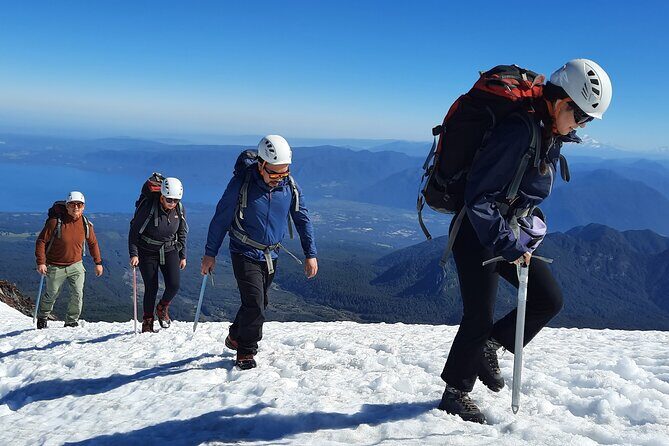
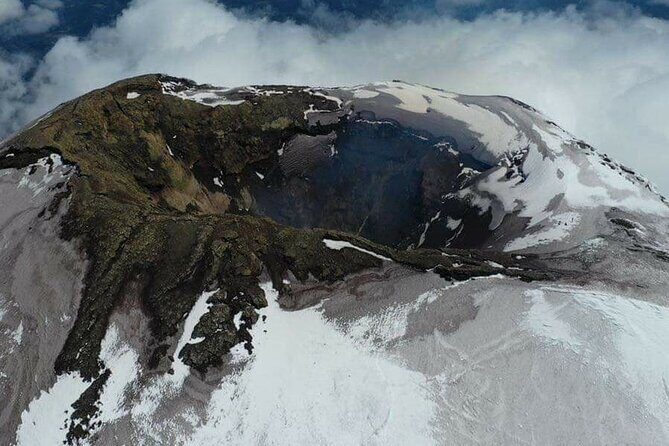
Villarrica is known for an open crater, and this tour aims to bring you up close enough to experience what makes it unusual. The volcano is described as the most active in South America, and that reputation is part of the draw.
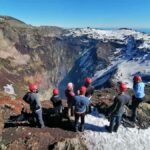
There’s a specific thrill to seeing a crater viewpoint at elevation. You’re not just looking at a mountain—you’re looking at a system that has a working volcanic personality. On clear days, it’s the kind of scene that makes your brain stop multitasking.
The tour’s focus on the crater area is also why weather and volcanic conditions matter. Even when your boots are ready and your legs are willing, officials may limit how far you can go depending on the situation. One review described how volcano status yellow meant they couldn’t hike up to the crater at the top, so they missed the lava view and didn’t reach the full height they were hoping for. Translation: you’re going to the volcano, but the volcano gets the final say.
Guided Climbing: How the Bilingual Support Shows Up
You’re with a guide team that’s certified and bilingual. That sounds like marketing language until you experience how much it affects the hike. At this altitude and on technical gear, you need clear instructions fast—how to place crampons, how to manage your balance on icy slopes, and how to move when conditions shift.
The reviews highlight that English guidance can be strong. One guest specifically praised the guide’s English and also said the guide took photos for them. That matters more than you’d think. When you’re concentrating on footing, it’s hard to also frame shots. If the guide can help capture the moment, you get to remember it without turning the hike into a self-portrait project.
Also, with technical gear, fit matters. One review mentioned a backpack chest strap was broken, making it harder to carry. You can’t control every tiny gear problem, but you can control one step: when gear is handed out, check that it’s in good working order and adjusted for you. The day is long, and small comfort issues can get annoying after hours.
Summit Energy: The Route, the Feel of Snow-Ice, and What You Might See
This isn’t a casual walk in the park. The day includes ascent on snow and ice with mountaineering gear, plus time spent in harsh cold conditions. You’ll likely feel the grind in your legs, even if you’re fit. The good news: the effort is tied to real rewards—higher elevation views and the chance to get near crater terrain if conditions allow.
If you’re wondering what the “top” part feels like, one review described enjoying the snow/ice terrain close to the top even when the crater wasn’t accessible. That’s useful to know. It suggests that even when you don’t get the full crater experience, you still get technical snow hiking and meaningful altitude scenery.
And about lava: if the crater viewpoint is limited, you may not see lava or the full view you hoped for. In one case, limited access meant no lava view. That doesn’t mean the day is a bust. It means your day might shift from crater spectacle to snow-climbing satisfaction.
The Fun Part: Snow Slides and Why the Season Can Change Everything
The tour describes a fun descent on snow slides. That’s the part people are excited to talk about. But snow slides are seasonal and condition-dependent. In May, one review said there wasn’t enough snow to slide, so they ended up hiking down instead.
Here’s the practical takeaway: the “snow slide” is a bonus, not a guarantee. You’re still doing a long day on ice and snow, and the descent might be active hiking rather than riding. That can be disappointing if you’re mentally locked onto the slide idea—but it’s also a good reason to book with realistic expectations.
When slides do work, that descent turns the day from pure work into a full-day adventure. Either way, you’ll come away with a sense of having actually tackled something technical, not just shuffled along a viewpoint path.
Timing, Group Size, and Your Fitness Reality Check
You’ll be with a maximum of 12 travelers. That’s a sweet spot for a technical hike: enough people for a lively day, not so many that you’re constantly waiting. It also helps guides manage gear checks, pacing, and safety on icy sections.
The tour is described as requiring moderate physical fitness. That phrase is doing a lot of work. Moderate here likely means you can handle steep sections, cold air, and hours of movement—not that you’re training for a race. If you’re coming straight off a couch-week, you’ll feel it.
The early start means you’re working while your body is still waking up. Plan to be rested the night before. And once you’re moving, you’ll rely on steady effort more than speed. The day is long enough that small pauses matter, but the flow still has to keep going.
Price and Value: What $194.81 Really Buys
At $194.81 per person, this isn’t a low-cost casual tour. But it also isn’t just a hike with a view. You’re paying for a full package that reduces the hidden costs and hassles:
- Technical gear included (helmet, ice axe, crampons, and more)
- Park tickets included
- Certified bilingual guides
- Private transportation
That combination is why the price can make sense, especially if you’d otherwise spend time renting gear or piecing together a guide and transport. For a volcano day, convenience and safety matter. And with technical equipment, getting it right from the start is worth paying for.
You can also look at the booking pattern: the tour is commonly booked around 14 days in advance on average. That’s a good sign that demand is real, and it can help you decide whether to lock your spot early—especially in high season.
One more value note: the tour has a 4.9 rating with 62 reviews, and 98% recommend it. That kind of ratio usually points to consistent guiding and good day-of execution—though, as you know, no business is perfect.
A Quick Reality Check: When Things Don’t Go Perfectly
Good tours are mostly about how they react when something goes wrong. There was one low review that reported the local tour company wasn’t reachable and the meeting point had no staff on arrival. The guest said they contacted the platform quickly and received a refund.
I can’t verify what happened from inside the company. But I can offer a practical lesson for you: if you book through any intermediary, don’t wait until the last minute to confirm. Get the exact local contact info, and make sure you have a clear plan for meeting. A quick recon firm-up the day before can save you from a vacation headache.
Also remember: conditions can change even with a perfect provider. Volcano access and snow-slide feasibility can vary. You’ll enjoy the day more if you treat it as a guided mountaineering experience that adapts.
Who Should Book This (and Who Should Think Twice)
This is ideal for you if you want a real mountaineering-style hike with snow and ice elements and you like the idea of reaching volcano terrain with a guide. The technical gear, bilingual instruction, and small group size fit travelers who want structure.
You’ll also like it if crater views are on your must-do list, because the tour is built around Villarrica’s open crater—even though access can be limited by status.
Think twice if you need a guaranteed snow slide. Reviews show it can depend on season and snow depth. If you only want a light scenic outing, this isn’t that. It’s a cold, physical day on snow gear.
Should You Book Mountaineering to Villarrica From Pucón?
I’d book this if you match the vibe: you’re ready for an early start, you want technical snow hiking with certified bilingual guidance, and you’re okay with the fact that volcano conditions can change the plan. The value is strong because gear, park access, and guiding are handled for you.
Skip—or at least ask more questions before booking—if you’re the type who needs a perfectly predictable route and exact crater access every time. Volcanic activity and snow conditions can shift what’s possible that day.
If you want one smart move before you go: confirm you’ll meet the guide team at Miguel Ansorena 775 and double-check the provider contact you’ll rely on in the morning.
FAQ
How long is the Villarrica volcano tour from Pucón?
It lasts about 9 hours (approx.), from the early morning start until you return to the meeting point.
What time does the tour start?
Pickup begins at 6:00 am.
What’s included in the price?
You get mountain equipment such as a helmet, ice ax, crampons, backpack, trouser cover, windbreaker, and other gear, plus private transportation, tickets to Villarrica National Park, and certified bilingual guides.
Is lunch included?
No. Lunch is not included, so you’ll need to eat on your own.
How big is the group?
The maximum group size is 12 travelers.
What happens if conditions don’t allow the crater or snow slide?
The experience requires good weather, and volcano status and snow depth can affect what’s possible. If snow slides can’t happen due to conditions, you may still complete the day by hiking down.