REVIEW · PUCON
Villarrica Volcano Ascent – Zenit
Book on Viator →Operated by Zenit Travel Chile®️ · Bookable on Viator
Villarrica wakes up early in Pucon. This is the kind of day-trip that turns a volcano into a hands-on workout: steady climbs, technical steps in icy sections, and a summit experience focused on fumaroles and what the activity is doing above the snowline. I really like the small-group setup (up to 12) and the clear progression from simple walking to using crampons and an ice ax with expert support.
One big consideration is that this trip is weather-dependent. If visibility is poor or conditions are harsh, reaching the crater edge may be restricted, and volcanic activity can also limit how close you get—so plan for the day to be great even if the volcano refuses to cooperate.
In This Review
- Key Things to Know Before You Go
- First Light in Pucon: The 6:00 am Start and Your Travel Time
- Villarrica’s Ascent in Phases: From Walking Sticks to Crampons and Ice Ax
- What You See at the Summit: Fumaroles, Weather Windows, and Incandescent Possibilities
- The Descent: Toboggans on Snow and Panoramic Lake Views
- Equipment, Guides, and Group Size: Why Up to 12 Makes a Difference
- Price and Value: Is $195 for Villarrica Worth It?
- Weather Reality: How to Protect Your Trip Plan in Chile
- Who This Tour Suits Best (and Who Should Rethink It)
- Should You Book Zenit for Villarrica?
- FAQ
- What time does the Villarrica ascent tour start, and how long is it?
- Where is the meeting point?
- What fitness level do I need?
- What gear and tools are used during the climb?
- How much elevation do we climb?
- Do we use a snow lift or go sledding on the way down?
- Is the crater edge always accessible?
- What happens if weather is bad?
Key Things to Know Before You Go
- Small-group mornings: start at 6:00 am with a schedule that includes transfers.
- A real elevation workout: about 1,700 meters of climbing during the ascent.
- Technique changes as the snow does: sticks/trekking steps up top, then crampons and an ice ax in exposed sections.
- Volcano views aren’t just for photos: fumaroles can show how active Villarrica is.
- Descent includes fun with control: snow toboggans on the way down, under guide supervision.
- Access can vary: crater-edge access may be prohibited at times due to intense activity.
First Light in Pucon: The 6:00 am Start and Your Travel Time
This tour begins at 6:00 am and the full day runs about 9 hours total, including transfers. That matters because Villarrica mornings are not leisurely. You’re likely stepping out before sunrise energy kicks in, then spending the early part of the day getting to the approach point on the mountain.
The meeting point is listed as Pedro de Valdivia 205, 4920552 Pucon, Pucón, Araucanía, Chile. The day ends back at the same meeting point, so you don’t have to worry about finding your way home after a long descent and that post-mountain snack craving.
If you’re deciding whether to do this, ask yourself one question: can you handle an early start plus a long cold day without getting grumpy? If yes, you’ll like the fact that the schedule is structured and paced for a mountain day, not an all-day waiting game.
You can also read our reviews of more tours and experiences in Pucon.
Villarrica’s Ascent in Phases: From Walking Sticks to Crampons and Ice Ax
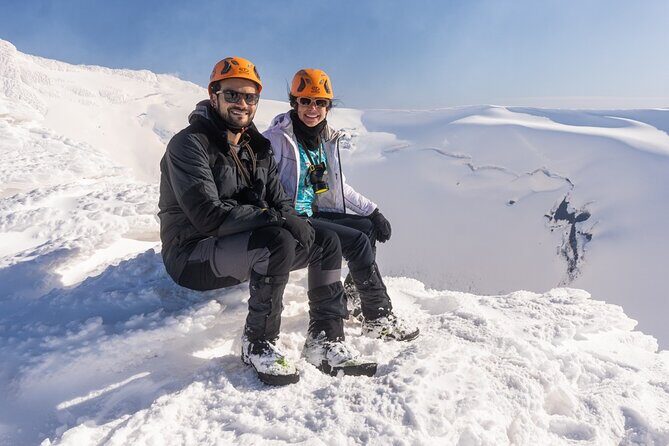
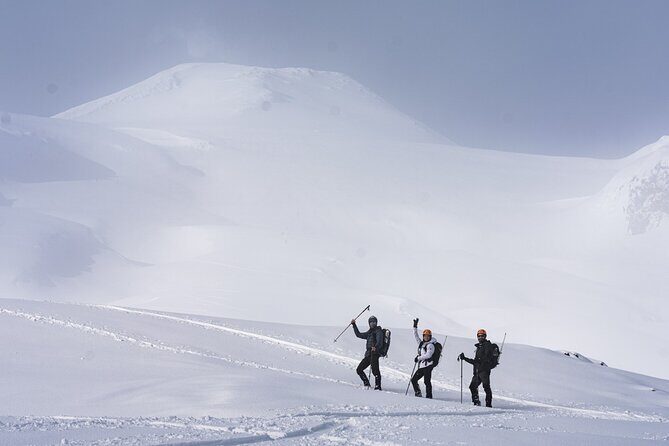
The climb targets Villarrica, one of South America’s most active volcanoes, at 2,847 meters. You won’t just be walking uphill. The route is designed in stages so you experience mountaineering skills progressively, guided by people who manage the hardest parts of the terrain.
You’ll build upward with walking using sticks, then transition to more exposed, icy sections where crampons and an ice ax come into play. Even if you’ve never used those tools before, the key is that you’re not dropped into a chaotic free-for-all. The whole approach is about doing the right movement at the right time, with guide support.
You’ll climb roughly 1,700 meters in elevation. That’s the number you should mentally anchor on. It tells you this is not a gentle hike that ends in a view. It’s an active climb where your legs and breathing both work, and the reward is that the effort feeds into the technical sections rather than feeling like random suffering.
One more detail that can help your planning: there’s a possible snow lift on the first stretch. If the lift is running and you’re assigned to use it, it can take some pressure off your legs early on. Even without it, the early approach is paced, not rushed.
What You See at the Summit: Fumaroles, Weather Windows, and Incandescent Possibilities
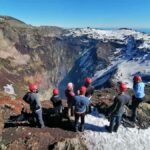
The summit goal is not just altitude. It’s the chance to observe Villarrica’s activity. The tour description points to fumaroles, and that’s the practical meaning of the volcano being active up close: you can see signs that it’s breathing and heating the mountain world around it.
If weather allows, there’s also a possibility of spotting incandescent magma inside. That’s exciting, but it comes with the reality of mountain weather. Fog, wind, and low visibility can turn the summit into a solid accomplishment without the dramatic glowing interior you hoped for.
There’s another wrinkle worth taking seriously: reaching the crater edge can be prohibited at times due to intense activity. That limitation can change the experience from summit-to-crater-photo to summit-to-viewpoint-and-observation. You’re still climbing a volcano, and you can still get meaningful activity observation, but your expectation should be flexible.
I like that Zenit’s approach is about safety and guide decisions rather than promising one fixed outcome. You’re buying a guided volcano ascent day, not a guaranteed view of glowing lava in every condition.
The Descent: Toboggans on Snow and Panoramic Lake Views
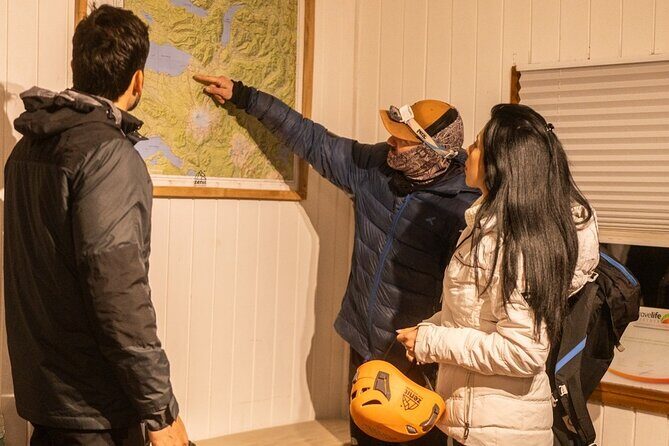
The descent is where a lot of people quietly get their second wind. You don’t spend the whole day gripping your focus; when the route allows it, you get to shift from climbing effort into controlled movement down the mountain.
On the way down, you’ll get panoramic views of the lakes and the surrounding geography. That’s a nice contrast to the technical climb. Up high, you’re working your body. Down lower, you’re taking in the shape of the region and realizing how the volcano fits into the broader Pucon area.
Then comes the fun part: you can slide on snow toboggans on sections of the descent. That’s not the same as unsafe backyard sledding. It’s still guided and part of the route design, which means you can enjoy the speed without turning it into a slippery chaos session.
If you’re the kind of traveler who fears that the hardest part will be the downhill, you’ll probably appreciate that this itinerary turns the descent into an actual activity, not just a knee-battering march.
Equipment, Guides, and Group Size: Why Up to 12 Makes a Difference
A tour like this succeeds or fails on two things: safety systems and pacing. Zenit caps the group at maximum 12 travelers, which keeps the experience from feeling like a line of identical clones moving at different speeds. In practical terms, smaller groups let guides keep an eye on individuals during the transitions—when everyone is moving from one gear approach to another.
Equipment is a major part of the value here. The experience includes the mountaineering components needed for the day, including gear used for snow and technical climbing. One past group noted trying on trekking boots the day before at the Zenit agency, and that the operator provides what you need for the climb.
Guides are also repeatedly praised in the team’s names that show up in real experiences. You might work with guides such as Luisa and Felipe, and other names like Agustin, Leo, Edgar, and Jorge have been associated with groups on this route. You should treat those as examples of the kind of experienced team you could meet, not a guarantee for your exact leader.
Either way, you can expect the day to include frequent attention during tiring moments. The climb is demanding, and what helps most isn’t just stamina—it’s knowing when to pause, how to reset, and how to keep moving without burning out.
Price and Value: Is $195 for Villarrica Worth It?
At $195 per person, this isn’t cheap. But it also isn’t paying only for a viewpoint. You’re paying for a full-day structure, guided mountaineering support, and the active logistics of getting to and from the volcano.
Here’s what you’re getting that justifies the price:
- Admission ticket included (so you’re not adding another line item later)
- A guided technical experience with transitions that require skill and supervision (walking sticks to crampons and an ice ax in exposed sections)
- A full mountain day with transfers built into the schedule
- A descent experience that includes snow toboggans, not just walking down
If you tried to do this independently, you’d have to solve multiple problems: gear, training time for snow technique, guide-level safety planning, and the challenge of coordinating a safe route on an active volcano. Even if you’re an experienced hiker, you still need the mountain-specific systems that a professional team brings.
So I see this as a fair-value option if you want a guided, safer, well-paced way into the Villarrica experience—especially if you’re traveling with limited time and don’t want to spend days arranging gear and training yourself.
Weather Reality: How to Protect Your Trip Plan in Chile
This is the part you should plan for before you pay, because the mountain can be stubborn. This tour requires good weather. If conditions are poor, it can be canceled and you’ll be offered a different date or a full refund.
One important practical insight: even when a summit attempt happens, poor visibility can shrink what you’re able to do. If you can only be in Pucon for a tight window, you may end up accepting a climb that’s still worthwhile but not exactly what you pictured at the crater.
Here’s what I recommend:
- Build in flexibility if your schedule allows. If you have only one day available, you should go in knowing the volcano may still win.
- Pack for cold, wet, and windy conditions so you’re not miserable if the forecast shifts.
- Treat the day as an experience first, and the glowing-magma fantasy as a bonus.
Also, the tour description says confirmation is received at booking time, which is helpful. But weather decisions happen on mountain time, so be ready for last-minute changes.
Who This Tour Suits Best (and Who Should Rethink It)
You’ll likely be happiest on this tour if you have moderate physical fitness and you can handle a long, cold day with a steady uphill effort.
This is not the best match if:
- you want an easy stroll with minimal exertion,
- you hate early starts,
- or you can’t tolerate uncertainty tied to snow and visibility.
You’ll probably enjoy it if you:
- want a guided technical mountain day without needing to learn the systems yourself,
- like structured adventure,
- and want both the climb and the descent experience, including toboggans.
The fact that it’s capped at 12 travelers also makes it appealing if you like a more personal day with guides who can keep track of the group.
Should You Book Zenit for Villarrica?
Book this if you want a guided Villarrica ascent that mixes real climbing effort with mountaineering technique, and you’re okay with weather shaping what you see at the summit. The value comes from the guided phases (walking, then crampons and ice ax in exposed sections), the organized transfers, and the inclusion of admission.
Skip it or rethink timing if you have zero flexibility and the one thing you’re chasing is a perfect crater-edge outcome. With intense volcanic activity and variable visibility, reaching specific points can be restricted. Still, even when the volcano doesn’t hand you the exact view you hoped for, the day can be a strong win: a disciplined climb, fumarole observation, lake panoramas, and a guided snow toboggan descent.
If you can, give yourself extra time in Pucon. That’s the simplest way to turn this from a single gamble into a chance for the best conditions.
FAQ
What time does the Villarrica ascent tour start, and how long is it?
The tour starts at 6:00 am. It lasts about 9 hours in total, and that includes transfer time.
Where is the meeting point?
You meet at Pedro de Valdivia 205, 4920552 Pucon, Pucón, Araucanía, Chile. The tour ends back at the same meeting point.
What fitness level do I need?
The experience is recommended for travelers with moderate physical fitness.
What gear and tools are used during the climb?
The itinerary includes hiking with crampons and using an ice ax in more exposed, exposed areas, with walking using sticks during other phases. Equipment for the climb is provided by the operator.
How much elevation do we climb?
You climb about 1,700 meters during the ascent.
Do we use a snow lift or go sledding on the way down?
There is a possibility of using a snow lift on the first stretch. On the descent, there’s also sliding on snow toboggans.
Is the crater edge always accessible?
Access can be restricted. At times, reaching the crater edge may be prohibited due to intense volcanic activity.
What happens if weather is bad?
This tour requires good weather. If it’s canceled due to poor weather, you’ll be offered a different date or a full refund. You can also cancel for a full refund up to 24 hours in advance.