REVIEW · ANTOFAGASTA
San Pedro de Atacama: Saver Pack Tatio Geysers + Moon Valley
Book on GetYourGuide →Operated by Say Hueque Argentina Journeys · Bookable on GetYourGuide
Dawn in the Andes sets the mood fast. This San Pedro de Atacama saver pack bundles the El Tatio geysers at sunrise (with breakfast watching the steam) and then Valle de la Luna at sunset, so you get two very different versions of the Atacama in one day. I especially love how El Tatio’s morning spectacle is tied to timing—your best views really happen around first light.
The only real drawback is the body-factor: you’ll rise early, ride long, and hang out at 4,320 meters when it can feel brutally cold. If you’re prone to altitude trouble or you hate being rushed, plan for a harder day than it looks on paper.
In This Review
- Key things to know before you go
- Why this day works: geyser steam then lunar dunes
- The early pick-up to El Tatio (and how to not suffer)
- El Tatio at dawn: what you’ll actually see
- Breakfast while the steam show is underway
- The return-trip stops: birds, desert plants, and Machuca
- Back in San Pedro: use the free time well
- Valle de la Luna, starting from the reserve gate
- Las Tres Marías, Quebrada Honda, and the Coyote Stone
- Sunset in the desert: timing is everything
- Price and value: what $147 buys you
- Comfort and pacing: what to watch for
- Who should book this saver pack
- Booking advice: plan your arrival day with altitude in mind
- Should you book the Saver Pack: Tatio Geysers + Moon Valley?
- FAQ
- How long is the tour?
- What time do I get picked up for El Tatio?
- What time does the Moon Valley part start?
- Is breakfast included?
- Do I need an entrance ticket?
- Is this tour suitable for kids?
- Are there health or activity limits?
Key things to know before you go
- El Tatio at first light: geysers can throw steam flows up to about 10 meters high, with temperatures reported up to 85°C.
- Breakfast with the sunrise show: you eat while the show is happening, not after it’s over.
- Wildlife and villages on the way back: you may spot vicuñas, llamas, rheas, vizcachas, and even the small ancestral town of Machuca.
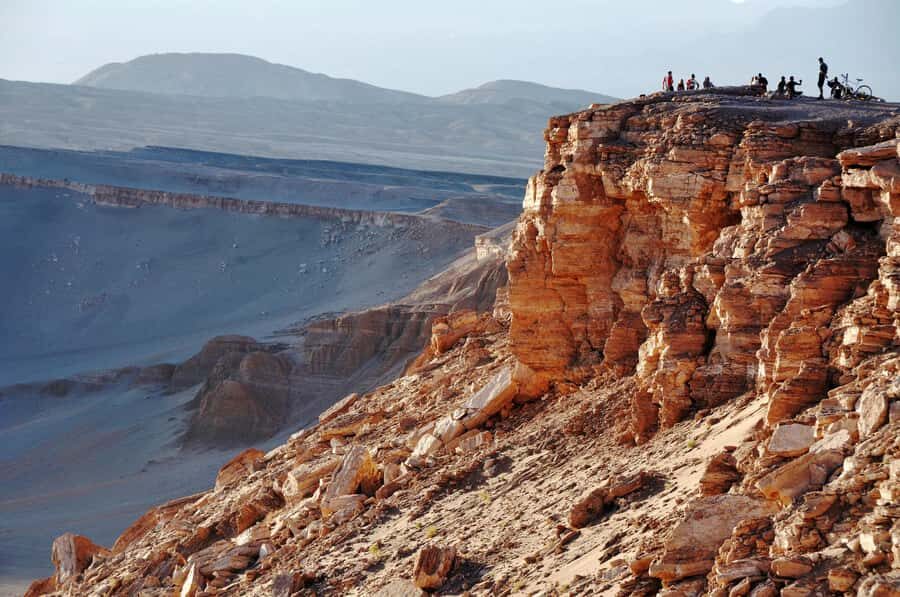
- Valle de la Luna inside Los Flamencos National Reserve: the stop includes famous formations like Las Tres Marías and viewpoints such as Quebrada Honda.
- A real desert sunset stop: you’re timed so the color changes happen before you head back to town.
- Two-tour day with a buffer in San Pedro: you get a break window between the morning and afternoon parts to warm up and reset.
Why this day works: geyser steam then lunar dunes
I like tours that feel like a complete story, not just a checklist. This one does. You start at El Tatio, one of the biggest geyser fields in the southern hemisphere, and you end in Valle de la Luna, where the terrain looks like it belongs on another planet. In between, you get a long reset in San Pedro de Atacama, which matters because mornings in the Andes are cold and the afternoon sun in the desert can swing the other way.
You also get a good “rhythm”: anticipation early, reward at sunrise, then wide-open desert scenery, then a finale at sunset. Even if your photos are great, the best part is the atmosphere—steam in thin air, silence between bursts, and then later that slow shift of color across sand and rock.
You can also read our reviews of more tours and experiences in Antofagasta.
The early pick-up to El Tatio (and how to not suffer)
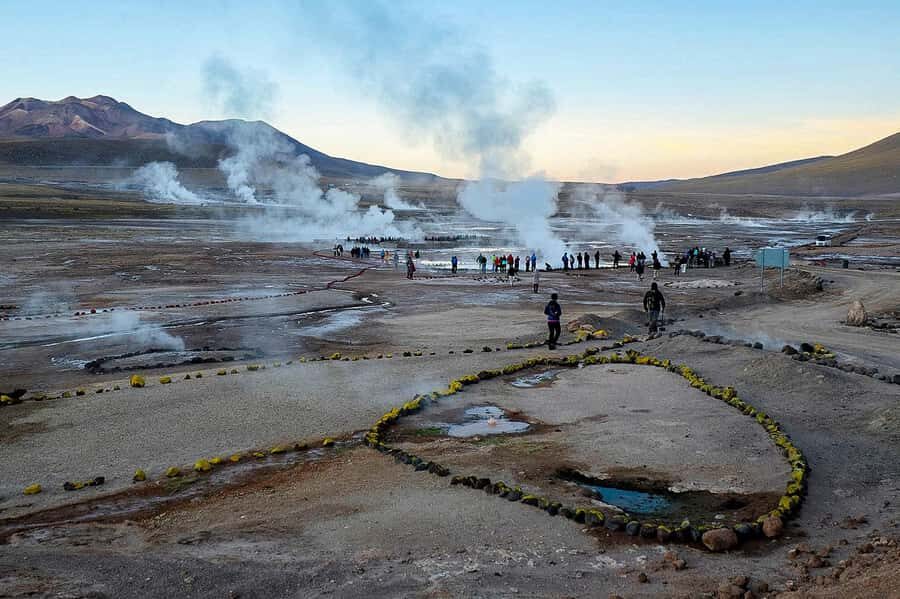
The day starts with a hotel pick-up in San Pedro de Atacama for El Tatio. Depending on season, it’s usually around 5:00–5:30 a.m., and in summer it’s often closer to 4:30–5:00 a.m. That means you’ll want to pack your “morning survival kit” the night before.
Transportation is by shared coach/vehicle with a driver/guide. The drive is long enough that comfort matters: one winter departure was noticeably colder than expected because the vehicle AC stayed on during the trip. You can’t control the air settings, but you can control what you wear. I’d dress like it’s colder than the guidebook suggests.
Bring layers you can adjust: base layer, warm mid-layer, and an outer layer that blocks wind. Add gloves if you run cold in the morning. Sunglasses and sunscreen still matter because the sun can be sharp at altitude, even when it feels freezing.
Also: altitude is not theoretical here. You reach about 4,320 meters, and that can affect your breathing and energy level right away. If you know you get altitude symptoms, take it seriously and move at a steady pace.
El Tatio at dawn: what you’ll actually see
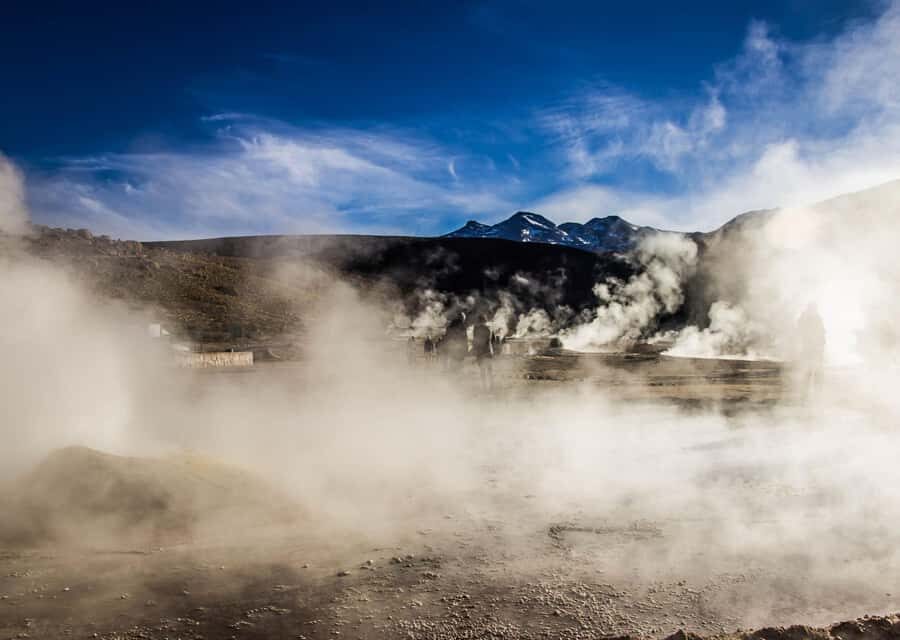
El Tatio is about 61 miles from San Pedro de Atacama and sits deep in the Andes. The name El Tatio is linked to the idea of a grandfather who cries, and the setting matches the mood: stark ground, thin air, then steam rising where you’d expect nothing to happen at all.
The key timing window is dawn, roughly between 06:00 and 07:00, when steam flows start to look most dramatic. You’ll likely do a mix of photo stops, a guided walk, and scenic viewpoint time on the way in. The geysers rise in bursts of steam—reported up to around 10 meters high—and the temperatures mentioned can reach about 85°C at the source. That’s why you’ll want to be close enough for views, but not so close that you forget safety and footing.
What I like about the experience is that it’s guided enough to help you understand what you’re looking at, but you still get time to soak it in. Geyser fields can feel chaotic from far away; guidance helps you pick the best angles and the best moments.
One more practical point: bring warm clothes even if the rest of your Atacama days feel sunny and mild. Dawn is not “chilly,” it’s cold cold.
Breakfast while the steam show is underway
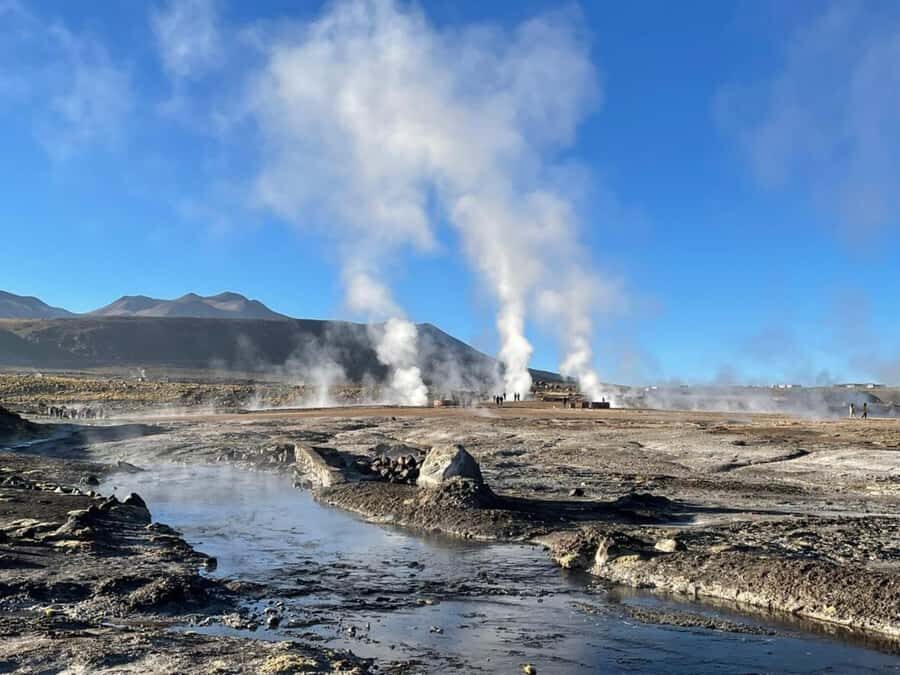
Instead of rushing you out and saving food for later, this option includes breakfast during the Tatio experience. The payoff is simple: you’re eating while the morning spectacle is still happening. That means you’re not doing the worst thing—standing out in the cold while hungry, hoping you’ll eat later.
It also helps you slow down. At 4,320 meters, your body can feel like it’s running on half-battery. Breakfast gives you energy for the guided walk and the cold-to-warm changes on the return.
If you’re sensitive to appetite at altitude, keep your breakfast strategy simple: eat enough to fuel yourself, and don’t force it. The morning air can make heavy food feel less appealing.
The return-trip stops: birds, desert plants, and Machuca
On the way back, the tour isn’t just about heading home. You get chances for nature and place-based views.
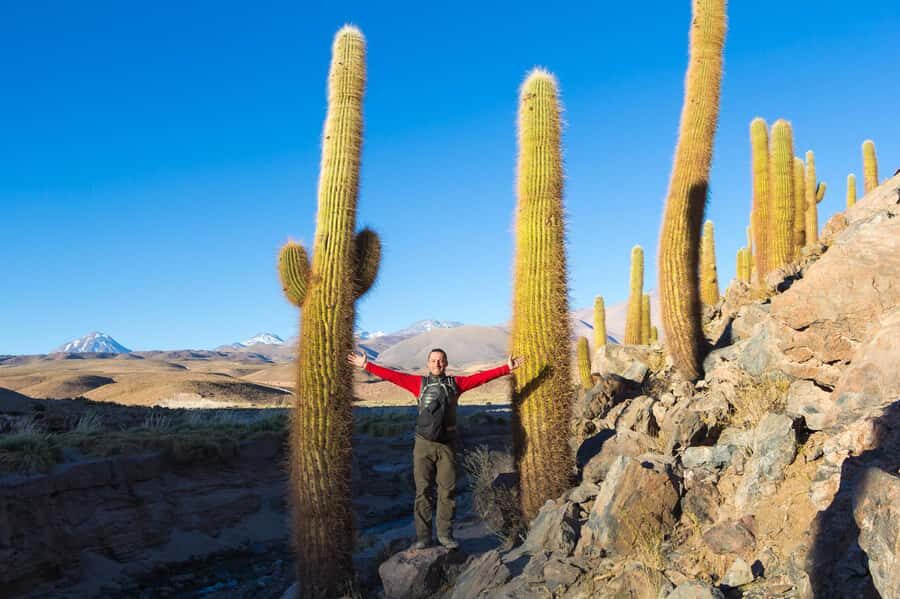
There’s a stop that can turn into a “spotting game.” Depending on conditions, you may see animals like vicuñas, llamas, rheas, and vizcachas. You might also notice desert flora such as giant cactus and other plants that handle extreme dryness.
Then there’s Machuca, a small ancestral town that you can see from a viewpoint. It’s not about a museum visit here; it’s about the feeling of arriving at a place still tied to grazing and small-scale food production. Nearby sits Laguna Salada, a setting where families of flamingos are reported alongside ducks and seagulls, creating a strong contrast against the salt-and-stone feeling of the area.
This is one of the reasons I like doing El Tatio as part of a longer, guided circuit rather than as a quick drive-by. You get context—how people live in harsh places, and how animals share the same survival rules.
Back in San Pedro: use the free time well
After El Tatio, you return to San Pedro de Atacama at around noon, and you have free time before the Moon Valley portion begins.
That break window is important. Your body is coming down from early-morning cold and altitude. If you try to keep the pace too high, you’ll feel it later during sunset walking.
Use this time to:
- warm up and hydrate
- eat a real lunch (not just snacks)
- take a short rest if altitude has made you sluggish
I also recommend a quick gear check: warm layer ready for late afternoon, plus sunscreen and a hat because the desert sun does not play fair.
Valle de la Luna, starting from the reserve gate
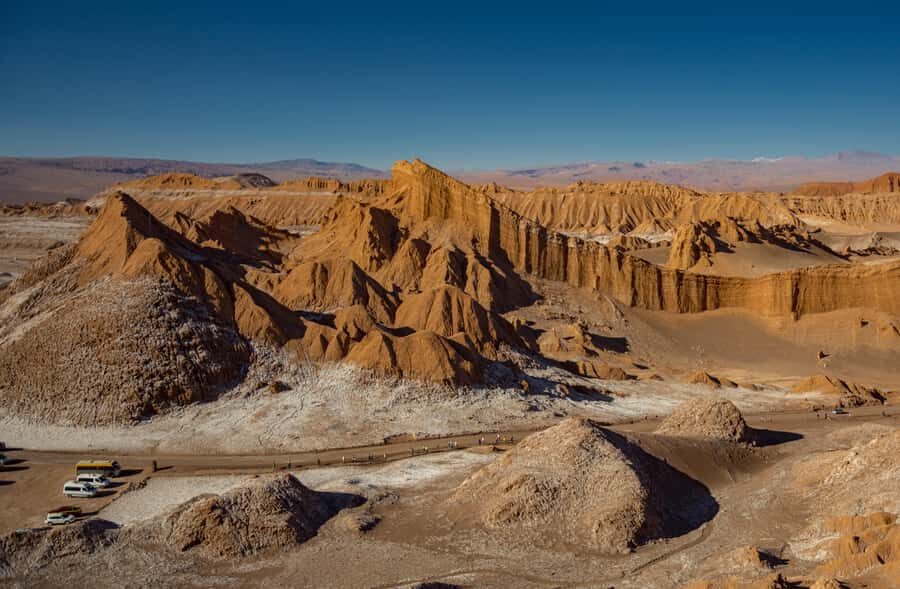
Moon Valley happens in Valle de la Luna, inside Los Flamencos National Reserve. You’ll travel there by bus (the Moon Valley side uses a smaller vehicle with a maximum of about 12 people), which usually makes the experience feel more personal and easier to follow.
Along the way, you pass the reserve area, then you arrive at Valle de la Luna for guided walking, photo stops, and viewpoints.
This is where the terrain becomes the star. Valle de la Luna resembles a lunar-like scene, which is exactly why it earned its name. You’ll see dramatic desert forms, not just flat sand.
Las Tres Marías, Quebrada Honda, and the Coyote Stone
During the Valle de la Luna visit, you’ll get to see standout formations, including Las Tres Marías and a major dune. You’ll also visit viewpoints such as Quebrada Honda, where the Coyote Stone is located.
Here’s what makes these stops worth it: they’re not just “look and leave.” The guide helps you connect the shapes to what the desert has been doing for ages—wind, sand movement, and erosion creating features you’d miss if you walked through alone.
The walking time is manageable for most moderate fitness levels, but you’ll still be in desert conditions: dust, sun angles, and uneven ground. Wear comfortable clothes you can move in, and bring a hat even if you think you’ll be in shade.
If you’re the type who likes geology, you’ll probably enjoy this part more than you expect. If you’re mostly there for views, you’ll still get plenty of strong photo points.
Sunset in the desert: timing is everything
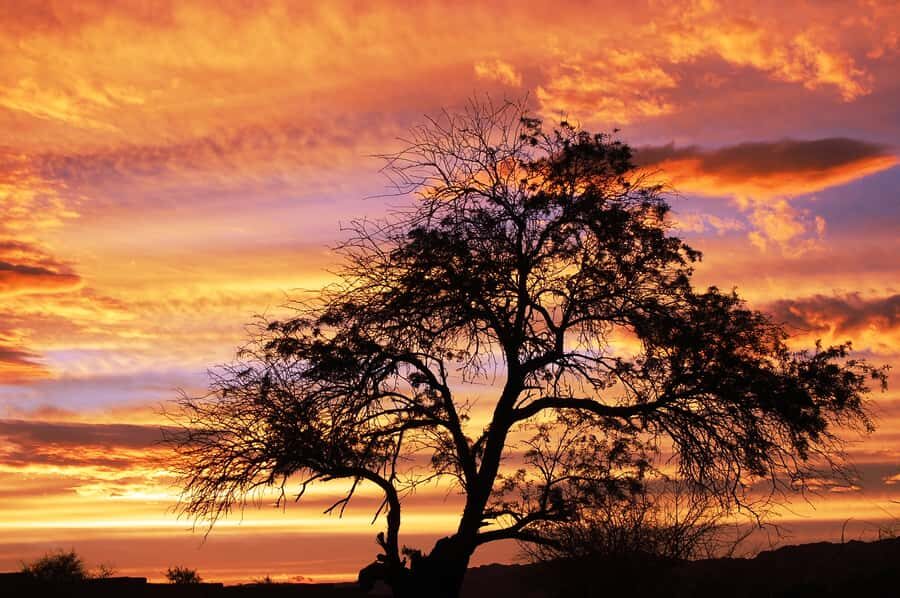
You’re scheduled to catch a sunset during the return to the meeting point in San Pedro de Atacama. That’s a big deal because the desert color shift is usually what people remember most from Moon Valley.
A downside: sunset results depend on sky conditions. If clouds roll in, the “color changing” moment might be muted. Still, the scene can stay dramatic with lighter conditions.
So manage expectations. Your goal isn’t one perfect, cinematic frame. It’s the full arc—the way light moves across the dunes and rock faces as the day cools.
Price and value: what $147 buys you
At $147 per person for an 11-hour day, you’re paying for two guided, transportation-based outings linked into one schedule. The big value points are:
- Breakfast included on the El Tatio side
- Hotel pick-up is included for the Tatio portion
- You have an entry fee option depending on whether you choose the With Ticket version
- Guides are provided in English and Spanish
- You get a desert-focused afternoon in Valle de la Luna plus a timed sunset moment
Is it cheap? No. But it’s also not just “a ride to a view.” You’re buying early timing, a substantial altitude experience, guided interpretation at Valle de la Luna, and a second half-day that would cost you time and logistics if booked separately.
If you’re choosing between this saver pack and doing the two tours on different days, this one wins when you want maximum Atacama per day—and you’re ready for a longer schedule.
Comfort and pacing: what to watch for
This day is packed. You’re moving from sunrise geysers to an afternoon desert circuit, with a free break in between. The pace is fast enough that you won’t want to be the person wandering off.
Here’s what matters in real life:
- Be on time at every handoff. If you miss a meeting point, the group can’t pause indefinitely, especially with morning logistics.
- Stay with the group during walks. Desert ground and time pressure aren’t a good combo for solo wandering.
- Dress for temperature swings. One winter note: El Tatio conditions were even colder than what some general clothing advice suggests. Don’t plan for “just cold.” Plan for “cold enough that you’ll feel it in your fingers.”
In some past experiences, guide communication has been stronger on one side than the other. Your best defense is simple: when you arrive at each new stop, ask the guide to confirm the meeting point and the time you’ll regroup.
Who should book this saver pack
You’ll likely love this tour if you:
- want one-day value from San Pedro de Atacama
- enjoy photography and dawn light as much as sunsets
- can handle early mornings and altitude at about 4,320 meters
- prefer guided structure at both El Tatio and Valle de la Luna
You should think twice (or choose another plan) if you:
- have altitude sensitivity or struggle with breathing
- are pregnant or have heart problems or serious medical conditions
- have respiratory issues or known altitude sickness
- need wheelchair access (this tour isn’t suitable for wheelchair users)
- have back problems that make walking on uneven ground difficult
- travel with children under 12 (this tour doesn’t allow them)
Booking advice: plan your arrival day with altitude in mind
One practical tip I really like: don’t assume your first day in San Pedro is the day to gamble with altitude. If you’re arriving and your body hasn’t adjusted yet, consider building in time before tackling El Tatio. The morning can feel harsh even when you’re otherwise healthy.
If you do book, treat your first night and morning like part of the itinerary. Sleep as best you can, drink water, and move carefully once you’re at elevation.
Also, avoid trying to squeeze flights into the same day as Moon Valley. The operator notes that they may not suggest taking flights on the same day, likely because the timeline can run late or shift due to conditions.
Should you book the Saver Pack: Tatio Geysers + Moon Valley?
Book it if you want a full Atacama sampler with the two biggest “timing wins”: sunrise at El Tatio and sunset in Valle de la Luna. I think the included breakfast and the chance to see both geysers and famous desert formations in one day makes this good value, as long as you’re prepared for cold mornings and altitude.
Skip or adjust if you dislike long travel days, hate early starts, or are at risk with altitude. In those cases, splitting the tours or choosing a gentler schedule will make the experience more enjoyable, not just more convenient.
If you’re ready for a long day that feels like two different worlds, this is a strong option from San Pedro de Atacama.
FAQ
How long is the tour?
The experience runs about 11 hours.
What time do I get picked up for El Tatio?
Pick-up from your hotel is usually between 5:00 and 5:30 a.m. In summer it’s usually between 4:30 and 5:00 a.m.
What time does the Moon Valley part start?
Moon Valley starts at the operator’s downtown office in San Pedro de Atacama. Winter departures are around 3:00 p.m., and summer departures are around 4:00 p.m.
Is breakfast included?
Yes. Breakfast is included for the El Tatio geysers portion.
Do I need an entrance ticket?
If you choose the With Ticket option, entrance fee for both tours is included. If you choose without ticket, entrance fees are not included.
Is this tour suitable for kids?
Children under 12 years old are not allowed on this tour.
Are there health or activity limits?
It’s not recommended for pregnant travelers, people with heart problems or other serious medical conditions, or those with altitude sickness/respiratory issues. You should also have a moderate fitness level, since you’ll reach about 4,320 meters.