REVIEW · ANTOFAGASTA
Tatio Geysers Tour: San Pedro de Atacama
Book on GetYourGuide →Operated by Whipala Expedition · Bookable on GetYourGuide
Cold mornings, loud steam, big skies.
This day trip takes you to El Tatio—one of the highest geyser fields on Earth—at around 4,320 meters, where the action really ramps up at dawn. I like that the tour blends geology with living things: you’re not just staring at steam, you’re also watching Altiplano flora and fauna along the way. The main drawback to plan for is the altitude and early schedule—if you’re not acclimated, you may feel it fast and want to move slower.
What I love even more is the human side of it: a real driver/guide who explains what you’re seeing, plus an organized route that helps you reach key spots at the right time. One example from the guide experience is the host Ernesto, praised for strong explanations and smooth organization so you can catch the site early. That said, there’s also an extra cost you must budget for: the entrance ticket to the tourist site is not included, and you’ll need cash.
In This Review
- Key things that make this tour worth your time
- El Tatio at 4,320 m: catching the crying grandfather at dawn
- Getting there from San Pedro: minibus ride, shared pace, and meeting points
- Entering the geothermal world: your El Tatio guided visit
- Vado de Putana: a meaningful Altiplano waypoint, not just a stop
- On the return: watching vicuñas, llamas, rheas, and vizcachas
- Flora on the Altiplano: giant cacti, llaretas, and coirón
- Machuca viewpoint: grazing life, cheese work, and Laguna Salada
- Secret stops, breakfast, and photo breaks that keep the day moving
- Price and value: $52 plus an entrance ticket you must plan for
- Guide quality matters here: Ernesto and the power of clear explanations
- What to bring for this high-altitude, cold-dawn day
- Who this tour suits best (and who should skip it)
- Final call: should you book this El Tatio tour?
- FAQ
- What is the duration of the Tatio Geysers tour from San Pedro de Atacama?
- How high is El Tatio during this tour?
- Is pickup included, and where do I meet the driver?
- Is the entrance ticket to El Tatio included in the price?
- What language is the tour guide available in?
- What does the tour include besides the geothermal visit?
- What should I bring for the day?
- Is this tour suitable for children or people with health concerns?
- Can I cancel and get a refund?
- Are drones allowed?
Key things that make this tour worth your time
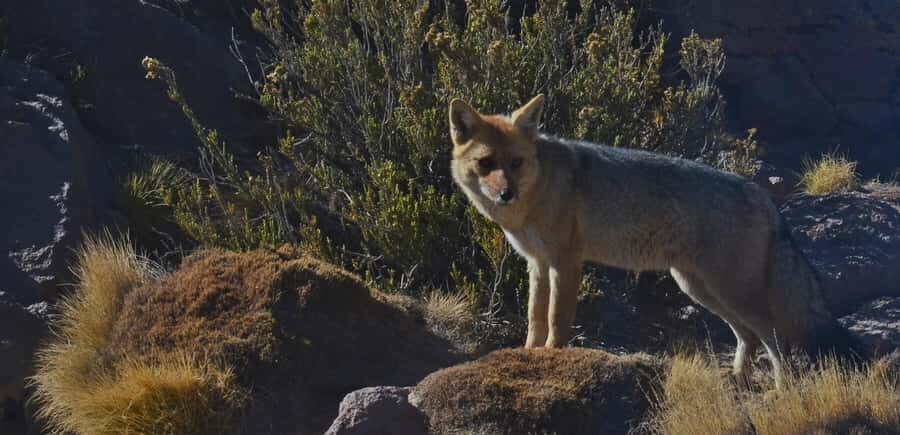
- El Tatio at sunrise: the “crying grandfather” starts showing its maximum steam early.
- Altitude scenery + Altiplano wildlife: you might spot vicuñas, llamas, rheas, and vizcachas on the return.
- Geyser field guided time: you get a structured visit instead of wandering in confusion.
- Vado de Putana stop: a classic waypoint with more of the Altiplano feeling than a straight rush to the geysers.
- Machuca viewpoint pass: you see the tiny ancestral town from above, where grazing and cheese are the main work.
- Short photo-hops: multiple chances to stop and shoot without turning the whole day into one long bus ride.
El Tatio at 4,320 m: catching the crying grandfather at dawn
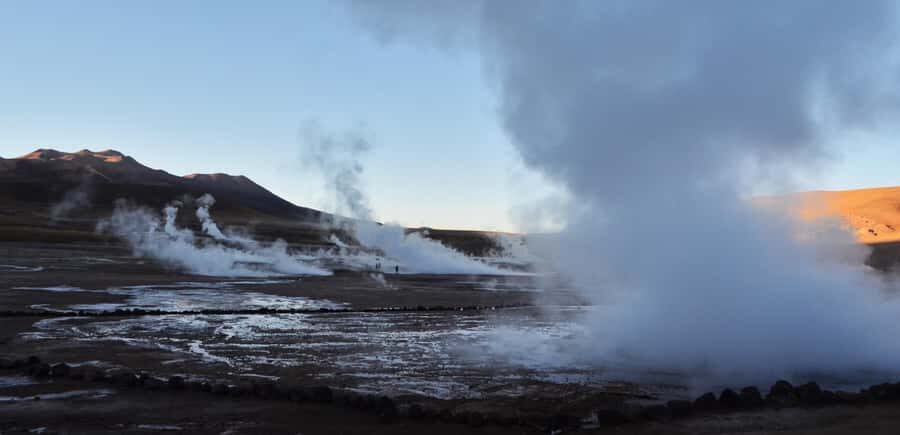
El Tatio sits in the Andes, northeast of San Pedro de Atacama, and it’s known as the largest cluster of geysers in the southern hemisphere—and one of the biggest in the world. The name comes from Kunza, meaning the crying grandfather, and the timing is the whole story. The most intense activity begins at dawn, and the fumaroles can reach around 85°C.
Practically, that means you should expect an early start and cold conditions even before you arrive. You’ll be standing at high altitude where the air feels sharp, your breathing is slower, and your hands don’t want to cooperate for photos. The good news: when you’re there at the right time, steam columns and the ground’s geothermal glow are exactly the kind of sight you remember for years.
You can also read our reviews of more tours and experiences in Antofagasta.
Getting there from San Pedro: minibus ride, shared pace, and meeting points
This tour runs from San Pedro de Atacama using a shared minibus. Pickup is included at hotels in town, and you’ll likely spend some time waiting—small group logistics matter more here than on casual city tours. If your hotel is farther from the town center, pickup may be shifted to a more central point, so it’s worth confirming where you’ll actually meet.
The bus time is part of the experience. You’ll go through several driving segments (including a couple of shorter hops), so you’re not stuck on the road all at once for seven hours straight. It’s more like a rhythm: drive, arrive, guided time, short stop, drive again. If you tend to get motion-sick, take it easy on reading and plan for the altitude to do the rest.
Entering the geothermal world: your El Tatio guided visit
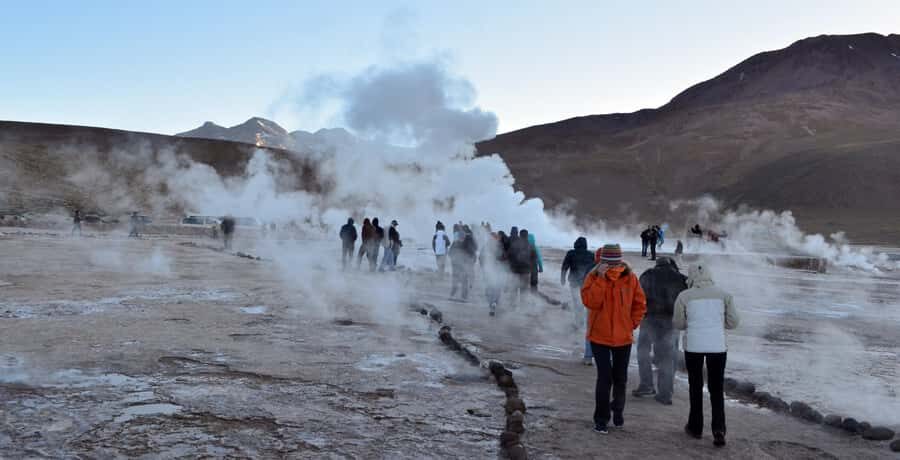
Once you’re at El Tatio, you get about two hours with a guide at the geyser field. This is the best window for understanding what you’re seeing. Geysers aren’t just random steam vents; it’s a geothermal system with channels, varying intensity, and constant change as the gases rise. A guide matters here because you’ll better connect the visual chaos to something that makes sense.
Expect wide open views, steam shifting with the wind, and the kind of photo conditions that change every minute. The tour is structured so you’re not wandering blindly. You’ll also get time from a viewpoint angle to make sense of the whole field, not just the closest jets.
If you’re a first-timer, this is where you’ll feel the most “wow” with the least confusion. If you’re a repeat geyser fan, you’ll still appreciate having a local explanation layer rather than just chasing the biggest plume.
Vado de Putana: a meaningful Altiplano waypoint, not just a stop
Between San Pedro and El Tatio—and especially on the way back—you make room for more than pure geology. A key stop is Vado de Putana. Even if it’s brief, it helps break up the day and keeps it from feeling like a one-track mission.
Why it’s valuable: Altiplano travel is about transitions. You’ll move through changing elevations and land textures, and those in-between moments help you understand the region beyond the geysers. It’s also a chance to reset your body after being cold and focused at the geothermal site.
Think of Vado de Putana as the tour’s breathing space: short, scenic, and useful for anyone who doesn’t want their entire day reduced to steam and photos.
On the return: watching vicuñas, llamas, rheas, and vizcachas
One of the most memorable parts of this tour is what happens after the main geyser time. On your way back, you can observe fauna of the Altiplano—the kind of animals that make the Andes feel alive rather than empty.
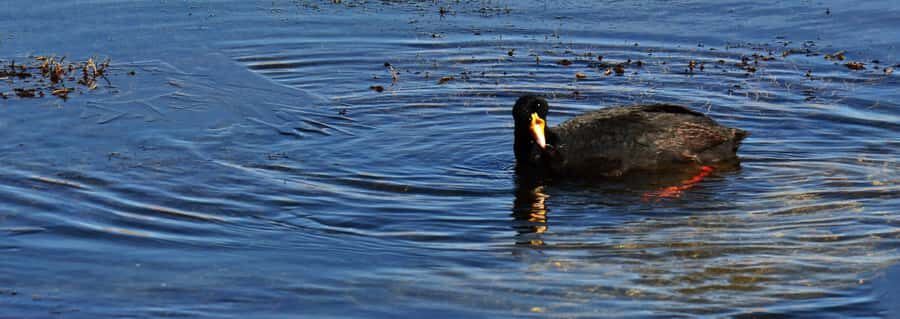
The tour information specifically points to possible sightings such as vicuñas, llamas, rheas, and vizcachas. Even when you don’t catch all of them, you’ll still be scanning the ground and slopes in a way that feels natural for the region. This is also where having good timing helps: the light and the temperature shift, and you notice movement more.
If you want to maximize wildlife chances, keep your voice low, stay patient at viewpoints, and remember these are wild animals—distance beats rushing.
Flora on the Altiplano: giant cacti, llaretas, and coirón
It’s not all animals. The Altiplano stops are also designed for floral observation, with the tour noting plants like a giant cactus, llaretas, and coirón.
This matters because high desert plant life doesn’t look like what most people expect. At altitude, vegetation is shaped by harsh sun, wind, and thin air. Seeing these plants while you’re still thinking about geothermal heat makes the day feel like a whole ecosystem story: the land’s extremes aren’t just about steam—they’re about survival strategies.
Don’t stress about identifying every species. The practical win is learning how the landscape supports life where you’d expect nothing to grow.
Machuca viewpoint: grazing life, cheese work, and Laguna Salada
You pass in front of Machuca, a tiny ancestral town with only a few inhabitants. The tour notes that many residents focus on grazing and cheese production. From the viewpoint, the town doesn’t feel like a tourist stop—it feels like a place that simply continues.
Close by is Laguna Salada, where you might see families of flamingos, ducks, and seagulls. This is the moment that shifts the day from geology to wildlife and water. It’s a strong payoff if your main interest is seeing the Atacama region as a living landscape, not just a collection of landmarks.
One practical note: bird viewing can be weather-dependent and time-dependent. If the light isn’t perfect, still spend the few minutes you have looking. At these altitudes, even short observation windows can feel longer because everything is so clear and still.
Secret stops, breakfast, and photo breaks that keep the day moving
You’ll have a breakfast on the road (about 30 minutes) and a couple of extra short stops described as secret/photo stops. These are part comfort, part pacing. At El Tatio altitude, you don’t want to run on empty—food helps more than you think when your breathing is already working harder.
The photo opportunities—some with guided explanation and some as short hop-off moments—are also smart. They let you shoot without feeling like you’re always grabbing the camera mid-motion. You’ll also benefit from moving locations a bit, since steam and lighting can change quickly.
If you’re the type who loves a good photo, keep your phone/camera gear ready. Cold air drains battery faster, and high altitude makes you want to stop moving for fewer minutes than you’d like.
Price and value: $52 plus an entrance ticket you must plan for
At $52 per person for a 7-hour trip, the value is mostly in the two big things: transportation from San Pedro plus guided time at El Tatio (about two hours) plus breakfast. For a region where doing this independently can mean coordinating your own logistics early in the day, this packaged approach is fair.
But don’t miss the extra cost: the tour does not include the entrance ticket to the tourist site, listed at 15,000 Chilean pesos per person. Bring cash. If you show up without it, you can lose time at the start—time you want to protect for dawn activity.
Also note that the service runs with a minimum group size of 6 people. If that minimum isn’t met, they may combine you with another friendly agency. That’s usually a practical reality rather than a problem, just don’t assume it will always be the exact same group size.
Guide quality matters here: Ernesto and the power of clear explanations
This is the kind of tour where a good guide changes everything. The reviews highlight exactly that: strong organization and lots of explanations. One name that stands out is Ernesto, praised for making the experience better and for clear guidance.
What that means for you on the ground: you’ll spend less time asking yourself what you’re looking at, and more time noticing patterns—how the steam behaves, what parts of the field matter most, and how the flora/fauna stops connect to the overall Altiplano story.
If English or Spanish is your comfort zone, you’ll be covered: the guide operates in English and Spanish. On high-altitude tours, being able to understand instructions clearly is a safety and enjoyment win.
What to bring for this high-altitude, cold-dawn day
Your packing list is simple, but it’s serious. Bring:
- a sun hat and sunscreen (high altitude sun can feel intense)
- water (you’re at about 4,320 m, and dehydration hits fast)
- a jacket and weather-appropriate clothing (dawn is typically cold)
- closed-toe shoes (the ground can be uneven and dusty)
Try to dress in layers. You’ll likely feel cold early and warm up some as the day moves and you’re walking at the geyser field. Layering gives you control instead of hoping you guessed the temperature right.
Also, no drones are allowed. If you bring one for the view, leave it behind.
Who this tour suits best (and who should skip it)
This experience is best for people who can handle altitude and a structured day outdoors. It’s listed as not suitable for:
- children under 12
- pregnant women
- people with heart problems
- wheelchair users
- people over 80
If you’re generally healthy but prone to altitude symptoms (headaches, nausea, breathlessness), you can still consider it—but you’ll want to follow the tour’s advice about acclimatization. They always recommend doing this tour on the 2nd day or at the end of your visit, so you have time to adapt to the altitude.
If you know you’ll struggle with cold mornings and early starts, this might not feel relaxing. But if you’re after one of the most dramatic, high-altitude natural sights in northern Chile, it’s a strong match.
Final call: should you book this El Tatio tour?
I’d book it if you want a single day that hits the region’s best combo: El Tatio at dawn, plus real Altiplano life around Machuca and Laguna Salada. The guided time at the geysers and the added stops for flora/fauna help it feel like more than a photo dash. And based on the guide reputation—especially Ernesto’s clear explanations and smooth organization—you’ll spend less time confused and more time watching.
Skip it if altitude is a known problem for you, or if you need a late start and a slow pace. Also, plan for the extra entrance ticket (cash on hand), so you don’t lose time right at the moment when the geysers are at their best.
FAQ
What is the duration of the Tatio Geysers tour from San Pedro de Atacama?
The tour lasts about 7 hours.
How high is El Tatio during this tour?
The altitude is around 4,320 meters above sea level.
Is pickup included, and where do I meet the driver?
Pickup is included from hotels in the town of San Pedro de Atacama. If your hotel is far, pickup may be adjusted to a more central point, so you should inform them in advance. You should wait at your accommodation reception or lobby for pickup.
Is the entrance ticket to El Tatio included in the price?
No. The entrance ticket to the tourist site costs 15,000 Chilean pesos per person and is not included. You should bring cash.
What language is the tour guide available in?
The guide provides the tour in English and Spanish.
What does the tour include besides the geothermal visit?
It includes shared transportation, a driver/guide, breakfast on the road, hotel pickup, and drop-off in the center.
What should I bring for the day?
Bring a sun hat, sunscreen, water, a jacket, weather-appropriate clothing, and closed-toe shoes.
Is this tour suitable for children or people with health concerns?
It is not suitable for children under 12, pregnant women, people with heart problems, wheelchair users, or people over 80.
Can I cancel and get a refund?
Yes. You can cancel up to 24 hours in advance for a full refund.
Are drones allowed?
No, drones are not allowed.