REVIEW · SANTIAGO
Essence of Santiago : History, Flavors and Panoramic Views
Book on Viator →Operated by Servitour · Bookable on Viator
Four and a half hours, and Santiago clicks. This private tour strings together historic landmarks and panoramic views in a smart order, so you understand where things sit and why they matter, without wasting your day on guesswork.
I love that the pacing is tight but not rushed, with a real local guide driving the story from Paseo Bulnes to La Moneda and up to Cerro San Cristóbal. The possible drawback is simple: the included gastronomy is a short tasting, not a lunch, so come hungry enough for snacks and then plan a proper meal later.
In This Review
- Key things I’d notice right away
- Why this 4–5 hour private loop is perfect for first-time Santiago
- Stop 1: Paseo Bulnes on the hill that shaped the city
- Stop 2: La Moneda in 15 minutes, with tickets handled
- Cerro San Cristóbal for panoramic views (and the included cable/funicular)
- Plaza de Armas: central Santiago, kept efficient
- Lastarria and Bellavista: free neighborhood time with a guide’s context
- Included food tasting: a snack to remember, not lunch
- Price and value: why $240 can make sense
- Picking the right guide style: what the experience tends to feel like
- Logistics in plain terms: what to know before you go
- Who should book this Essence of Santiago tour?
- Should you book it? My decision guide
- FAQ
- How long is the Essence of Santiago tour?
- What time does the tour start in Santiago?
- Which stops are included on the route?
- Are tickets included for all the major attractions?
- Is lunch included?
- Is this tour private, and how does cancellation work?
Key things I’d notice right away
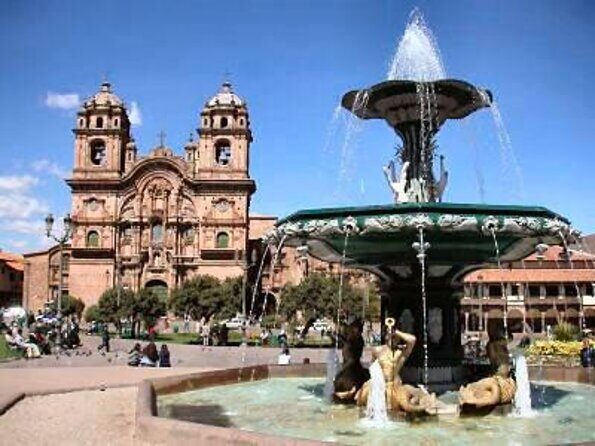
- Paseo Bulnes: a historic hill stop tied to the city’s origins
- La Moneda: the Chilean government house, handled in a focused 15 minutes
- Cerro San Cristóbal: big urban-park views plus a cable/funicular ticket Tuesday to Sunday
- Plaza de Armas and free neighborhood walks: central Santiago, then Lastarria and Bellavista
- Included tasting: typical breaded bites and/or a typical drink, but no lunch
Why this 4–5 hour private loop is perfect for first-time Santiago
If you only have one day (or one half-day that you can’t stretch), this tour makes the city understandable. You start at 9:30 am, you stay in a tight geographic route, and you get enough time at each landmark to actually register what you’re seeing. It’s also a private tour, meaning you won’t be stuck matching your pace to strangers.
What’s really smart is that the itinerary balances three kinds of sightseeing: history (Paseo Bulnes, La Moneda), a major viewpoint (San Cristóbal), and everyday city life through central squares and two neighborhoods (Plaza de Armas, Lastarria, Bellavista). That mix is a fast way to build context for the rest of your trip, even if you go back later and explore on your own.
The best part for your comfort is that you get private transport plus bottled water, and you’re covered by transport insurance. That’s not just “nice to have.” It means you can spend your brainpower on what you’re learning, not on traffic, tickets, and getting back to the meeting point.
You can also read our reviews of more tours and experiences in Santiago.



Stop 1: Paseo Bulnes on the hill that shaped the city

Your first stop is Paseo Bulnes, described as the historic hill where the city was founded. You’ll have about 30 minutes here, and the admission ticket is included.
Why this matters: an early stop like this gives you a mental map immediately. When Santiago’s story starts on a hill, you’ll start noticing how viewpoints, streets, and city growth connect. It’s the kind of orientation that pays off later, because you’ll know what you’re looking at instead of just collecting photos.
The time allowance is also realistic. Thirty minutes is enough to learn the big picture and still move on. If you’re the type who gets restless in long museum-like stops, this works in your favor.
One practical note: since you’re starting in the morning, aim to dress for walking comfort. Even when it’s short, you’ll want your feet ready for uneven sidewalks and hill-adjacent streets.
Stop 2: La Moneda in 15 minutes, with tickets handled
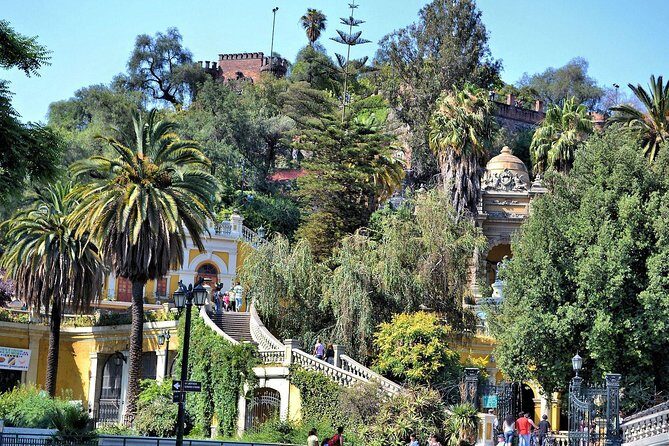
Next is La Moneda, the government house. This is a short 15-minute stop, and the admission ticket is included.
Fifteen minutes sounds brief, but in practice it works if your goal is orientation. La Moneda isn’t a place you need to “live in” for hours to understand its role. The guide’s job here is to connect the building to the political and social story of Chile in a way you can remember.
If you care about architecture and civic space, this is where the tour can feel extra worth it. You get a guided frame for what you’re looking at, then you move on before the day gets heavy.
Cerro San Cristóbal for panoramic views (and the included cable/funicular)
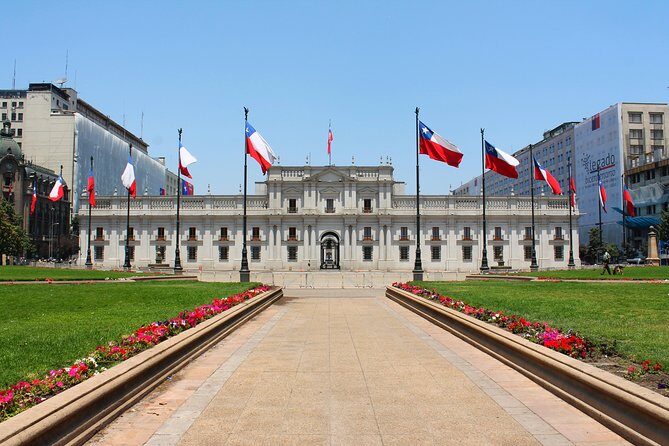
Then you head to Cerro San Cristóbal, with about 30 minutes on site. This is one of the highlight moves: it’s described as the 4th biggest urban park in the world, and the tour includes a cable and funicular ticket Tuesday to Sunday.
Here’s why this stop tends to stick in your memory: big parks and big viewpoints help you feel the city’s scale. Central Santiago can look compact until you’re up high and suddenly the whole layout feels different. San Cristóbal gives you that “oh, now I get it” moment fast.
A practical consideration: the cable/funicular ticket is included Tuesday to Sunday. If your visit is on a Monday, don’t assume the same transport method is covered. You’ll want to check with the provider when you book so you’re not surprised on the day.
Also, since your time here is capped, don’t plan to treat it like a long hike. Come with your priorities: viewpoint photos first, then slow down just enough to enjoy the atmosphere and park setting.
Plaza de Armas: central Santiago, kept efficient
After the viewpoint, you drop into the heart of the city at Plaza de Armas. You’ll get about 30 minutes here, and it’s free (no admission ticket required).
This is a smart pairing after San Cristóbal. The high stop gives you structure, and the square gives you rhythm. Plaza de Armas is where Santiago’s everyday motion becomes visible—street life, central energy, and the sense of “this is where people come through.”
Thirty minutes is the sweet spot for this kind of stop. Long enough to walk the edges, notice details your brain would otherwise skip, and still keep the day from dragging.
If you like photos, this is also where you’ll want to take a few that anchor your route: one wide shot, one street-level shot, and one “turning point” photo to remind you where you were after the hill and viewpoint.


Lastarria and Bellavista: free neighborhood time with a guide’s context
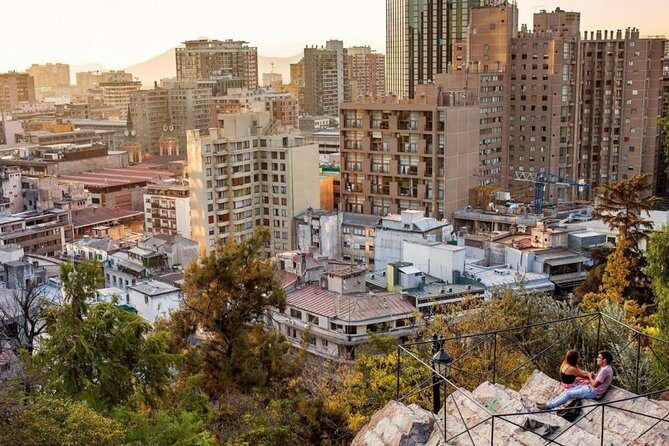
The last stretches of the tour focus on neighborhoods, and they’re handled in a way that keeps you from overplanning.
- Barrio Lastarria: about 30 minutes, free
- Bellavista: about 30 minutes, free
Lastarria is described as cosmopolitan, and Bellavista as bohemian. That’s helpful because it tells you what kind of streetscape and vibe you can expect. You’re not just sightseeing landmarks; you’re getting a sense of how different parts of the city feel, socially and culturally.
Why I like how these stops are built in: you’re getting narrative contrast. After the government seat and the central square, neighborhood time lets you see a different side of Santiago. It also gives you flexibility. If you want to linger later on your own, you’ll know exactly which areas felt right for you during the tour.
Included food tasting: a snack to remember, not lunch
Food is included, but in a specific way. You’ll get a typical food tasting, described as breaded or complete with a typical drink. The tour does not include lunch.
So treat this tasting like a sampling course, not a full meal plan. It’s great for trying something locally tied to the tour’s route and for keeping your energy up between stops. But if you’re the kind of person who needs a full lunch to function, plan ahead.
My practical advice: eat a real breakfast before the tour (or at least a substantial one). Then use the tasting as a bonus, and save your main lunch for after you’ve finished.
Price and value: why $240 can make sense
At $240.00 per person for roughly 4 to 5 hours, it’s not a “budget” outing. But it can be good value for what’s packed inside.
Here’s what you’re paying for that you’d likely piece together yourself:
- Private transport (saves time and reduces the stress of moving between several distinct zones)
- Local guide (the story connection is what turns landmarks into understanding)
- Bottled water (small, but it matters over a full morning)
- Admission tickets where required (Paseo Bulnes and La Moneda)
- Cable and funicular ticket Tuesday to Sunday for Cerro San Cristóbal
- Transport insurance and local taxes
- A typical food tasting
When I look at tours like this, I ask one question: are you paying to “see spots,” or are you paying to solve problems? This one solves the big problems—getting between stops efficiently, handling key tickets, and getting context fast. If that matches your situation, the price feels more justified.
Also, note the booking pattern: this is commonly booked about 81 days in advance on average. That’s usually a sign the slots fill up, especially for first-timer-friendly tours that run at a convenient time.
Picking the right guide style: what the experience tends to feel like
The tour experience seems to live or die by the guide. Based on the guide names that come up often—Estoben, Claudio, Daniel, Pedro, Estaban, and Leonardo—there’s a consistent theme: people get a mix of clear history and practical city guidance, plus a friendly, no-fuss attitude.
One detail that stands out is how guides can tailor your day. In particular, some guides have been noted as adjusting to interests, and one guide helped with dinner planning after the tour. That kind of follow-through can be worth more than it sounds, because it turns your tour into a launchpad for the rest of your trip day.
If you care about architecture, social context, or simply want someone to explain what you’re walking past, look for a guide with that teaching style. If you want someone more laid-back, you can also communicate your pacing preference when you book.
Logistics in plain terms: what to know before you go
This is scheduled for a start time of 9:30 am, and the tour runs about 4 to 5 hours. It’s a private tour/activity, so it’s just your group.
The tour includes multiple short time blocks—15 minutes, 30 minutes, then a couple of neighborhood stops. That means you’ll spend most of your time moving from place to place, with enough time at each stop to feel the meaning and not just the surface.
You also have a few helpful practical notes built in:
- Service animals are allowed
- It’s near public transportation
- Most travelers can participate
What you should plan yourself:
- Lunch (not included)
- Any extra snacks or drinks beyond the included tasting
Who should book this Essence of Santiago tour?
This tour is a great fit if you:
- Are doing Santiago for the first time and want a fast orientation
- Like history tied to specific places, not long lectures
- Want panoramic views from Cerro San Cristóbal without planning tickets and transport
- Prefer a short, guided route over building your own day
It may be less ideal if you:
- Want a full lunch or a longer food-focused outing
- Prefer a slower pace with extended time in one neighborhood
- Are visiting on a day when the cable/funicular ticket may not be included (since it’s listed as Tuesday–Sunday)
Should you book it? My decision guide
If your main goal is to get oriented fast—history, central Santiago, and a real viewpoint—the answer is yes. The itinerary is built to reduce decision fatigue: you get guided tickets where needed, a clear sequence of stops, and a morning schedule that helps you keep the rest of your day free.
Book it especially if you’re the kind of traveler who likes to understand a city in layers: start with origins on Paseo Bulnes, see the power center at La Moneda, earn the views at Cerro San Cristóbal, then finish with neighborhood texture at Lastarria and Bellavista.
If you’re a serious foodie looking for a full meal experience, treat the tasting as a taste, not the whole plan. In that case, plan lunch elsewhere and still consider this tour as your smart morning “starter pack.”
In short: this is a strong choice for a one-day Santiago hit, with the rare combo of key landmarks, real viewpoint time, and practical city guidance.
FAQ
How long is the Essence of Santiago tour?
It runs about 4 to 5 hours.
What time does the tour start in Santiago?
The meeting/start time is 9:30 am.
Which stops are included on the route?
You’ll visit Paseo Bulnes, La Moneda, Cerro San Cristóbal, Plaza de Armas, Barrio Lastarria, and Bellavista.
Are tickets included for all the major attractions?
Admission tickets are included for Paseo Bulnes and La Moneda. The cable and funicular ticket is included Tuesday to Sunday for Cerro San Cristóbal.
Is lunch included?
No. The tour includes a typical food tasting, but lunch is not included.
Is this tour private, and how does cancellation work?
It’s private, meaning only your group participates. You can cancel up to 24 hours in advance for a full refund.