REVIEW · SANTIAGO
Private Santiago City Half Day Tour
Book on Viator →Operated by MTO Tour Chile · Bookable on Viator
Santiago in four hours, minus the guesswork. This private half-day tour is a smooth way to connect Santiago’s civic core with the views that help you orient fast. I like how the route starts with classic downtown sights, then turns into higher ground photo time.
I especially appreciate the guide-led pacing. People like Giovanni and Jaime are praised for being friendly, explaining city life clearly, and adjusting the schedule so you can linger where you care most.
One drawback to plan around: some departures have faced hot-day comfort issues. On high-heat days, a car without air conditioning can make the day feel longer, and heat can slow down walking in the center.
In This Review
- Key things you’ll notice on this private half-day
- A Half-Day Tour That Links Santiago’s Old Power to Big Views
- From Pickup Areas to Plaza de Armas, You Start With the Downtown Backbone
- Cathedral Metropolitana, La Moneda, and the Central Post Office: Civic Santiago Up Close
- The Santa Lucía Hill Option: Founding History and a Classic Park View
- The San Cristóbal Option: Panoramas That Tell You Where You Are
- When the Route Shifts to Culture and the Mapocho River Side
- Mercado Central at the End: A Real Lunch Option Without Rushing
- Price and Value: What You’re Actually Paying For at $76.90
- Timing, Heat, and Comfort: The One Variable You Can Control
- Who This Private Santiago City Tour Fits Best
- Should You Book This Private Santiago City Half-Day Tour?
- FAQ
- How long is the private Santiago city half-day tour?
- How much does the tour cost?
- Is lunch included at Mercado Central?
- What sites do you visit?
- Are entrance tickets included?
- Where does hotel pickup happen?
- Can I cancel and get a full refund?
Key things you’ll notice on this private half-day
- Door-to-door pickup: you’re collected from select Santiago neighborhoods and driven between stops
- Civic highlights with context: Cathedral Metropolitana, La Moneda, and the Central Post Office area get real historical framing
- Two hill options: choose Santa Lucía or San Cristóbal for included entrance time and big panorama payoff
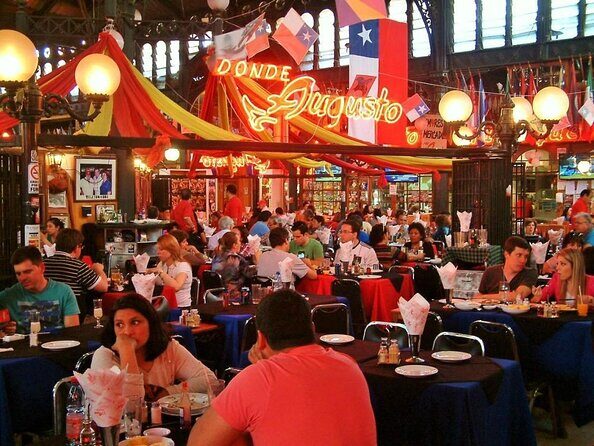
- Mercado Central at the end: a high-energy food market stop, with lunch available at your own expense
- A route that can flex: some guides are noted for improvising if conditions or timing change
- Private group only: it’s just your party, not a shared bus crowd
A Half-Day Tour That Links Santiago’s Old Power to Big Views
If you want a fast but meaningful first look at Santiago, this half-day private tour makes sense. You’ll cover the downtown story—the places tied to government, religion, and public life—then move to the hills that show you where everything sits against the Andes.
What I like most is the balance: you’re not stuck only on monuments. You get short walks plus driving time, which matters in Santiago where sun and traffic can turn a simple stroll into a chore.
You also get to choose your hill experience up front. That choice changes the feel of the day: Santa Lucía is more about founding-era history and a classic park vibe, while San Cristóbal is more about orientation and wide panorama energy.
You can also read our reviews of more city tours in Santiago


From Pickup Areas to Plaza de Armas, You Start With the Downtown Backbone
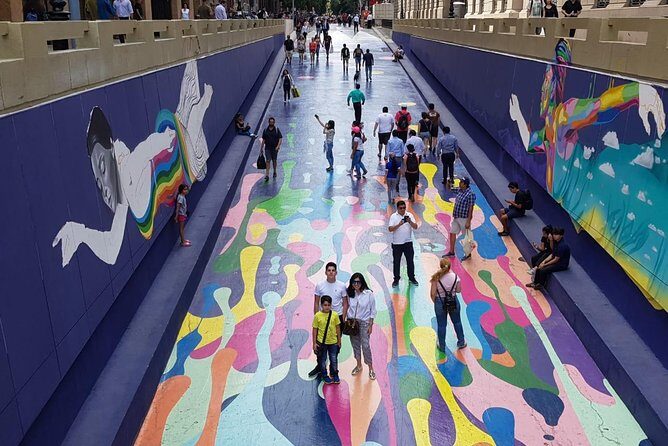
Your tour starts with hotel or address pickup, then heads through older, more established neighborhoods where the architecture tells part of the story. The early drive isn’t just sightseeing trivia. It helps you understand how the city grew from wealthy residential areas toward the civic center.
From there, you roll into Plaza de Armas and the central walk zone. A good example is Paseo Ahumada, a four-block-long shopping street that runs north–south from Plaza de Armas toward Avenida Libertador General Bernardo O’Higgins. It’s useful for orientation because you can see how the pedestrian retail core connects to major metro points like Plaza de Armas metro station and Universidad de Chile metro station.
This is one of those moments where a local guide pays off. Without commentary, it’s easy to see only storefronts. With commentary, you notice how Santiago’s downtown axis works.
Practical note: this is still a city-center walking moment. In warm weather, you’ll want water and sun protection.
Cathedral Metropolitana, La Moneda, and the Central Post Office: Civic Santiago Up Close
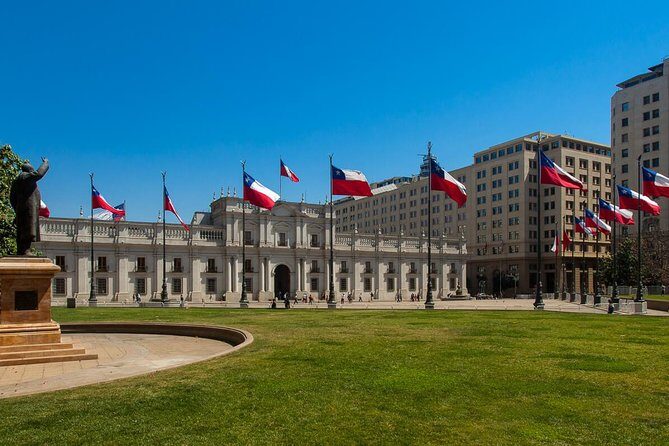
This is the heart of the “what kind of city is this?” part of the tour.
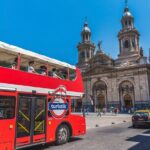
You’ll stop at the Metropolitan Cathedral (Catedral Metropolitana), the seat of the Archbishop of Santiago. Construction began in 1753 and ran until 1799, with the Italian architect Gioacchino Toesca credited for the design. Even if you don’t go deep into architecture, it’s a strong visual anchor for the colonial-to-neoclassical evolution Santiago experienced.
Then comes La Moneda, the seat of Chile’s president and the offices of key cabinet ministries. It occupies an entire downtown block, which is exactly why it’s such an effective stop for your mental map. You’ll also pass the Plaza de La Constitución area in front of La Moneda, surrounded by offices linked to finance, foreign affairs, justice, and institutions like Banco Central de Chile. Again: the value here isn’t only the buildings. It’s understanding how political life shapes the city’s center.
You’ll also visit the Central Post Office Building, a historic structure near the Plaza de Armas edge. It’s adjacent to the Palacio de la Real Audiencia de Santiago, and it sits on land once tied to Pedro de Valdivia. That kind of detail helps you see downtown as more than a photo backdrop—it’s layered territory.
One thing to keep in mind: not every site has an included entry. The tour data lists La Moneda admission as not included, while the surrounding walking stops are generally free.
The Santa Lucía Hill Option: Founding History and a Classic Park View
If you book the Santa Lucía option, you’re trading panorama size for a tighter, more historical feel.
Cerro Santa Lucía starts with a geological fact: it’s the remnant of a volcano estimated at 15 million years old. The conquistadors used it as a lookout point, and it’s tied to Pedro de Valdivia’s founding declaration of Santiago in 1541. Those are big claims, but they land because you’re literally on the spot where people once watched the city-in-the-making.
In 1872, governor Benjamín Vicuña Mackenna transformed the hill into a park to commemorate its significance. The hill today includes bronze gates, metal stairways, and fountains and statues, spread across about 65,300 square meters. That park layout makes it easier to “read” the hill as a designed space rather than a random viewpoint.
You’ll also see Castillo Hidalgo on top of the hill. It was built in 1816 during the reconquest by order of Casimiro Marco del Pont, and it’s described as one of the city’s important historical buildings. Even if you skip inside details, it’s a great landmark for your photos.
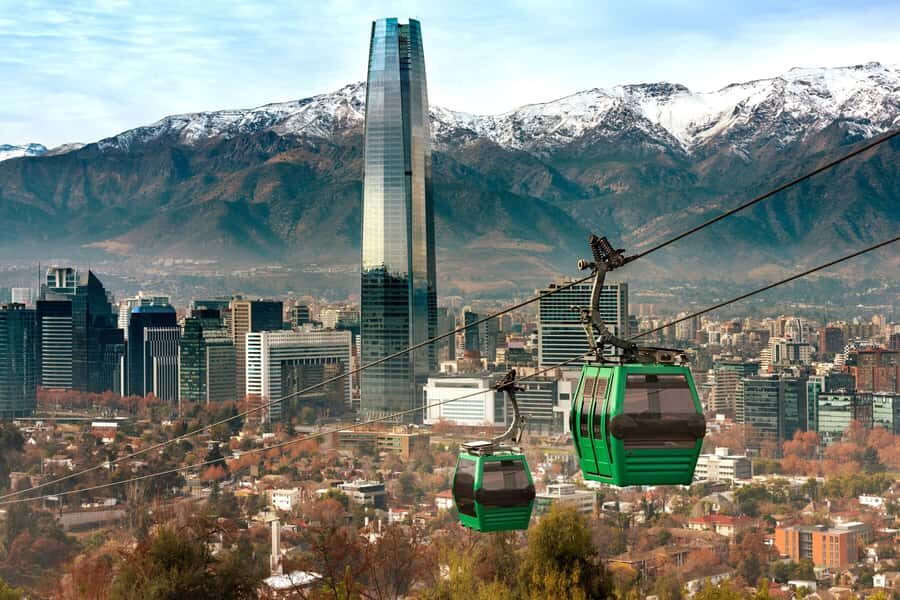
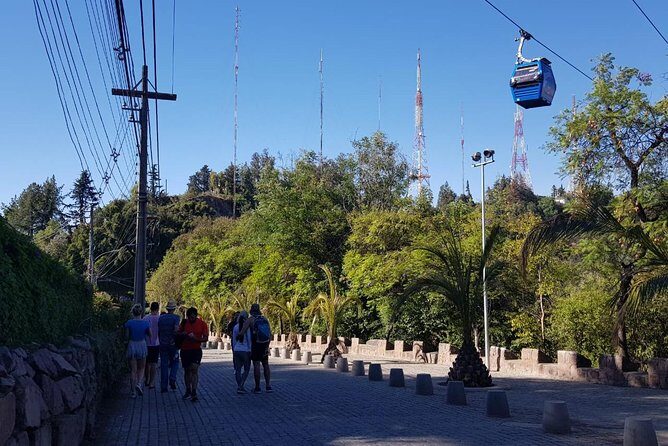
A note from real-world experiences: some departures have included time for a cable car/teleférico ride connected to the hill experience. If it’s operating and your guide includes it, it can be a fun way to add convenience to the ascent.
The San Cristóbal Option: Panoramas That Tell You Where You Are
Choose Cerro San Cristóbal if you want the “I can place Santiago now” moment.
The big draw is the viewpoint function. From the hill you can orient yourself to Santiago’s surroundings, including the Andes Mountains and the Cordillera de la Costa. That orientation is exactly what first-time visitors tend to struggle with. After San Cristóbal, you’ll find it easier to understand where downtown sits and why the city feels framed.
The tour data also ties this hill to Parque Metropolitano de Santiago, created in April 1966. It incorporated the Chilean National Zoo and services of San Cristóbal Hill, and it’s managed by the Ministry of Housing and Urban Development. That matters if you’re wondering why the hill area feels like it has layers of infrastructure rather than being only a lookout.
Here’s another practical win: the hill admission is marked as included for the San Cristóbal option, so you’re not stuck with last-minute entry planning.
You can also read our reviews of more private tours in Santiago




When the Route Shifts to Culture and the Mapocho River Side
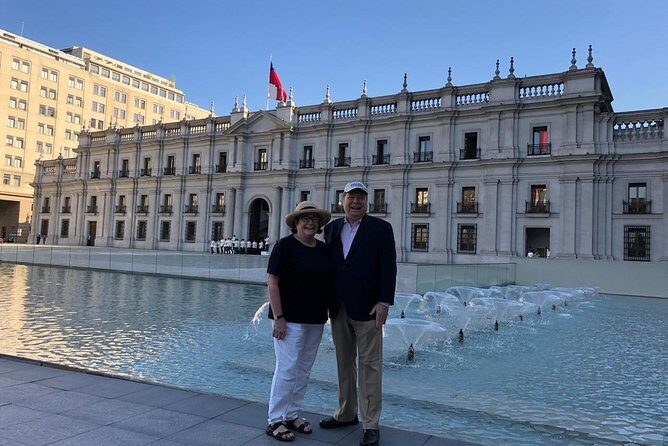
After the civic core and your hill choice, the tour typically continues into areas that show Santiago’s cultural and everyday texture.
You may spend time around the Centro Cultural Palacio de La Moneda, a cultural space beneath Plaza de la Ciudadanía. The design is part of the experience: a glass-slab roof brings natural light into the vaultlike area, and ramps guide you down through a central atrium past the Cineteca Nacional before you reach temporary exhibition spaces.
If you’re a museum person, you’ll appreciate seeing how La Moneda spills into arts programming rather than staying purely political.
The route also makes room for the bohemian quarter of Bellavista, described as lying between the Mapocho River and San Cristóbal Hill. This is the part of Santiago tied to restaurants, boutiques, avant-garde galleries, bars and clubs, and creative residents. You’ll also hear about Pablo Neruda’s house in Santiago, La Chascona, which is part of why this area carries a “literary city” reputation.
If you’re short on energy (heat does that), this portion is especially helpful because it’s built around driving and short viewing stops rather than long museum days. You still get that sense of neighborhood personality.
Mercado Central at the End: A Real Lunch Option Without Rushing
The last stop is Mercado Central (Central Market), and it’s not just a generic souvenir-and-snack zone. The tour description notes that it was named one of National Geographic’s top ten food markets worldwide, highlighted for offering fresh local produce alongside everyday local life.
Ending here is smart. By the time you arrive, you’ve already seen enough “big city” landmarks that food feels like a reward, not an afterthought.
You’ll have time to look around. And if you want lunch, you can eat there at your own expense—no need to pre-plan a restaurant. That gives you flexibility based on appetite and pace.
If you’re trying to be efficient with a half day, this is one of the best ways to add a sensory Santiago moment. You’ll smell it, see it, and pick what fits your budget.
Price and Value: What You’re Actually Paying For at $76.90
At $76.90 per person for about four hours, this tour sits in the “not cheap, but not crazy” zone—mainly because it’s private and includes guide time.
Here’s where the value often lands:
- Hotel pickup and drop-off save time and stress, especially if you’re staying outside the densest transit grid.
- You get a professional bilingual guide with live commentary, not just a driver who drops you off.
- Depending on your hill choice, you also get included entry for Cerro Santa Lucía or Cerro San Cristóbal, which can matter on a short timeline.
- Many of the downtown walking stops are free, so your money goes toward direction and context rather than only entrances.
There’s also a realistic counterpoint. Some people feel you could hit many sights with Uber and DIY planning. If you already love self-guided walking, you might question the price.
In my opinion, the “worth it” angle is strongest if:
- you want a guided story fast,
- you hate figuring out which metro stop is best for moving between clusters,
- and you want hill time without hunting for tickets and timing.
Timing, Heat, and Comfort: The One Variable You Can Control
Santiago can be sunny and intense, and the comfort of the transport matters more than you’d think on a half-day schedule. One caution from real experiences: on a hot day, a car without air conditioning can make stops feel harder and walking in the center less pleasant.
You can’t control the weather, but you can control your prep:
- Wear sunscreen and bring water.
- Plan for shade breaks when you can.
- If it’s peak heat, consider the Santa Lucía option for more “park-style” browsing or the San Cristóbal option for a strong panorama moment with less back-and-forth.
Also, language comfort is part of the experience. Some guides have been praised for clear English, while one account highlighted that a driver-guide was in early stages with English vocabulary. If your travel party needs very smooth English, you might want to confirm that when booking.
Who This Private Santiago City Tour Fits Best
This tour is a strong match if you:
- want the main-picture overview of Santiago without spending a full day,
- enjoy short guided stops more than long museum marathons,
- like photo viewpoints and city orientation,
- and prefer private attention over group logistics.
It also works well for families and couples because the route is built to keep moving while still allowing you to choose how long you stay at key stops. Some guides have been noted for improvising and adjusting when needed, which helps when your timing doesn’t match perfect plans.
One thing to remember: there’s a minimum of two people per booking. So solo travelers should check that requirement when booking.
Should You Book This Private Santiago City Half-Day Tour?
Yes, if you want a guided Santiago primer with door-to-door pickup and two hill choices. It’s a good way to see the civic landmarks, understand the city’s layout, and end with Mercado Central food energy without adding extra planning stress.
But book with your expectations set right: it’s not a deep-dive on every building. It’s a curated overview designed for a short window. If you’re sensitive to heat or you hate car rides with minimal comfort, pick your time of day carefully and come prepared.
If you want a first-timer shortcut that feels personal—this private format is the selling point.
FAQ
How long is the private Santiago city half-day tour?
It lasts about 4 hours.
How much does the tour cost?
The price is $76.90 per person.
Is lunch included at Mercado Central?
Lunch isn’t included. Mercado Central is the final stop, and you can have lunch there at your own expense if you want.
What sites do you visit?
You’ll see downtown highlights like Plaza de Armas area sights, the Metropolitan Cathedral, La Moneda, the Central Post Office area, and Mercado Central. You’ll also go to either Santa Lucía Hill or San Cristóbal Hill based on your option.
Are entrance tickets included?
Entrance is marked as included for the chosen hill option (Cerro San Cristóbal or Cerro Santa Lucía). Other stops are listed as free or not included, such as La Moneda admission not included.
Where does hotel pickup happen?
Pickup is available from accommodations in Providencia, Las Condes, Vitacura, or Santiago Centro. If your hotel is outside the pickup area, a recharge may apply.
Can I cancel and get a full refund?
Yes. You can cancel for a full refund if you cancel at least 24 hours before the experience starts.