REVIEW · SANTIAGO
Traditional City Tour
Book on Viator →Operated by Lucero Travel Chile · Bookable on Viator
Santiago is easier to understand from the top down. This Traditional City Tour strings together key landmarks in about five hours, with a guided flow and free admission at each stop. I especially like the practical mix of viewpoints and city-center icons, so you walk away with an instant sense of where things sit. The other big plus is the comfort factor: you ride in an air-conditioned vehicle and you’re not stuck figuring out logistics on your own.
Still, keep one caution in mind: guide quality can make a big difference. In a small group, clear communication matters, and I’ve seen examples of tours where people got separated or the pace felt disorganized. If you want smooth English narration, show up early at the meeting point and stick close so you’re always where you should be.
In This Review
- Key takeaways before you go
- Quick snapshot: five stops, a 5-hour Santiago morning loop
- Cerro Santa Lucía: the hilltop start that helps you read Santiago
- La Moneda Palace: seeing Chile’s political center without a detour
- Plaza de Armas: the main square where the city energy comes through
- Parque Bicentenario: a change of tempo from old streets
- Bellavista: a short neighborhood hit with big “local” vibes
- Price and logistics: what $45 buys you in Santiago
- Small-group pacing: how to avoid the common “schedule stress”
- Guides: why Niklas (and clear communication) can change everything
- Who this tour is for (and who should pick a different plan)
- Should you book? My booking verdict
- FAQ
- What time does the tour start?
- How long is the Traditional City Tour in Santiago?
- Is admission included for the main stops?
- What’s included in the price?
- What isn’t included?
- What’s the group size limit?
- What’s the cancellation policy?
Key takeaways before you go
- Five stops in one morning: Cerro Santa Lucía, La Moneda, Plaza de Armas, Parque Bicentenario, and Bellavista.
- Free admission tickets at every stop: you’re not paying extra once you’re in the loop.
- Comfort included: round-trip transfer plus an air-conditioned vehicle.
- Short, focused visits: about 20 minutes at most stops, 15 minutes at Bellavista.
- Small-group feel: maximum of 30 travelers, so you can move as a unit.
- Morning start at 8:00 am: plan for a quick, efficient day that doesn’t drag.
Quick snapshot: five stops, a 5-hour Santiago morning loop

This is a classic “get oriented fast” tour. You start at 8:00 am, ride by round-trip transfer, and spend roughly 5 hours moving through some of Santiago’s best-known sights. The pacing is deliberate: you’re guided through the highlights, not stuck for long periods in one place.
The value is in the structure. For $45 per person, you get a guided city thread plus transport, and the tour includes free admission tickets at all the major stops listed. That’s helpful in Santiago, where paid entries can add up quickly if you’re building your own day from scratch.
One more practical note: the tour runs with up to 30 people. That keeps things manageable, but it also means your guide needs to keep everyone together. So, your best bet is to listen carefully at each stop and confirm where the group is meeting before you wander off for photos.
You can also read our reviews of more city tours in Santiago



Cerro Santa Lucía: the hilltop start that helps you read Santiago
Cerro Santa Lucía is where the city makes sense. You get a hilltop introduction that works like a map in real life. Even if you don’t go deep into monuments, you’re still doing something useful: learning what’s nearby, what’s central, and what “direction” feels like when you’re standing above street level.
This stop is short—about 20 minutes—so treat it as a snapshot. I’d plan to arrive ready for photos and quick orientation. Look for views that show how the downtown grid sits in relation to the surrounding areas. If you keep one eye on the skyline while you listen, the rest of your day tends to click.
Possible drawback: because the time is limited, you won’t have long to explore every corner. If you’re the type who likes to linger, you’ll probably want to come back later on your own. Still, for a first pass, it’s an efficient way to kick off the tour.
La Moneda Palace: seeing Chile’s political center without a detour

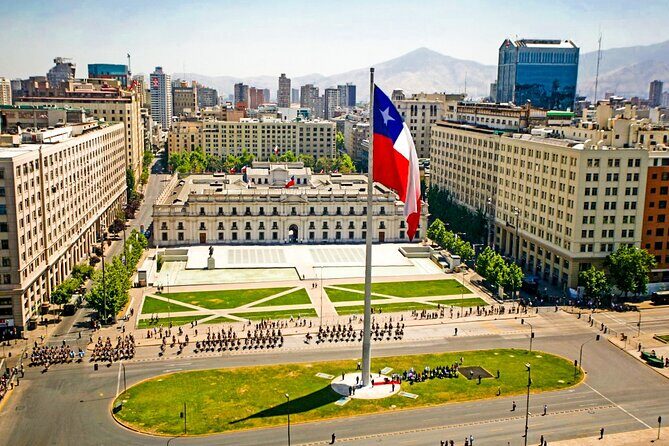
Next comes La Moneda Palace, the presidential complex. This is another 20-minute stop that’s built for context. It’s the kind of place where a guide can explain what you’re looking at beyond the postcard version—how the building fits into Santiago’s civic identity and why this area matters.
What I like here is the “no-stress” approach. Since the tour provides free admission, you’re not mentally juggling tickets while you’re trying to pay attention to the story. You also get a chance to see the square-and-institution layout that defines the center of Santiago.
One consideration: this is a high-profile site. With a group moving through on a schedule, expect a controlled rhythm rather than a leisurely roam. If you’re hoping for long photos or extra time inside, you’ll likely feel the 20-minute cap. But if your goal is understanding the city’s core quickly, it hits the target.
Plaza de Armas: the main square where the city energy comes through
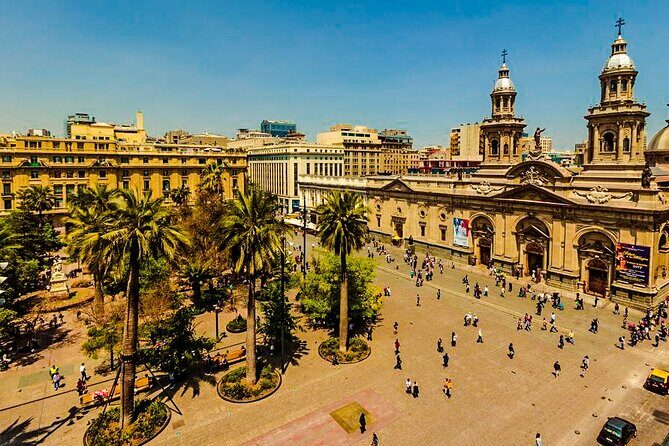
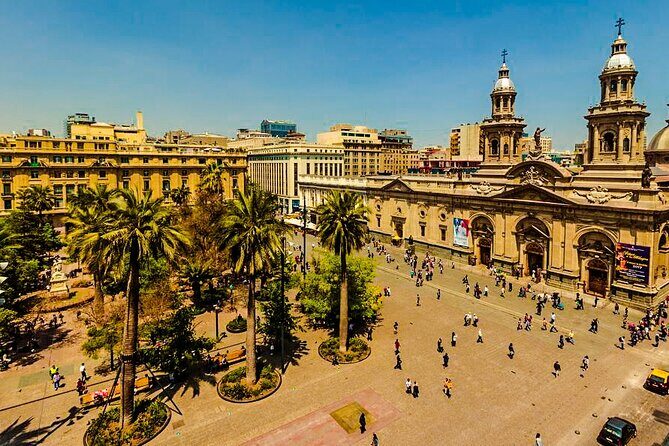
Plaza de Armas is Santiago’s classic center. This is your 20-minute anchor point—the place that helps you connect the dots between institutions and street life. Even if you’ve seen photos before, being there in person gives you the scale: where people gather, how the streets fan out, and what “downtown” feels like under your feet.
I like that this stop is included as a guided pause, because plazas can be confusing if you don’t know what to look for. A good guide helps you notice the layout and understand how the square functions as a hub. It also makes the next neighborhood stop feel more grounded, since you’ve got an obvious reference point in your mind.
The tradeoff is time again. With only about 20 minutes, you should treat it as a quick orientation and a photo stop. If you want cafés or shopping time around the plaza, plan to branch out after the tour ends on your own.
Parque Bicentenario: a change of tempo from old streets
Parque Bicentenario adds a different feel. Instead of just civic landmarks, you get a sense of how Santiago looks when it turns toward modern public space. This stop is also around 20 minutes, so it’s not about a long walk through the park—it’s about a brief, guided viewpoint that resets your day.
Why this matters: after multiple central landmarks, a park stop gives your legs and your eyes a break. It’s the kind of stop that helps you remember the city isn’t only buildings and government. It has recreation and open space, too.
A practical thought: since the tour is dependent on weather, parks can be better on clear mornings and more annoying in bad conditions. If the day turns gloomy, your best strategy is to keep your attention on the guide’s explanation and use your time for quick photos rather than long wandering.




Bellavista: a short neighborhood hit with big “local” vibes
Bellavista is the finish-line neighborhood in this loop. You get about 15 minutes, which is short, but it’s a good way to end with a change in pace. This is the part where you get a taste of neighborhood energy and street character after all the formal landmark stops.
In a short window, I recommend you focus on what you can see without rushing: streetscape details, viewpoints, and any “this is different from the center” contrasts your guide calls out. With only 15 minutes, you’re not here for a full neighborhood exploration. You’re here to get the flavor and decide if you want more later.
Possible drawback: the short time at Bellavista means you may feel like you blinked and it was over. That’s normal for this kind of structured tour. If you want deeper browsing, pair this tour with a longer afternoon later in Bellavista.
Price and logistics: what $45 buys you in Santiago

Let’s talk value. At $45 per person for about five hours, you’re paying for a guided route plus air-conditioned vehicle and round trip transfer. On top of that, the major stops are listed with free admission.
That combination usually beats the DIY approach for one simple reason: you spend less time sorting out transportation between scattered points. In a city like Santiago, distances and parking can be time thieves. Here, the tour compresses it into one morning.
What you still need to budget for: lunch and tips aren’t included. Since the tour includes several landmark stops, you’ll likely get hungry toward the end. Plan a meal after, not during.
One more money-saving tip: because you have free admission at each scheduled stop, you won’t need to decide on the fly whether to pay for entry. That keeps the day from turning into surprise expenses.
Small-group pacing: how to avoid the common “schedule stress”
This tour keeps numbers tight—up to 30 travelers. That helps with movement, but it also creates a social reality: if the group loses track of the meeting point, everyone feels it fast.
Here’s my practical advice to make it smoother:
- Arrive a few minutes early so you’re not running to catch up.
- At each stop, listen for the regroup instructions and repeat the meeting location back to yourself.
- Stay in the same general area as the guide and the front half of the group for at least the first few minutes after you stop.
I’m mentioning this because guide communication clearly matters on tours like this. In one set of experiences, people reported issues like being left behind and meeting points being changed without clear notice. You can’t control that, but you can protect yourself by staying close and checking in when the group moves.
Guides: why Niklas (and clear communication) can change everything
When a city guide is good, you feel it quickly. One standout example is a guide named Niklas, who was praised for being pleasant and informative. That’s the kind of guiding style that turns “places I recognize” into “places I understand.”
But another lesson comes from the tougher feedback: English clarity and audible volume matter. If you’re booking and you rely on guided narration in English, be ready to choose a spot where you can hear well. Don’t hang back at the edge where voices get lost in the crowd.
If you can, also ask yourself what matters most to you: If you want a tight, factual landmark rundown, you’ll appreciate strong guiding. If you just want photos and quick context, you can still enjoy the route—just keep your expectations aligned with the short stop times.
Who this tour is for (and who should pick a different plan)
This Traditional City Tour is a great fit if you:
- Want one morning to learn Santiago’s structure and key sights.
- Like guided interpretation, especially for political and historic landmarks.
- Prefer comfortable round-trip transport over navigating buses or taxis between sites.
- Don’t want to manage multiple entry tickets because admission is included as free for the listed stops.
It may be less ideal if you:
- Need deep time at each place. The schedule is short at every stop.
- Want long neighborhood browsing, especially at Bellavista where time is 15 minutes.
- Get stressed by any chance of group confusion. Stay close, arrive early, and listen for regroup points.
Should you book? My booking verdict
If you’re visiting Santiago for the first time and you want your bearings fast, this is the kind of tour that earns its place. The combination of guided sightseeing, air-conditioned transport, round-trip transfer, and free admission at the main stops is strong value for $45.
My vote comes with one condition: go in ready to follow the group. Morning landmark tours succeed when you stay together and you’re attentive at each regroup point. If weather isn’t cooperating, the tour is designed around good conditions, so flexibility helps.
If you’re the type who likes to see a lot without planning, this tour is a solid book. If you’re chasing long stays in a single neighborhood, you’ll likely want to add your own time after the tour so you can linger where you actually like it.
FAQ
What time does the tour start?
The tour start time is 8:00 am.
How long is the Traditional City Tour in Santiago?
It lasts about 5 hours.
Is admission included for the main stops?
Yes. The stops listed include free admission tickets.
What’s included in the price?
The tour includes an air-conditioned vehicle, a guided tour, and round trip transfer.
What isn’t included?
Tips and lunch are not included.
What’s the group size limit?
The tour has a maximum of 30 travelers.
What’s the cancellation policy?
You can cancel for a full refund up to 24 hours before the experience’s start time. It also depends on good weather; if canceled due to poor weather, you’ll be offered a different date or a full refund. The tour also requires a minimum number of travelers, and if that minimum isn’t met, you’ll get a different date/experience or a full refund.