REVIEW · VALPARAISO
Valparaiso: Street Art, Funiculars and Port City Tour
Book on GetYourGuide →Operated by Still Travelling · Bookable on GetYourGuide
Valparaíso feels like a city built for surprise. This tour pairs panoramic funicular rides with street art you can actually understand, not just snap and move on. I really love how the mural stories connect the art to the hills and the people who live there.
The pacing stays calm and controlled, with plenty of stopping for photos and questions. One drawback to know up front: it involves walking on hills and stairs, and it is not suitable for people with mobility impairments or for those dealing with altitude sickness.
In This Review
- Key things you’ll notice on this Valparaiso tour
- Where the tour starts: Prat Pier and a quick Valparaíso orientation
- Port of Valparaíso and Plaza Sotomayor: the bay view that frames everything
- Ascensor El Peral: the funicular ride that turns streets into a viewpoint
- Cerro Concepción and Cerro Alegre passages: where the street art gets explained
- The iconic hill mix: German, Italian, British touches, plus piano stairs
- Alfajor break and viewpoint food stops: how to use this tour for lunch plans
- Ending at Ascensor Reina Victoria: your last panoramic stitch
- Price and value for $41: what you’re really paying for in 2 hours
- Who this tour fits best (and who should skip it)
- Should you book this Valparaíso street art and funicular tour?
- FAQ
- How long is the tour?
- Where does the tour start?
- Where does the tour end?
- What’s included in the price?
- Are food and drinks included?
- What languages is the tour offered in?
- Is the tour suitable for mobility impairments or pregnancy?
- Is there free cancellation?
Key things you’ll notice on this Valparaiso tour

- El Peral funicular: early-1900s panoramic ride with sweeping hill views
- Cerro Alegre street art: murals explained with local context, plus famous stair spots
- Port + squares: Sotomayor area views of the bay before you climb
- Multiple heritage stops: Italian passage, German college, British-style promenade touches
- Alfajor break: a local alfajor included to keep energy up
- Trusted local guiding: the route is paced for safety and comfort, often with strong local connections
Where the tour starts: Prat Pier and a quick Valparaíso orientation
You’ll meet around the two cannons at Muelle Prat (Prat Pier). It’s a smart start point because you’re right where the city’s story begins: the port. From here, you don’t jump straight into hills with no context. Instead, you walk to the square to compare old photos of Valparaíso with what you see now. That little time-travel trick matters more than it sounds.
Valparaíso changes fast in the eye. New paint shows up, buildings age, and murals replace murals. Those old pictures help you see what’s been preserved, what’s been transformed, and why street art is more than decoration—it’s commentary, memory, and community voice.
If you like getting your bearings quickly, this is your move. The guide sets the tone early and helps you understand what you’re looking at as you walk.
You can also read our reviews of more city tours in Valparaiso

Port of Valparaíso and Plaza Sotomayor: the bay view that frames everything
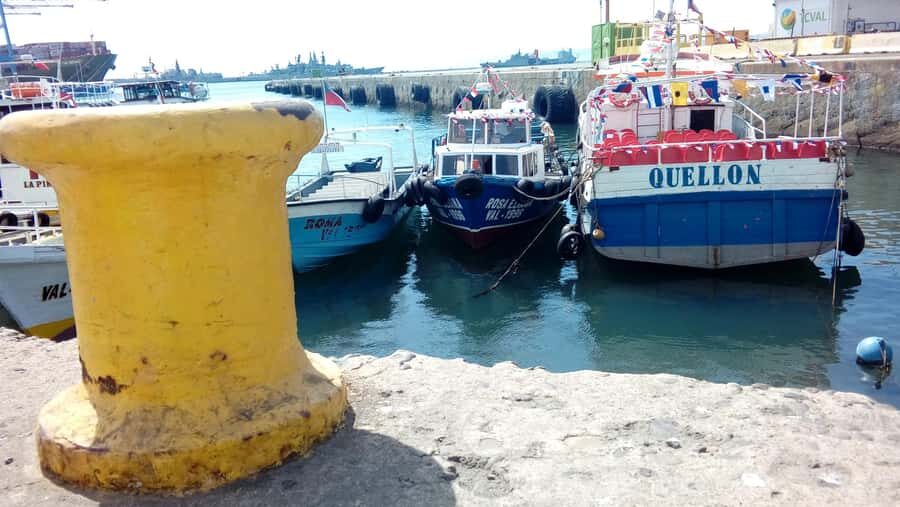
The tour includes a guided stop at the Port of Valparaíso for about ten minutes. Even if you’ve only arrived in town recently, this gives you that essential big-picture moment: Valparaíso isn’t just murals and houses on slopes. It’s a working port city whose view of the bay still shapes daily life.
From there, you head toward Plaza Sotomayor. You’ll look at major landmarks like the monument area and nearby institutions, including the fire department building and the Chilean Navy Headquarters. This is where the hill art makes more sense. Street art here often responds to politics, identity, and community history—and that background tends to start at the coast.
The practical win: you’ll already have a mental map of the bay before you start climbing. That makes later viewpoints feel earned instead of random.
Ascensor El Peral: the funicular ride that turns streets into a viewpoint
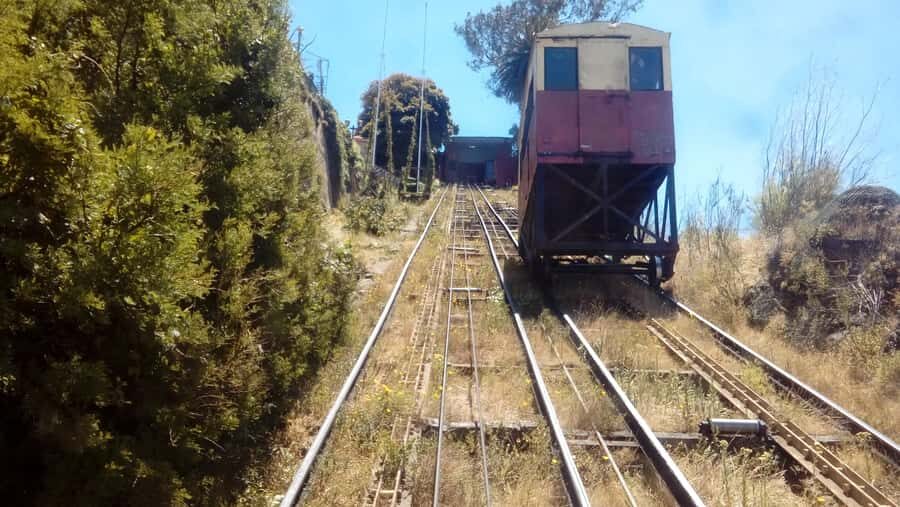
Next comes one of the main reasons people book this kind of tour: the Ascensor El Peral. You’ll ride it as part of the guided experience, and you’ll learn the story of this transport system built in the early twentieth century.
This isn’t just a ride from point A to point B. It’s a slow-moving “pull back the curtain” moment. From the funicular, you get that classic Valparaíso hill view—promenades, colorful houses, and layers of neighborhoods stacked up where roads feel like they were drawn by hand.
Once you reach the hill area, the guide focuses on Cerro Concepción and Cerro Alegre, describing what you’ll see as you walk through narrow streets. In my view, that’s what separates a funicular photo-op from a meaningful tour: you’re not only looking; you’re learning how the city is organized.
One note: even with a funicular helping you along, you’ll still do hill walking. Wear shoes that handle uneven sidewalks without drama.
Cerro Concepción and Cerro Alegre passages: where the street art gets explained
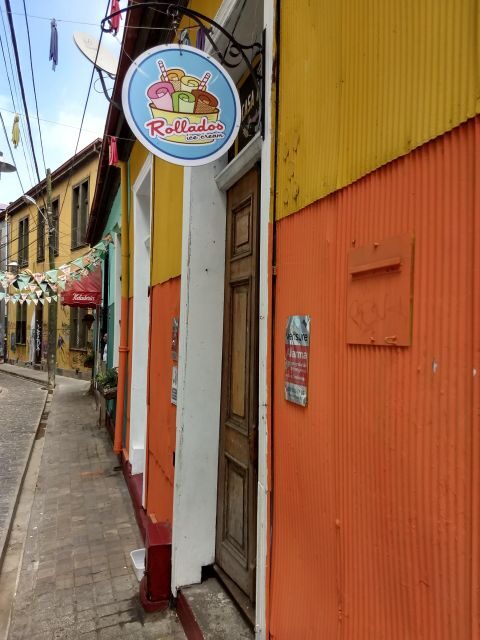
This is the heart of the experience. You’ll move through narrow streets and older areas where the cultural atmosphere of this bohemian city feels immediate—especially when you’re shown how to read the murals as messages, not just visuals.
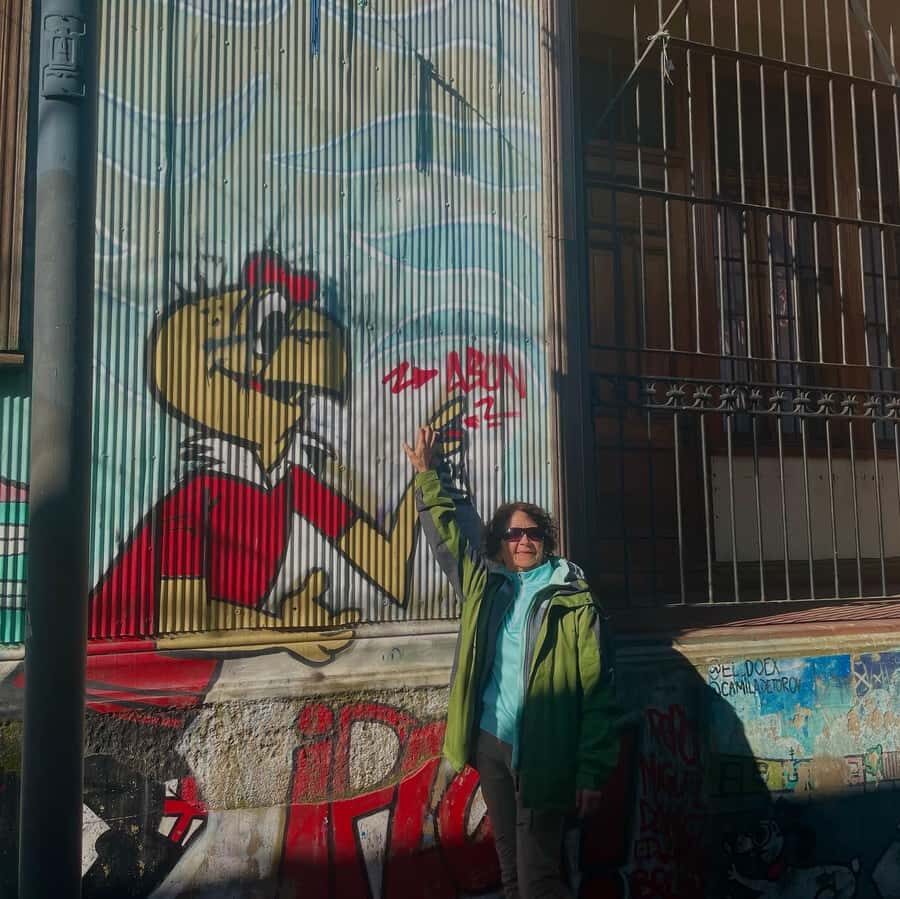
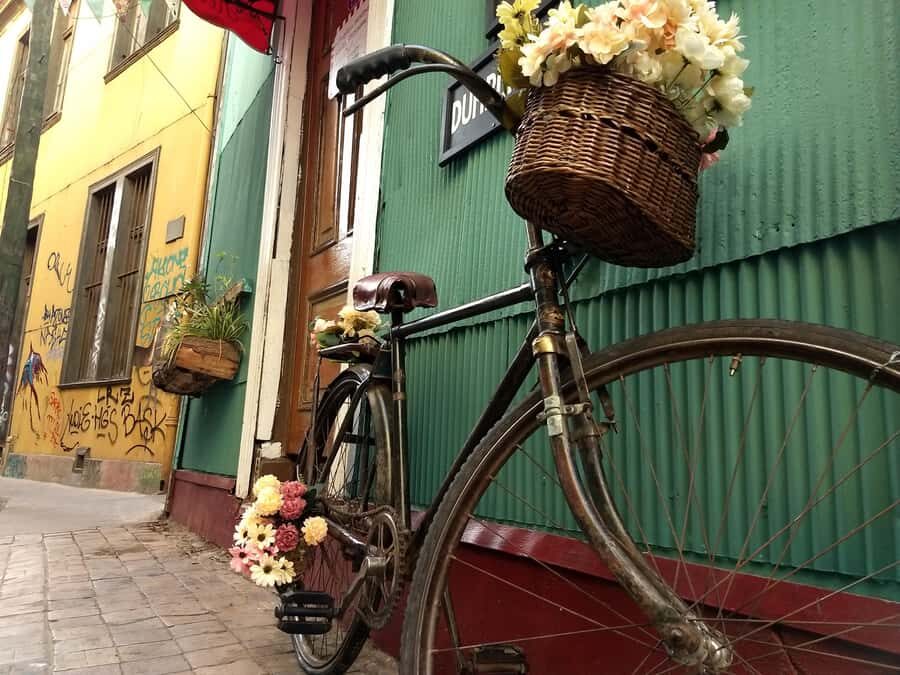
You’ll spend significant time in Pasaje Gálvez, a key street-art corridor. This is where you’ll see a lot of murals up close, with explanations attached to what they show and the social context behind them. People also love this stop because it feels like stepping into an open-air gallery where the walls argue, joke, and speak up.
A few standout points along the way:
- Pasaje Bavestrello: where the area’s Italian heritage shows up in the way the passage reflects shared community life
- The famous stairs connected to Calle 13’s Latinoamérica: bright, colorful, and an easy “Where am I?” photo moment
- A stop at Pasaje Gervasoni and surrounding walkways that keep the pace moving while still showing you the texture of the neighborhoods
What I like is that the tour doesn’t treat street art like a museum display. It treats it like street-level conversation. The tour includes time where the guide talks with local artists (or at least focuses on artists and their work), so you understand why a mural exists beyond aesthetics.
The iconic hill mix: German, Italian, British touches, plus piano stairs

Valparaíso is one of those cities where heritage isn’t hidden—it’s written into the streets. You’ll pass places tied to German, Italian, and British influences, and those sections help you see why the city’s character feels so layered.
You’ll make stops around Paseo Yugoslavo and Pasaje Bavestrello, then continue through the hill network toward Paseo Atkinson. This promenade area gives you the “British heritage” vibe through its houses and gardens. If you’re expecting Valparaíso to look like one single style all the way through, you’ll be pleasantly surprised.
A couple of well-known spots on this stretch:
- Deutsche Schule of Valparaíso: a clear marker of German heritage
- Pastor Theodor Schmidt passage: named for the German pastor linked with the Lutheran church
- Hotel Manoir Atkinson: with a focus on how big walls are handled to resist environmental conditions across seasons
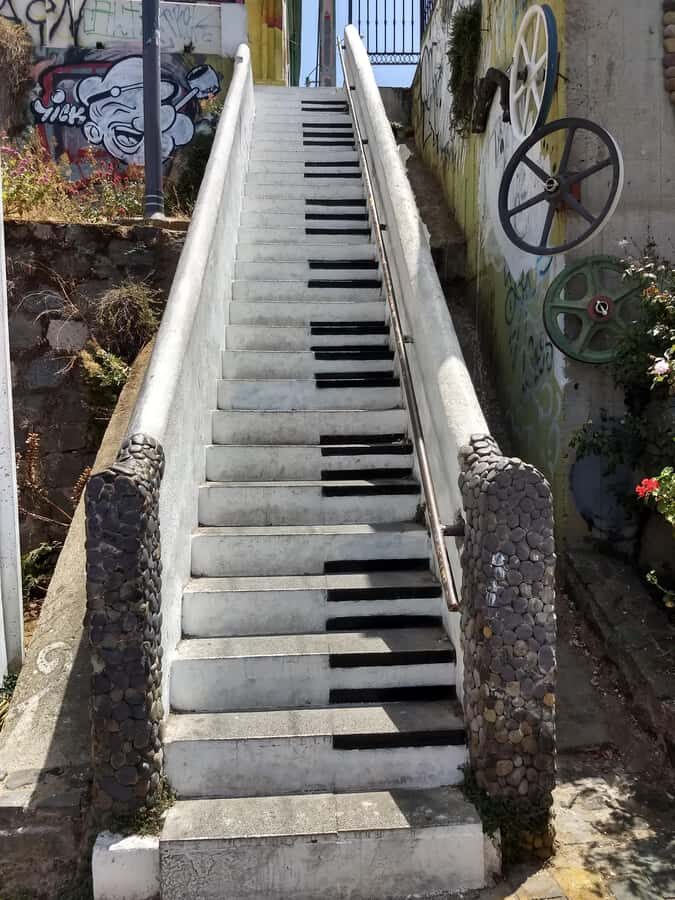
- The Piano Staircase: one of the famous attractions here, and the kind of stop where your phone battery suddenly becomes a real concern
You’ll also see church landmarks such as the Lutheran Church of the Holy Cross (1897) and the Anglican Saint Paul Cathedral. These stops add balance. Street art is loud; religious architecture is steadier. Together, they show you how the hills held community life across different eras.
Then you’ll walk down Paseo Dimalow for views over the hills and more local restaurant info.




Alfajor break and viewpoint food stops: how to use this tour for lunch plans
An alfajor is included, and it’s not just a tiny sweet you barely notice. The point is timing: it gives you a quick energy reset while you’re between viewpoints and murals.
As you move through the route, the guide also helps you connect to local food options. For example, you’ll pass La Concepción, known for a terrace view over the sea. You’ll also hear about Brighton Restaurant, which offers a panoramic viewpoint from its terrace. Even if you don’t stop for a full meal during the tour, these are useful anchors for deciding where to eat afterward.
One practical detail I appreciate: the tour ends with guidance on how to get back, plus suggestions for lunch or dinner. That matters in Valparaíso because the funiculars and steep streets can make solo navigation feel harder than it should.
Ending at Ascensor Reina Victoria: your last panoramic stitch
The tour finishes at Ascensor Reina Victoria. This ending choice is smart because it closes the loop on the funicular theme: you’ll already have ridden El Peral, and now you end with another hillside anchor point. It gives you a clean way to regroup and plan your next move.
If you want one last view before you head to dinner, this is the right moment to linger for photos and then ask the guide what’s the simplest path down.
Price and value for $41: what you’re really paying for in 2 hours
At $41 per person for about two hours, this tour has a clear value logic.
You’re paying for three things that are hard to assemble solo:
- Guided navigation through steep, narrow areas without wasting time
- Interpretation of street art so you don’t miss the meaning
- Funicular access included (the tour includes tickets for the funiculars)
On top of that, you get alfajores included. Not every short Valparaíso tour throws in a snack and funicular rides; some leave you to handle those separately.
What you should budget for: food and drinks beyond the alfajor are not included. If you plan on a full lunch afterward, it’s worth keeping that in mind.
The group format is also flexible: you can find options for private or small groups, which usually helps you move at a comfortable speed.
Who this tour fits best (and who should skip it)
This is a good fit if you want:
- A 2-hour orientation that covers major hill highlights
- A street art walk with explanation and city context
- Funicular rides plus viewpoints without turning your afternoon into a full-day hike
It may not work for:
- Anyone with mobility impairments (the route includes hill walking and stairs)
- People who are pregnant
- Anyone dealing with altitude sickness
Even though some descriptions emphasize that it’s not physically demanding, the reality is Valparaíso is built on slopes. If stairs make you miserable, choose carefully.
Should you book this Valparaíso street art and funicular tour?
I’d book it if you want an afternoon that feels like learning and sightseeing at the same time. This route is built for orientation: port first, then hills, then funiculars, then street art with stories you can follow. And because funicular tickets and alfajores are included, it’s one of those “short time, strong payoff” deals.
If you’re the type who loves photos but hates vague explanations, you’ll probably enjoy this more than a generic walk. The strongest reviews mention guides with great local connections—people named Alex, Benjamin, Grex, Cristóbal, Maria, and Romina were praised for guiding at a pace that works, plus using old photos to compare the city over time.
One last deciding question for you: do you want to understand what you’re seeing? If yes, this is a very efficient way to do it in Valparaíso.
FAQ
How long is the tour?
The tour lasts about 2 hours.
Where does the tour start?
You’ll meet at Muelle Prat near the two cannons (around the Tourist Information Office area).
Where does the tour end?
The tour ends at Ascensor Reina Victoria.
What’s included in the price?
The tour includes funicular tickets and alfajores.
Are food and drinks included?
No. Additional food and drinks are not included.
What languages is the tour offered in?
The live guide is available in English, Chinese, French, and Portuguese.
Is the tour suitable for mobility impairments or pregnancy?
No. It’s listed as not suitable for people with mobility impairments and not suitable for pregnant women.
Is there free cancellation?
Yes. You can cancel up to 24 hours in advance for a full refund.