REVIEW · VALPARAISO
Walking Tour Valparaiso, History & Art – Private Optional
Book on Viator →Operated by Jurassic Tour Logistics · Bookable on Viator
Valparaíso has stories painted into its streets. This history-and-art walking tour connects murals and plazas to the people and events behind them, so the city feels less random and more meaningful. You’ll follow a route through iconic hill neighborhoods and key public spaces, with time to pause and take it in.
What I like most is how the tour uses big historical names as a map through the city. You start with Juan de Saavedra, then move through plazas tied to Aníbal Pinto and Carlos Condell, and finish at a sailors’ monument honoring Arturo Prat and Rafael Sotomayor. Second, the format is practical for a short visit: about 2 to 3 hours of walking, with viewpoints and a built-in stop at Empanaderia 190 Varieties for rest and bathrooms.
One thing to consider: there have been reports of cancellations or late changes close to the start time, especially around busy periods. If your schedule is tight, it’s smart to double-check your message day-of and have a backup plan.
In This Review
- Key things to know before you go
- How this Valparaiso tour turns murals into a story
- Starting at Condell 1154, then building context fast
- Plaza Aníbal Pinto and the Fountain of Neptune stop the walk in a good way
- Hills and neighborhoods: where viewpoints do half the explaining
- The sailors’ monument: Arturo Prat and Rafael Sotomayor bring the ending home
- The practical “pause point” at Empanaderia 190 Varieties
- Guide quality: strong English, local humor, and real city fluency
- Price and value for a short, high-impact route
- Pacing, walking comfort, and what to bring
- When plans change: cancellations and guide no-shows to watch for
- Who should book this tour
- Should you book Walking Tour Valparaíso, History & Art – Private Optional?
- FAQ
- How long is the Valparaiso History & Art walking tour?
- What is the price per person?
- Where do you meet and where does the tour end?
- Is there a bathroom or rest stop during the tour?
- Are service animals allowed?
- How big can the tour group be?
Key things to know before you go
- Stories attached to places: Juan de Saavedra, Aníbal Pinto, Carlos Condell, Arturo Prat, and Rafael Sotomayor shape what you see.
- Plaza Aníbal Pinto details: the plaza sits on land reclaimed from the sea, plus you can spot the Fountain of Neptune.
- Viewpoint time in the hills: the route moves through neighborhoods where you’ll look out over Valparaíso, not just walk past walls.
- A real break built in: Empanaderia 190 Varieties includes about 20 minutes for bathrooms and resting.
- Guide energy matters: past guides named Amari, John, Gonzalo, Geans, and Phillip were praised for strong English and lively storytelling.
- Short city window friendly: in a few hours you get a lot of city “shape,” especially if you’re new to Valparaíso.
How this Valparaiso tour turns murals into a story
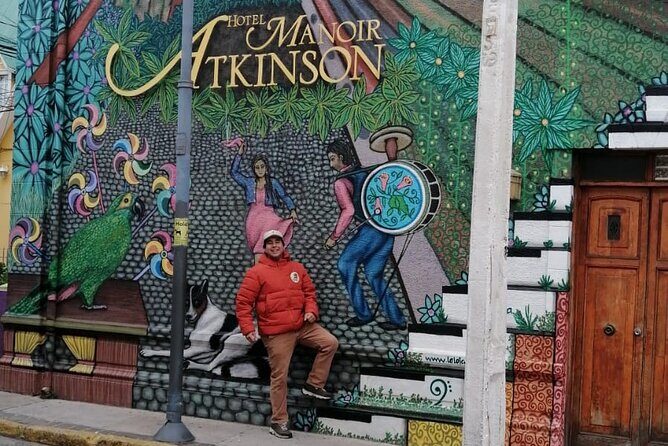
Valparaíso can be overwhelming in a good way. Color everywhere, steep lanes, and murals stacked like layers. The challenge is knowing what you’re looking at and why certain walls matter. This walking tour’s core strength is that it gives you a thread to hold onto.
Instead of treating street art like a random gallery, the guide ties artwork and architecture to the cultural context of the city. You learn the names behind the monuments, why particular plazas exist, and how the sea, wars, and local heroes connect to what you’re seeing today. The effect is simple: the city clicks faster.
The tour is also a good length for realistic pacing. At roughly 2 to 3 hours, you get enough stops to learn and look around, but you’re not trapped for an entire day. That matters in Valparaíso, where hills and steps add up fast.
You can also read our reviews of more walking tours in Valparaiso


Starting at Condell 1154, then building context fast

The meeting point is Condell 1154, Valparaíso, Chile, and the tour ends at Muelle PratErrázuriz, Valparaíso, Chile. The first part of the walk is about orientation. You’re not thrown straight onto the steepest lanes without context.
It starts with historical information about Valparaíso and its cultural characters, beginning with Juan de Saavedra. Even if you’re not a history person, that early setup helps you understand why the city developed the way it did, and why local pride shows up so strongly in public spaces and artwork.
This is the moment where a good guide earns their fee. The tour works best when you treat it like a guided “map in your head,” not just a photo walk. When the guide links people and events to specific places, you start noticing details you’d miss alone.
Plaza Aníbal Pinto and the Fountain of Neptune stop the walk in a good way
One of the most concrete, visual parts of the route is Plaza Aníbal Pinto. Here you connect two more historical figures—Aníbal Pinto and Carlos Condell—to a specific physical setting.
The plaza is built on land reclaimed from the sea. That’s not just a fun fact; it’s a clue to how Valparaíso changed around maritime life. When you understand the sea-and-city connection, it’s easier to read the city’s pride and symbolism elsewhere on the tour.
You can also observe the Fountain of Neptune. Neptune works well as a “anchor detail” because it’s memorable. You look at a single object, then the guide explains what the plaza represents and why the setting matters. This is the kind of stop that makes the rest of the walk more rewarding because you’ve learned how the guide will interpret what you see.
Hills and neighborhoods: where viewpoints do half the explaining
After the plaza section, the tour shifts into the parts of Valparaíso that make you slow down automatically: hills, lanes, and neighborhoods where the city opens up.
You’ll visit a part of Valparaíso’s hills and get historical information plus cultural context. This is where you learn that the steep geography isn’t just scenery—it shaped routes, communities, and the way people put identity on walls.
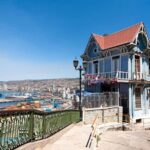
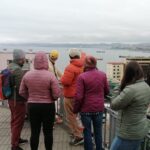
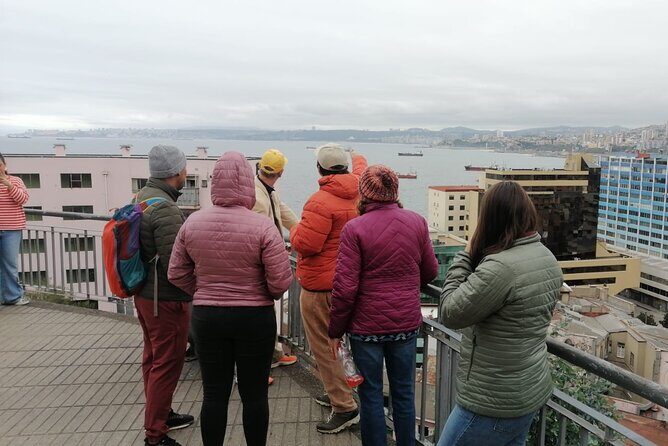
Then you’ll move toward another important neighborhood and pass by viewpoints. The value here is not only the view, but the way you get to compare what you saw earlier in flatter public spaces with what unfolds uphill. From these lookouts, you can often spot how streets, architecture, and art spread across the slopes.
A practical note: walking tours in Valparaíso mean real stairs and uneven ground. The route is listed as doable for most travelers, but pace yourself. Wear shoes with traction, especially if you’re there after rain or near the end of the day.
The sailors’ monument: Arturo Prat and Rafael Sotomayor bring the ending home
The last major storytelling stop focuses on two very important people: Arturo Prat and Rafael Sotomayor. The highlight is a monument in a square honoring Chilean sailors who fell during the Battle of Iquique and the Battle of Punta Gruesa.
This ending works because it gathers themes from earlier. You started with historical characters and learned how the sea, national identity, and civic spaces shape the city’s symbolism. At this monument, the story becomes more direct and emotional, and the city’s pride becomes harder to miss.
If you like history that’s tied to a specific place (not just dates in a book), this stop is one of the reasons people feel the tour is worth doing in a short window. It gives meaning to the formality of the monument and the way Valparaíso honors its heroes in public.
You can also read our reviews of more private tours in Valparaiso


The practical “pause point” at Empanaderia 190 Varieties
About 20 minutes into the route, you’ll stop at Empanaderia 190 Varieties. This is labeled as a place to rest and use the bathrooms, and the admission ticket for this stop is free.
Even when you’re excited to keep walking, Valparaíso can wear you down fast. That break is genuinely useful. I like tours that treat rest as part of the experience instead of assuming everyone is fine to power through.
It also gives you a small reset between hill segments. If you want to try an empanada or a drink, this is often the moment to do it. Just note the stop is there for rest and bathrooms; how long you spend eating can vary depending on the group and the guide’s pacing.
Guide quality: strong English, local humor, and real city fluency
What really lifts this tour is the guide. Several people have praised guides by name—Amari, John, Gonzalo, Geans, and Phillip—for being upbeat and for connecting art to the city’s everyday life.
Some guides are praised for very good English and for telling stories with humor. That’s not fluff. When language is clear and the guide can explain context without rushing, you actually absorb what you’re seeing. And if you want your photos to come with meaning, a good storyteller helps you know what matters.
On at least some departures, guides have also mentioned extra touches like a funicular ride and a taste of pisco sour, plus stopping near shops. Those add-ons aren’t guaranteed from the basic schedule alone, but they’re consistent with the tour style: mix viewpoints, street art, and a slice of local routine.
Price and value for a short, high-impact route
The price is $42.05 per person, with the tour lasting about 2 to 3 hours. That’s not the cheapest walking tour in the world, but it’s also not trying to be a full-day project.
Here’s the value logic: in a condensed timeframe, you get a curated route through multiple neighborhoods, plus guided interpretation of major historical characters and monuments. If you’re visiting Valparaíso for a day or two, that kind of guidance can save you time searching for context on your own.
Also, the tour includes a built-in rest and bathroom stop at Empanaderia 190 Varieties. Small thing, big practical payoff. When you’re paying for a short outing, you want it to feel efficient without cutting corners on comfort.
If you’re planning to do other Valparaíso activities too, this works as a strong “first city pass.” You’ll leave with a mental framework that makes the murals and viewpoints you see later feel more intentional.
Pacing, walking comfort, and what to bring
This is a walking tour, and Valparaíso is hilly. Even if most people can participate, you should plan like there will be stairs and uneven pavement.
I suggest:
- Comfortable, grippy shoes for slopes and steps
- Water (you’ll thank yourself)
- Layers, because coastal weather shifts
- A phone with enough battery for photos and maps
If you’re someone who hates slow walking, tell the guide early. One guide has been described as adapting the route to the group’s preferences, and that’s often the difference between a tour that feels like a march and one that feels like a stroll with purpose.
When plans change: cancellations and guide no-shows to watch for
No travel review is complete without the awkward part. There are reports of cancellations very close to departure time, and one account described a guide not arriving and difficulty reaching the operator right then.
This doesn’t mean it happens constantly, but it’s enough to be cautious. If your day depends on the tour, use a simple safeguard: confirm the status near departure time, and keep your contact information handy for the day-of.
Busy holidays seem to be a trigger in at least one case. If you’re visiting around major local dates, keep your expectations flexible.
Who should book this tour
I think this tour is a great fit if:
- You want Valparaíso history and art connected into one walk
- You have only a half-day or short time window
- You prefer guided context over wandering without a plan
- You like monuments, named heroes, and meaning behind public spaces
You might skip it if:
- You strongly dislike walking up and down hills
- You need a perfectly guaranteed start time with no wiggle room
- You’re only looking for street-art photos and want no historical context
Should you book Walking Tour Valparaíso, History & Art – Private Optional?
If you want an efficient introduction to Valparaíso that helps you understand why the city looks the way it does, I’d book it. The route hits key story locations—Juan de Saavedra to Aníbal Pinto and Carlos Condell at Plaza Aníbal Pinto, then onward to hills and viewpoints, and finally the sailors’ memorial with Arturo Prat and Rafael Sotomayor.
My main decision factor would be your schedule. If you can handle the occasional last-minute change and you’re ready for real walking, the $42.05 price becomes much easier to justify for what you get in a few hours. If you’re on a tight clock or traveling during high-demand periods, do a quick day-of check before you head over to Condell 1154.
FAQ
How long is the Valparaiso History & Art walking tour?
It runs about 2 to 3 hours, depending on the pace of the group and the time spent at each stop.
What is the price per person?
The price listed is $42.05 per person.
Where do you meet and where does the tour end?
The tour starts at Condell 1154, Valparaíso, Chile, and ends at Muelle PratErrázuriz, Valparaíso, Chile.
Is there a bathroom or rest stop during the tour?
Yes. The tour includes a stop at Empanaderia 190 Varieties for about 20 minutes, marked as a resting place and with bathrooms.
Are service animals allowed?
Yes, service animals are allowed.
How big can the tour group be?
The tour/activity has a maximum of 999 travelers. (That doesn’t tell you the exact group size on your day, but it sets the upper limit.)