REVIEW · VALPARAISO
2 Hour Walking Tour in Valparaiso
Book on Viator →Operated by Urbantours Chile · Bookable on Viator
Valparaíso hits fast. This 2-hour-plus walking route strings together iconic lifts, street art, and landmark churches so you get your bearings without wasting time. You move through hilltop viewpoints and old streets that feel like an open-air gallery, with a guide who keeps the story flowing from stop to stop.
I love that the stops are easy on your wallet: admission is free at each featured site. I also love the variety: you’ll see street-level promenades and big architectural moments, plus those Valparaíso elevators that make the city make sense.
The only real catch is pace and footing. Valparaíso is steep, so you’ll want comfortable shoes and you’ll appreciate the guide’s habit of keeping you moving safely.
In This Review
- Key things to know before you go
- Valparaíso makes sense when you walk it
- Price and logistics: what $35 buys you
- Plaza Aníbal Pinto and the Reina Victoria lift
- Paseo Dimalow: the promenade that sets the mood
- Churches that explain the city: San Pablo and Santa Cruz
- Paseo Atkinson: the viewpoint walk you’ll remember
- Paseo Gálvez and Bavestrello: color, street art, and small passages
- Paseo Yugoslavo and Palacio Baburizza: culture on the move
- Ascensor El Peral and Plaza Sotomayor: finishing near the port
- The guides: how they turn a walk into a real orientation
- Comfort checklist: so you enjoy it, not just survive it
- Who should book this Valparaíso intro walk
- Should you book it?
- FAQ
- How long is the tour?
- How much does it cost?
- Are there admission fees for the stops?
- Where do I start and where do I end?
- How big is the group?
- Is free cancellation available?
Key things to know before you go
- Free tickets at every featured stop keeps the tour feeling good value.
- Two elevator rides (including Queen Victoria) add a classic Valparaíso rhythm to the walk.
- Street art-focused route means you’re not just sightseeing buildings—you’re reading the city’s walls.
- Small group size (max 20) makes it easier to hear your guide and stay together.
- Ends near the port so you can keep exploring right after the tour.
- English skills are a recurring plus in guide feedback, including strong English from multiple guides.
Valparaíso makes sense when you walk it
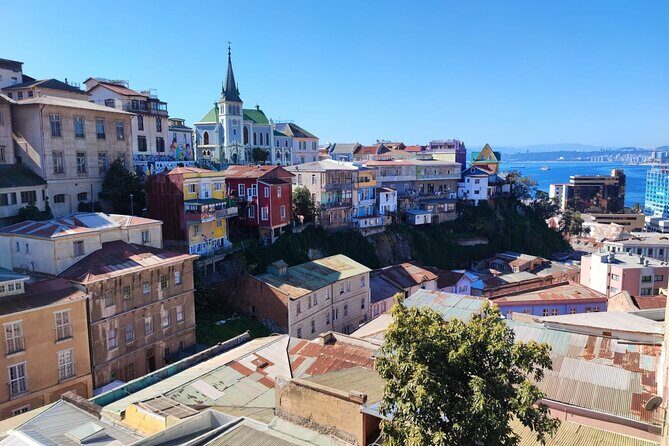
Valparaíso is one of those places where a map alone won’t help. The streets climb, the views pop out at weird angles, and the best details hide in small corners. A walking tour like this works because it gives you a simple path through the mess—then layers in context so the art and architecture start to feel connected, not random.
You’ll get a route that’s built around recognizable landmarks and the city’s signature forms of movement: the pedestrian promenades, the hillside outlooks, and the historic ascensores (elevators) that turn steep terrain into a manageable stroll. Even if you’ve seen photos, being on the ground is a different story. It’s color, texture, and craft—plus the little bits of local life you only notice when you’re close enough.
And since the route is about 2 hours 15 minutes, it’s long enough to feel like a real introduction but short enough that you don’t feel stuck in “tour mode” all day.
You can also read our reviews of more walking tours in Valparaiso


Price and logistics: what $35 buys you
At $35 per person, this tour is priced for people who want real orientation. The biggest value lever here is that everything listed is free to enter—so you’re not paying extra at each stop. That matters in Valparaíso, because once you start adding museums and attractions, costs can creep up fast.
The tour runs with a maximum of 20 people. That’s not huge, and it helps with one practical thing: keeping the group together on uneven streets and stairs. You’ll also start at Plaza Aníbal Pinto and finish at Cochrane 607, close to the port area, where you can continue on your own without having to backtrack.
It also helps that the meeting location is near public transportation. In a city like this, where transit options matter, that reduces stress. You can plan around the tour rather than feeling like you have to “win the day” before it even starts.
Plaza Aníbal Pinto and the Reina Victoria lift
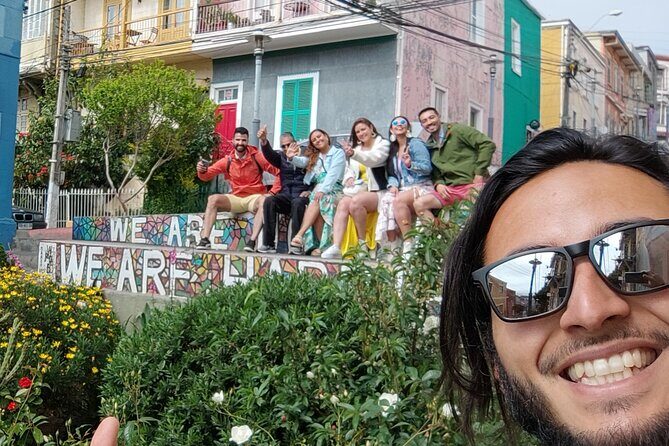
Your morning begins at Plaza Aníbal Pinto, a natural starting point that sets the tone. From here, you’re already in the thick of Valparaíso’s energy. It’s the kind of place where you can look around and quickly understand why the city is famous: hills, stairs, and that constant sense of “something is around the corner.”
Soon after, the tour shifts into one of Valparaíso’s most useful inventions: the Ascensor Reina Victoria. Riding a lift here isn’t just a ride. It’s a shortcut through the steep geography—plus a small cultural moment. Those elevators are part of how Valparaíso functions, not just a photo prop. You’re seeing the city’s engineering and its street-level reality in one go.
Even if you’ve done elevators in other cities, this one tends to land differently because of the surrounding texture. You’re moving through a neighborhood where the street art and architecture are close enough to feel personal.
Paseo Dimalow: the promenade that sets the mood
After the lift moment, you transition into Paseo Dimalow—a classic Valparaíso promenade. This stretch is where the city starts to feel like a walkable museum of small scenes. You’re not stuck staring up at buildings from far away. You’re moving along the line where the streets meet the bay-side energy.
This part of the tour is especially good for first-time visitors because it teaches your eye how to look. You’ll start noticing composition: where color clusters, how murals relate to doorways and stair landings, and how each viewpoint frames the hills.
It’s only a brief stop, but it works like a warm-up. You’ll be ready for the heavier history and the church architecture that comes next.
Churches that explain the city: San Pablo and Santa Cruz
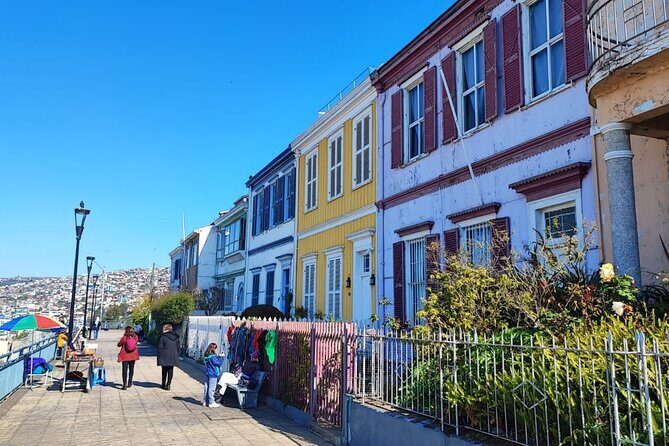
Valparaíso’s story isn’t only street art. The route includes two churches that add a different kind of meaning.
First is Iglesia Anglicana San Pablo, noted as the first Anglican church in South America. That makes it more than a pretty landmark. It’s a marker of how ideas moved and settled in Chile, and it adds an early-in-time layer to the city’s mix.
Then you move to Iglesia Luterana de La Santa Cruz de Valparaiso, described as a classic national monument. In practice, this stop gives you something concrete: architecture that signals permanence in a city that can feel temporary and improvised from street level. National monument status also means this isn’t just a neighborhood building—this is a recognized part of Chile’s cultural map.
You don’t need to be religious to appreciate these places. What you’re really learning is how Valparaíso grew into a place where different communities built their own landmarks, and those landmarks now sit side-by-side with the city’s art life.


Paseo Atkinson: the viewpoint walk you’ll remember
Next comes Paseo Atkinson, one of the best kinds of stops for the first visit: a pedestrian stretch with a view over the bay. This is where the walk starts to feel like a reward.
When you’re in Valparaíso, the bay is always nearby, even if you can’t see it for a few streets. Atkinson helps you connect the urban maze to the geography that made the city important. You start understanding the hills not as obstacles, but as vantage points.
This is also where you’ll appreciate the structure of the tour. You’re not just wandering—you’re reaching viewpoints in the order that keeps your energy steady and your photos worthwhile.
Paseo Gálvez and Bavestrello: color, street art, and small passages
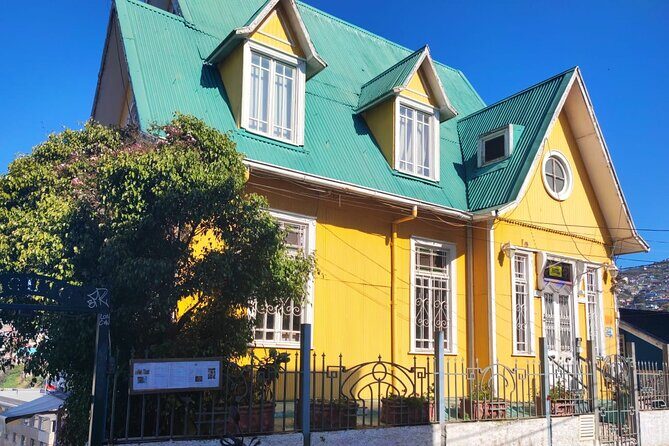
The tour then leans hard into what Valparaíso does best: street art and color.
Paseo Gálvez is one of those corners where the walls tell stories fast. It’s described as one of the city’s most colorful areas, with lots of murals and street art. This stop is great for learning to look. You start noticing how street art isn’t random decoration—it often responds to the neighborhood’s identity and the mood of the street.
From there you move to Bavestrello, a patrimonial passage. Passages like this matter because they show Valparaíso at human scale. Instead of big “tour stops,” you’re seeing the city as it behaves between major streets: narrow, textured, and full of small details.
If you’re worried you’ll get tired of walking between photo spots, this is a smart break from that pattern. It’s the kind of area where you can slow down and just absorb the visuals while your guide keeps the thread of the story intact.
Paseo Yugoslavo and Palacio Baburizza: culture on the move
Then comes Paseo Yugoslavo, described as a boulevard walk. This stop helps connect the art-and-hills vibe to the city’s broader layout. It’s another reminder that Valparaíso isn’t only steep alleys and murals—it’s a lived-in city with routes, corridors, and neighborhoods.
Right after that, you hit Palacio Baburizza, home to the Museum of Fine Arts. Even though the stop is short, it gives you a helpful shift in gears. Street art is the headline in Valparaíso, but a fine-arts museum adds perspective. It shows you there’s a long cultural thread here—people have been collecting, displaying, and shaping public taste in Valparaíso for generations.
This is also a good time to let your brain reset. You’ve been walking and visually scanning for a while. A museum setting, even for a brief look, helps you reframe what you’re seeing outside.
Ascensor El Peral and Plaza Sotomayor: finishing near the port
To close out the tour, you ride Ascensor El Peral, going down a classic elevator. That ending move is smart because it changes the feel of the walk. You’re finishing the hillside navigation with a real change in elevation, not just another step-by-step climb or descent.
Finally, you arrive at Plaza Sotomayor, a unique historical site. This is where the city’s maritime connection becomes obvious. You’re ending near the port area, close to where many day plans naturally continue—food, viewpoints, or another walk.
It’s a strong finish for two reasons. One: you’re not stranded in the hills. Two: you can easily keep exploring without losing time backtracking to your start.
The guides: how they turn a walk into a real orientation
The best part of this tour isn’t only the sights—it’s how the route comes alive in the guide’s hands.
Several guides have been singled out for being attentive, with strong English skills and a sense of local flavor. One guide in particular—Joaquin—is described as cautious, with visitors feeling safer than if they wandered on their own. That’s not a small detail in Valparaíso, where the streets and steps can feel like a puzzle.
Guides also tend to explain what you’re looking at instead of treating each stop as a quick checkpoint. When you understand why the street art appears where it does, and what a landmark like the Anglicana church represents, the city stops feeling like scenery and starts feeling like a place with logic.
One practical tip that comes up in feedback: stop for a bite when the moment fits. If your guide recommends an empanada break, take it. It’s the kind of low-effort local snack that makes the whole walk feel more real.
Comfort checklist: so you enjoy it, not just survive it
This is a walking tour through a city made for foot traffic—but not all feet are built the same. Plan like you’re tackling hills.
Bring:
- Comfortable, grippy shoes (stairs and slopes are part of the deal)
- A small water bottle or drink you can manage during the day
- Sun protection if you’re going in bright weather
Also, be ready for lots of short segments. The tour is structured with multiple stops, so your best strategy is to keep your attention flexible: a lift ride, a promenade, a church, a view, then street art again. If you like variety in small doses, this fits you well.
Who should book this Valparaíso intro walk
You’ll likely love this tour if:
- You’re visiting Valparaíso for the first time and want a clear starting route
- You care about street art with context, not just photo ops
- You want to see the city’s elevator culture and major landmarks without adding ticket costs
- You prefer a smaller group (max 20) where it’s easier to hear and stay together
You might skip it if you want a long, slow, open-ended wandering day. This tour is designed to cover a lot in a set window, so it’s more efficient than it is leisurely.
Should you book it?
If you want a smart, value-packed introduction to Valparaíso, I’d book this. For $35, the free entry stops, the two elevator experiences, and the blend of views, promenades, churches, and street art give you a foundation you can build on afterward.
The main “make or break” factor is how comfortable you are with walking in a hilly old city. If your feet and shoes are ready, you’ll come away with a much better sense of where things are and what to chase next on your own.
FAQ
How long is the tour?
The walking tour lasts about 2 hours 15 minutes.
How much does it cost?
It costs $35.00 per person.
Are there admission fees for the stops?
No. The provided details say admission tickets are free for the featured stops.
Where do I start and where do I end?
You start at Plaza Aníbal Pinto and end at Cochrane 607, 2340000 Valparaíso near the port area.
How big is the group?
The tour has a maximum size of 20 travelers.
Is free cancellation available?
Yes. You can cancel for a full refund if you cancel up to 24 hours in advance.
If you want, tell me your travel month and your walking comfort level, and I’ll suggest a good follow-up plan after the tour ends near the port.