REVIEW · PUNTA ARENAS
Private Torres del Paine & Milodon, departing from Punta Arenas
Book on Viator →Operated by Amigos Patagonia · Bookable on Viator
Waking up early is worth it in Patagonia. This private outing strings together two big-name stops—Milodon Cave and Torres del Paine—so you can hit the highlights even with limited time. You get a guide to translate the geology, wildlife, and history into something you can actually use while you’re standing there looking at it.
I especially like two things: the private, air-conditioned ride with Wi-Fi (a real stress saver on a long day), and the way the day feels custom—slower pace for photo stops, plus a guide who can answer questions in clear English.
One thing to consider: it’s a long haul from Punta Arenas, so you’ll spend a big chunk of the day on the road. If you’re prone to motion sickness or you want an easy “no-driving” itinerary, this probably won’t match your style.
In This Review
- Key Things That Make This Tour Work
- Punta Arenas to Patagonia: The Real Value of a Private Day
- Milodon Cave Natural Monument: Pre-Paine Patagonia in 45 Minutes
- Torres del Paine National Park Entry: Early Hours, Best Chance
- Lake Pehoé and Salto Grande: The Walk That Pays Off
- Nordenskjold Lake: Deep Blue Views Without the Hassle
- Laguna Amarga: A Small Stop With Big Peak Reflections
- Cerro Castillo Coffee Stop: Comfort Break in the Middle of the Long Day
- Wildlife Chances: What You’re Most Likely to See
- The Guides and Drivers: Why English Matters Here
- Lunch and What’s Included (and Not)
- Timing Reality: A 12 to 14 Hour Day From Punta Arenas
- Price and Logistics: Does $554.17 Feel Fair?
- Should You Book This Torres del Paine + Milodon Day?
- FAQ
- What time does the tour start?
- How long is the experience?
- Where does the tour depart from and return to?
- What are the main stops on the day?
- What walking is involved inside Torres del Paine?
- What’s included in the price?
- Is Wi-Fi available during the drive?
- What should I bring for food?
- Will the tour run in bad weather?
- Is this suitable for cruise ship travelers?
Key Things That Make This Tour Work
- Private guide + private vehicle: less waiting, fewer crowds, and more flexibility.
- Milodon Cave first: a quick Patagonia science lesson before the big scenery.
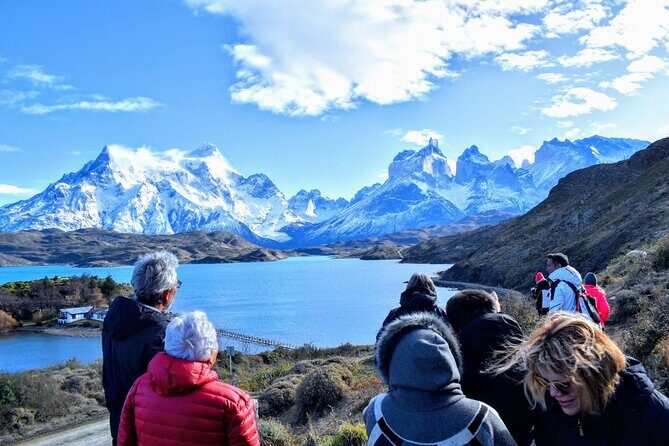
- Torres del Paine at multiple viewpoints: lakes, waterfalls, and peak angles in one day.
- Wildlife spotting help: guanacos, ñandú, condors, and a chance at pumas.
- Real pacing for your body: multiple stops and a guide who adjusts for different speeds.
Punta Arenas to Patagonia: The Real Value of a Private Day
This is the kind of tour that makes sense when you’re trying to “do it all” without feeling wrecked. The distance from Punta Arenas to Torres del Paine is significant, so the value isn’t only the destination—it’s how you’re transported and explained along the way.
A private tour cuts down the usual pain points: no crowd herding, no awkward timing, and fewer moments where you’re just standing around waiting for everyone else. Plus, the vehicle is air-conditioned with Wi-Fi, which is a small detail that feels huge when the day stretches into a marathon.
And the best part? You’re not just getting dropped at a couple of scenic pull-offs. You’re getting interpretation—geology, glacial history, wildlife behavior, and local culture—so the park stops become understandable, not just pretty.
You can also read our reviews of more private tours in Punta Arenas
Milodon Cave Natural Monument: Pre-Paine Patagonia in 45 Minutes
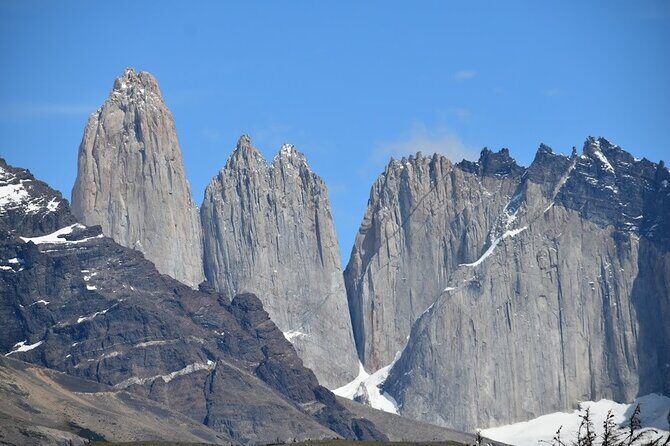
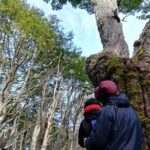
Before Torres del Paine, you stop at the Mylodon Cave Natural Monument. It’s a smart start because it gives context for what you’re about to see.
The story: in 1895, remains of a prehistoric animal were found here. Today, there’s a replica of the mammal and detailed information about how the cave formed through glacial processes. Even if you’re not the type who reads every sign, it helps you “get” the big picture of Patagonia—ice, erosion, and time doing their slow work.
What I like for practical reasons: the cave stop is short enough that you stay energized. And it’s the kind of place where an English-speaking guide can point out what matters without turning it into a lecture.
Possible drawback: if you expected Torres del Paine-style walking right away, this is more of an interpretive stop. It’s a must-do if you like understanding the land, but it’s not a hike.
Torres del Paine National Park Entry: Early Hours, Best Chance
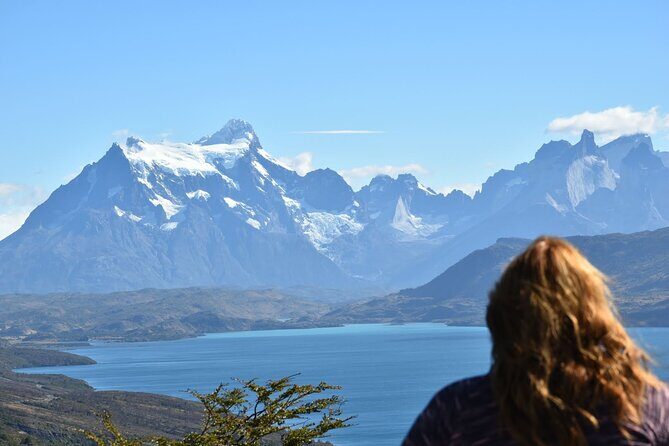
After the drive, you head into Torres del Paine National Park. In one day, you’re not “doing the whole park.” You’re hitting the highlights from the best angles and stopping where photos and wildlife sightings are most likely.
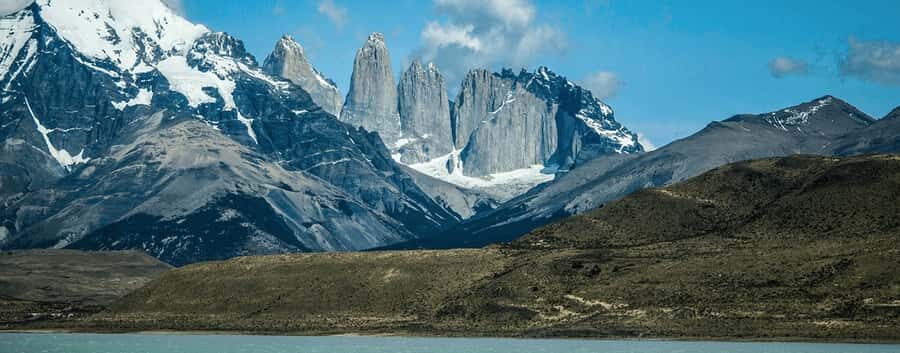
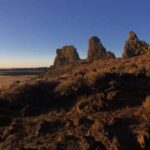
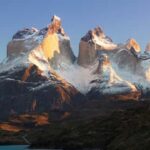
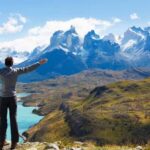
Most people come for the iconic views, especially the famous towers and the dramatic rocky silhouettes around them. Here, you’ll also get viewpoints as you approach—places that frame the Torres del Paine, the Cuernos del Paine, and views tied to the Paine massif.
In winter or shoulder seasons, conditions can be changeable and windy. The tour runs in all weather conditions, so dressing for Patagonia matters more than getting your hopes up for perfect skies.
Lake Pehoé and Salto Grande: The Walk That Pays Off
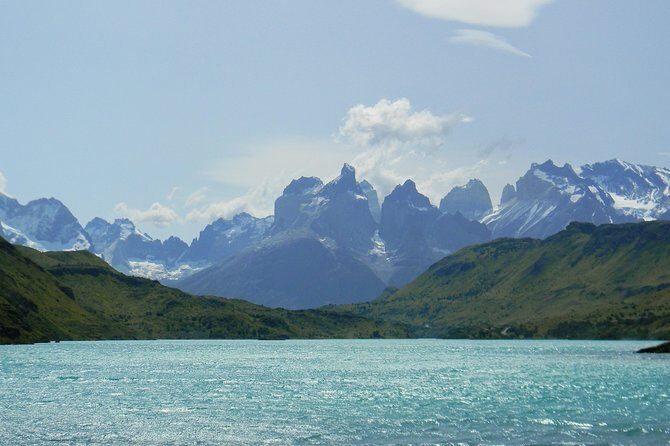
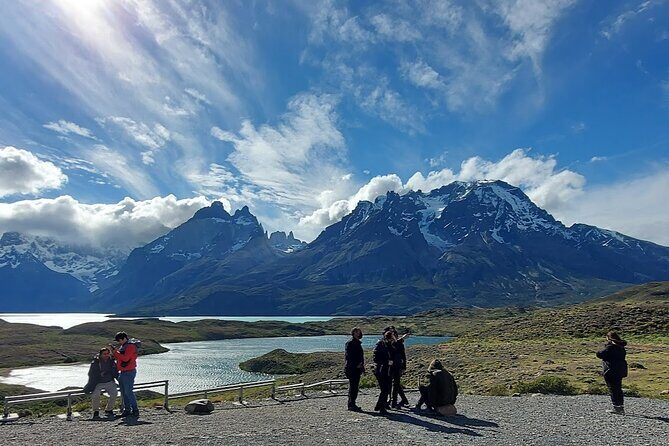
Inside the park, you get time at Lake Pehoé. This is where the “turquoise lake” reputation shows up for real. The lake and nearby views also set you up for what Torres del Paine is famous for: ice-covered mountains, steep walls, and the sense of scale you can’t really capture from a moving car.
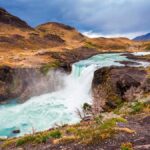
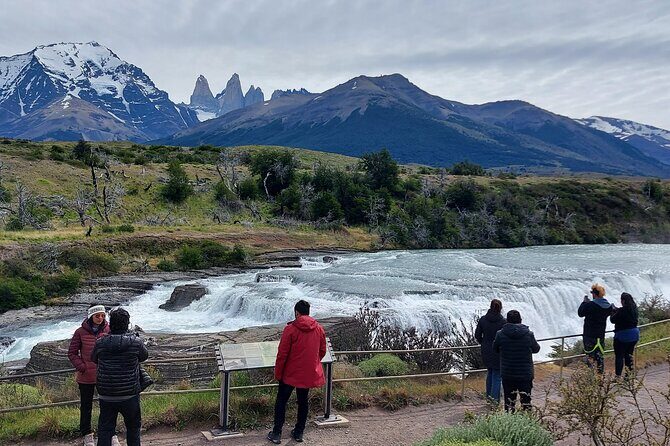
You’ll also make a walk to get closer to Salto Grande. The itinerary notes a 15-minute walk for proximity to the waterfall area, timed inside a longer park stop (around 1 hour 30 minutes).
Why this stop is worth it: a walk here changes the day. It breaks up the driving, gives you a chance to hear water in the wind, and lets you see the area in a more grounded way than just standing at viewpoints.
What to watch for: wind. Even when the weather looks calm, Patagonia can slap you with strong gusts around lakes. Bring layers you can adjust fast.
Nordenskjold Lake: Deep Blue Views Without the Hassle

Next up is Lake Nordenskjold, another glacial lake inside the park. This one is known for its deep blue tone, and the context matters: it’s fed by the Paine River, tied to melting ice from the Paine massif.
The stop is short—about 10 minutes—so this isn’t the place to expect a long, lingering stroll. It’s a quick photo-and-look stop, designed to stack the day’s highlights efficiently.
When this shines: if visibility is good, those few minutes can deliver a strong payoff. If conditions are rough, the guide’s job becomes more about choosing angles that still work.
Laguna Amarga: A Small Stop With Big Peak Reflections
Then you reach Laguna Amarga, the “Bitter Lagoon.” The name can sound a little dramatic, but the point is the contrast: calm water against rugged peaks.
The itinerary calls for around 15 minutes here. You can use that time for a slow look and a few photos, especially if the light changes. A guide also helps you understand where the best viewing angle is, rather than just aimlessly pointing your camera at the horizon.
This is also a good moment to check your outfit, warm up a bit, and reset before the later driving portions.
Cerro Castillo Coffee Stop: Comfort Break in the Middle of the Long Day
Between park stops, you’ll make a 30-minute stop in Cerro Castillo, including time at a rustic general store. This is the kind of pause that matters on a long itinerary: clean restrooms, a coffee break, and a snack option.
It’s also where a private guide can add small comforts without turning the day into a series of roadside stops. You’re still on the move, but you’re not suffering.
If you tend to get hungry late in the day, this is one of your best chances to top up before the final return ride.
Wildlife Chances: What You’re Most Likely to See
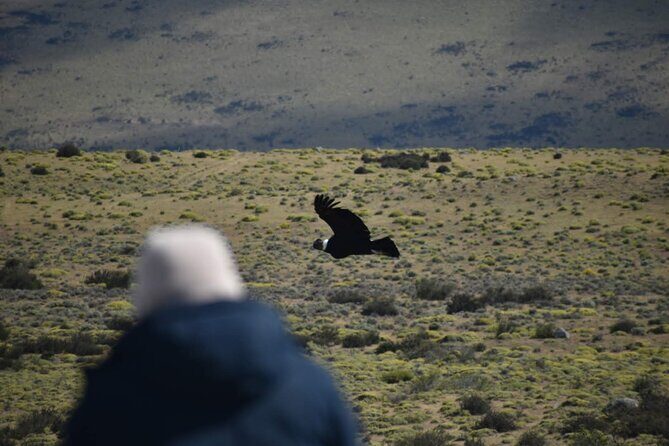
Torres del Paine is known for wildlife, but sightings aren’t guaranteed. What you can do is increase your odds by knowing what to look for and when.
The itinerary and park experience include a strong chance of seeing:
- guanacos
- ñandú
- condors
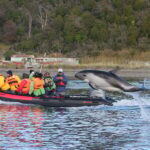
It also notes other animals that may show up depending on the day, including foxes, hares, and chincol. And yes, there’s the possibility of seeing pumas, sometimes described as the lion of America.
Two practical tips I’d follow with this tour style:
- Don’t rush every viewpoint. If you stand still for a minute, you’ll notice motion you’d miss while walking fast.
- Ask your guide what they’re watching for in that specific area. With the right guidance, “nothing’s happening” turns into “oh, there it is.”
The Guides and Drivers: Why English Matters Here
This tour is private, but the real difference comes from the people running it. Over the set of experiences tied to this route, guides and drivers named like Gerardo, Juan (Johnny), and Cristian/Christian are repeatedly praised for English ability, patience, and making the day feel tailored. Drivers such as Cesar, Felipe, Philippe, and Mauricio/Maricio are noted for smooth driving and support when roads and weather are tough.
What this means for you: you’re not stuck with a dry script. You can ask questions and get straight answers about:
- how glaciers shaped the caves and valleys
- why certain animals show up where they do
- what to focus on for the best photos
It also helps if you’re traveling with kids, seniors, or anyone who needs a slower pace. Several experiences emphasize that the guide adjusted to different speeds instead of forcing a one-size-fits-all plan.
Lunch and What’s Included (and Not)
The tour includes lunch, entrance fees, bottled water, and private transportation in an air-conditioned vehicle.
Not included: snacks.
That last part matters. You’ll be out from the early morning start (6:00 am) through most of the day. Lunch is covered, but if you like having backup energy—especially in cold wind—plan to bring your own snack or pick something up during the Cerro Castillo stop.
Timing Reality: A 12 to 14 Hour Day From Punta Arenas
Even with efficient stops, this tour is long. Start time is 6:00 am, then you drive toward Puerto Natales area (with a drive segment around 3 hours noted early on), then continue onward for the cave and park segments.
Inside the park, you’ll spend structured time at:
- Lake Pehoé and the Salto Grande walk
- Lake Nordenskjold
- Laguna Amarga
Then there’s the Cerro Castillo comfort break, and finally the return to Punta Arenas (noted as about 5 hours of driving).
This kind of schedule is great if you’re short on days in Punta Arenas and want the big hits in one shot. It’s less ideal if your idea of a trip is to slow down for a more extended hike and fewer viewpoints.
Price and Logistics: Does $554.17 Feel Fair?
At $554.17 per person, this isn’t a “budget” day. But in Patagonia terms, it’s a value-style price if you care about comfort and interpretation.
Here’s why it can feel fair:
- Private transport for a long-distance route
- A private English-speaking guide
- Entrance fees
- Lunch
- Bottled water
- AC and Wi-Fi during the long driving hours
You’re essentially paying for time and expertise. A one-day itinerary like this is expensive mostly because the logistics are expensive: long roads, long hours, and the guide’s role in timing stops so you see the right things in the right order.
If you’re traveling as a couple or small group, private often becomes the sweet spot—because the cost is shared, and you gain flexibility.
Should You Book This Torres del Paine + Milodon Day?
Book it if:
- you’re staying in Punta Arenas and want Torres del Paine without transferring through overnight logistics
- you want private pacing to reduce stress and maximize photo/wildlife time
- you value an English-speaking guide who ties geology and wildlife into what you’re seeing
- you understand it’s a long day and you’re okay with big driving hours
Skip it (or pick a different format) if:
- you want minimal time in a vehicle
- you’re very sensitive to cold wind and fatigue and can’t manage a 12–14 hour schedule
- you prefer a slow multi-day hike style, not a “highlights in one day” approach
My final take: this is one of those trips where private time buys you sanity. You’ll trade some slow travel for strong results—Milodon Cave context, Torres del Paine viewpoints, lakes and waterfalls, and a guide who makes the day make sense.
FAQ
What time does the tour start?
Pickup begins at 6:00 am.
How long is the experience?
The duration is listed as 12 to 14 hours (approx.).
Where does the tour depart from and return to?
It departs from Punta Arenas and returns to your hotel in Punta Arenas.
What are the main stops on the day?
You’ll visit Mylodon Cave Natural Monument, then go into Torres del Paine National Park, with stops at Lake Pehoé, Lake Nordenskjold, Laguna Amarga, plus a break in Cerro Castillo.
What walking is involved inside Torres del Paine?
The plan includes a 15-minute walk to get closer to Salto Grande during the Lake Pehoé portion.
What’s included in the price?
Included are air-conditioned vehicle, private transportation, private guide, bottled water, entrance fees, and lunch.
Is Wi-Fi available during the drive?
Yes, the tour includes private air-conditioned transport with Wi-Fi.
What should I bring for food?
Lunch is included, but snacks are not included, so plan accordingly.
Will the tour run in bad weather?
It operates in all weather conditions, so you should dress appropriately.
Is this suitable for cruise ship travelers?
It notes that due to extended travel time between Punta Arenas and Torres del Paine, the tour is not suitable for cruise ship travelers.