REVIEW · SANTIAGO CHILE
Santiago: Guided City Tour through the historic center of Santiago
Book on GetYourGuide →Operated by Conect chile · Bookable on GetYourGuide
Santiago’s historic center is best walked slowly. This guided route strings together La Moneda, Plaza de Armas, and the climb to Cerro Santa Lucía, so you see how the city’s buildings, streets, and legends connect. I like that it’s a tight, 2-hour format with a small group (max 10), which makes it easier to ask questions without feeling rushed. I also like the mix of big-ticket stops and smaller streets like Calle Nova Iorque and Calle Colorida, where the details are what make the place click. The one thing to consider is that English-level guiding can vary by guide, so if you’re planning to rely on English, it’s smart to keep an eye on that.
If you want value, this tour is a good deal for $25. You get live interpretation in Portuguese, Spanish, and English, plus a structured sequence of photo stops and guided time at the main monuments. Still, it’s a walking tour—so comfortable shoes matter, especially with the Santa Lucía Hill finish.
In This Review
- Quick hits you’ll feel in Santiago
- Starting at Palácio de La Moneda: where the stories begin
- Bolsa de Comercio photo stop: the city’s commercial side
- Calle Nova Iorque and Calle Colorida: the center as street-level storytelling
- Plaza de Armas and Santiago Metropolitan Cathedral: the center’s big stage
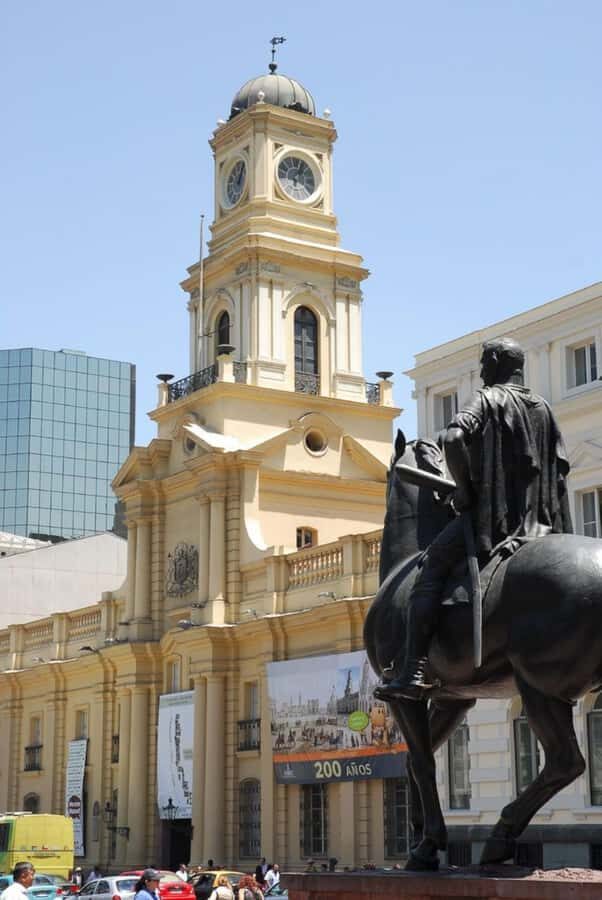
- Museo Historico Nacional: where the tour gets real
- Quick in-between moments: short photo stops that keep the flow
- Santa Lucía Hill finish: a view-based ending that seals the route
- Price and what you really get for $25
- Language and guide style: a small detail that matters
- Who this walking tour suits best
- Should you book this Santiago historic center walk?
- FAQ
- FAQ
- How long is the Santiago historic center guided walking tour?
- Where does the tour start and end?
- How much does it cost?
- What languages are the guides available in?
- What’s the group size limit?
- What should I bring?
- Is the tour wheelchair accessible?
- Is free cancellation available?
Quick hits you’ll feel in Santiago
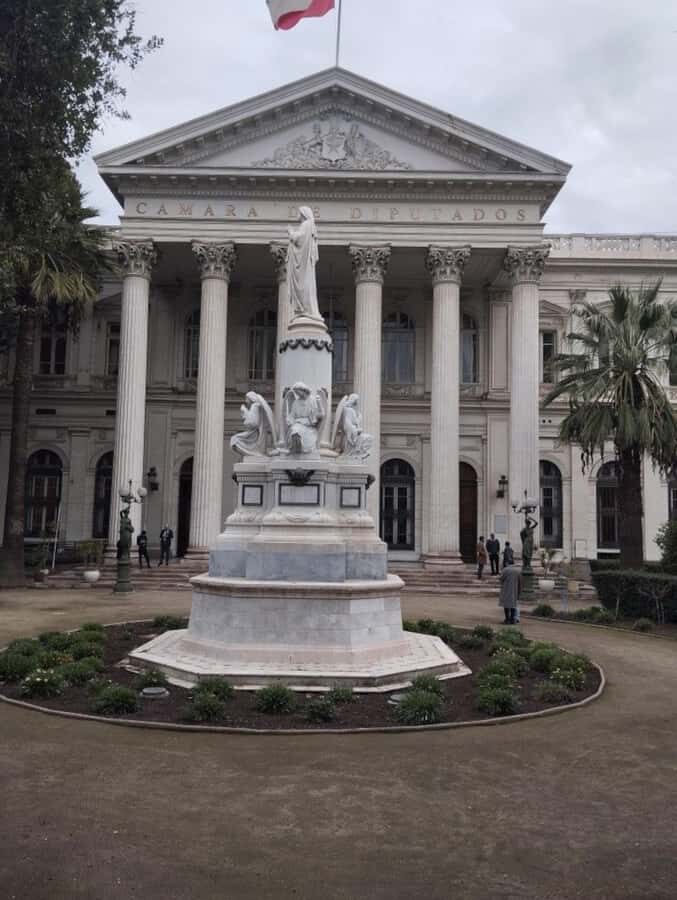
- Small group, big attention: limited to 10 people, so you’re not shouting over the crowd.
- Architecture with explanations: you’re not just taking photos at Plaza de Armas and La Moneda—you learn how the city’s power and identity show up in stone and layout.
- Streets with personality: Calle Nova Iorque and Calle Colorida add color and context between the major landmarks.
- A museum stop that adds depth: Museo Historico Nacional gets you past what a quick street view can explain.
- Good pacing for 2 hours: photo stops break up the walk so you don’t burn out early.
- End with views: Santa Lucía Hill is a satisfying finish point for getting oriented.
Starting at Palácio de La Moneda: where the stories begin
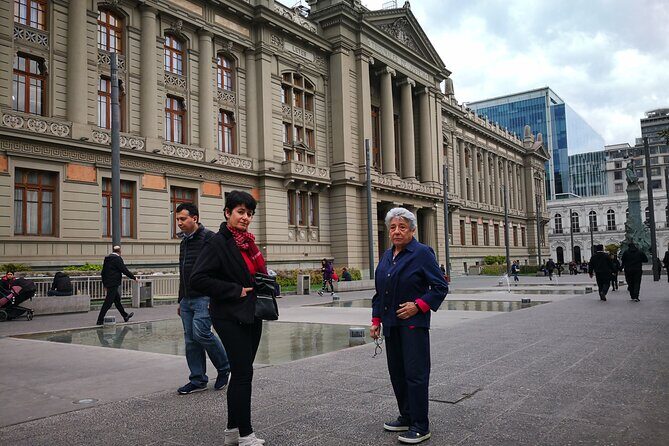
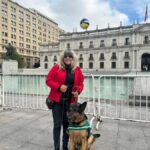
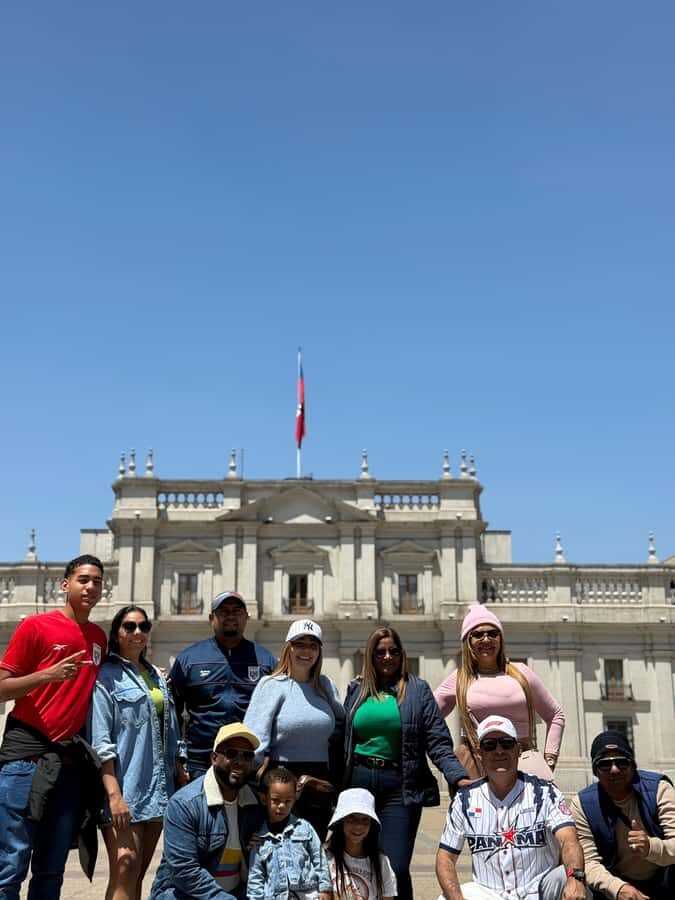
You start at Palácio de La Moneda, the kind of place you notice even before you understand it. It’s the obvious anchor for Santiago’s political pulse, and the tour uses that location to set the theme: this city is layered, and power changes leave traces in architecture and public space.
From here, you’ll get a walking rhythm that helps you mentally map the center. That matters because Santiago’s historic core can feel “dense” if you’re just wandering. With a guide, you get the sequence—where you are, what you’re looking at, and why it’s placed where it is.
Tip for you: If you’re arriving early or traveling from elsewhere, take a minute before the start time to note where the main entrances and sidewalks are. It makes the first stretch easier, since the tour quickly turns into a walk-and-stop flow.
You can also read our reviews of more guided tours in Santiago Chile



Bolsa de Comercio photo stop: the city’s commercial side
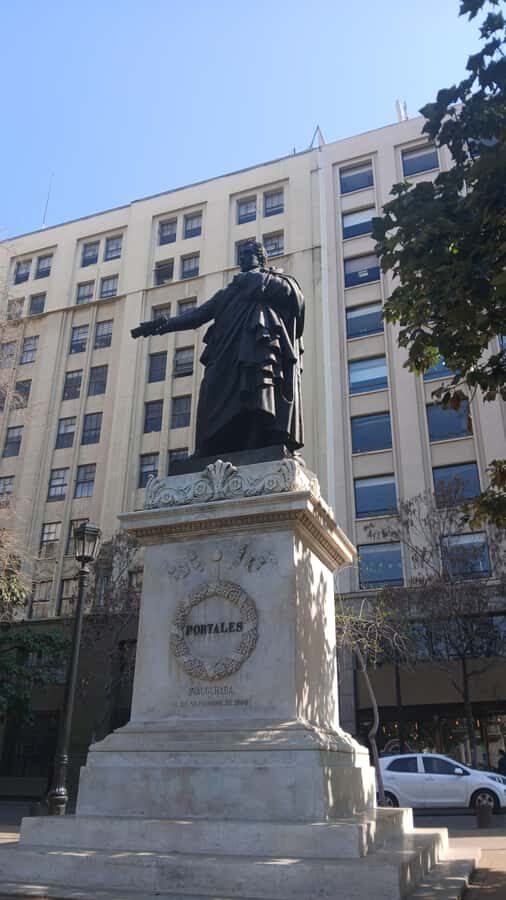
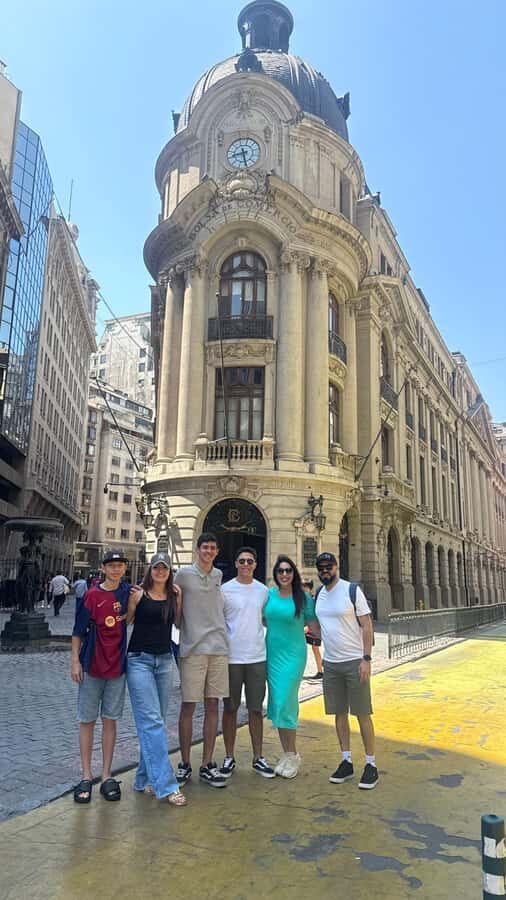
Next comes a photo stop at Bolsa de Comercio de Santiago. Even if you’re not a history or finance person, this stop is useful because it reminds you Santiago isn’t only government and cathedrals. Trade and commerce shaped what the city built, where people gathered, and how neighborhoods connected.
The tour allots about 20 minutes for this moment—long enough to get photos and actually look at details, but not so long that you lose the thread of the day. It also breaks up the early walk so your legs don’t turn on you before you reach the center’s bigger landmarks.
Why it’s worth it: Streets around the historic core make more sense once you realize the area developed in multiple directions: civic life, religious life, and business life.
Calle Nova Iorque and Calle Colorida: the center as street-level storytelling
After the main landmark anchors, the tour shifts to the kind of Santiago you feel at eye level. You’ll spend time around Calle Nova Iorque and Calle Colorida, with short guided windows mixed with photo moments.
These streets are the kind of stops that can sound minor on paper—until you get the explanations. This is where names, architecture, and “small” design choices start acting like clues. They help you understand how the historic center wasn’t built as one big monument; it grew as a network of streets that people actually used.
A couple things make these street stops feel like a win for value:
- You get quick context without a long detour.
- You collect visual memories that help you navigate later on your own.
One consideration: Because these are walking-and-looking sections, you’ll want to have your phone charged and your camera ready. The time windows for photo stops are short in the middle part of the tour, so don’t wait until you’re already halfway to start snapping.
Plaza de Armas and Santiago Metropolitan Cathedral: the center’s big stage
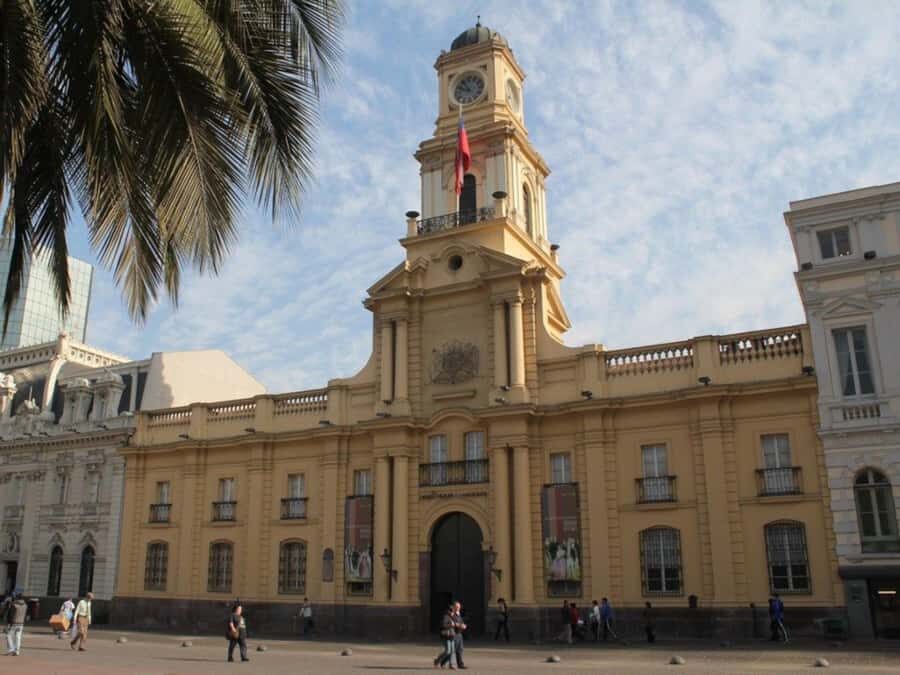
Then you reach Plaza de Armas, Santiago, and the pace becomes more “guided” and less “look-around.” This is a classic central square for a reason. It’s where the city gathers energy, and it’s where the historic core feels most like a single unit.
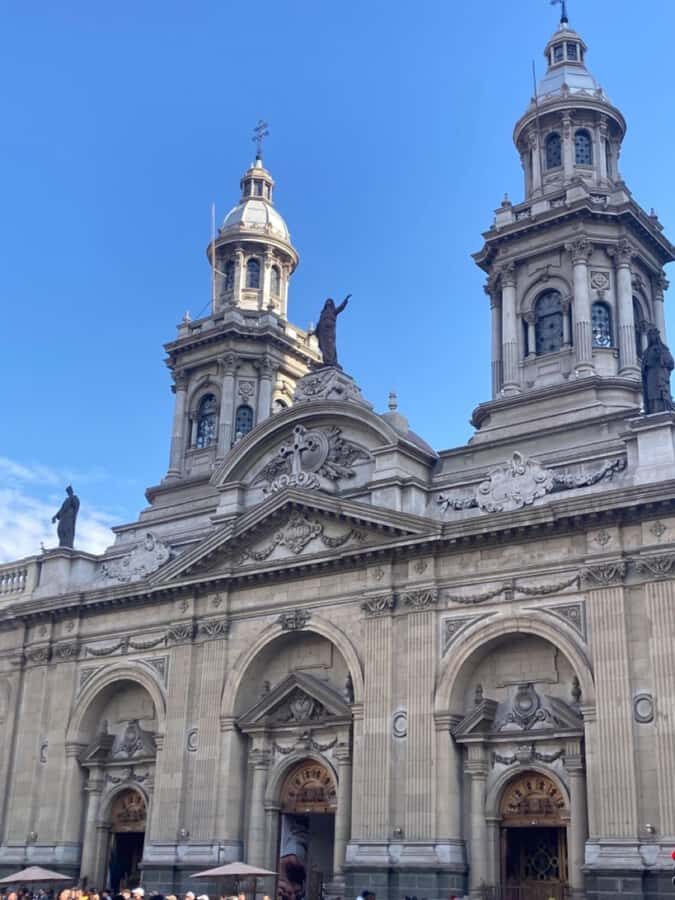
You’ll have about 20 minutes for the Plaza area, which is enough time to take in the space and learn the kind of context that turns a pretty square into a meaningful one. Next comes Santiago Metropolitan Cathedral with another photo stop, visit, and guided time (about 20 minutes).
This cathedral stop is useful even if you’re not religious. The building tells you how Santiago expressed authority and community. And the plaza-to-cathedral pairing helps you see the relationship between civic and spiritual space in the same footprint.
What you’ll want to do during this part: slow your walking pace for a few minutes. The best photos in a square usually happen when you step back, pick your angle, and let the architecture fill the frame.
Museo Historico Nacional: where the tour gets real
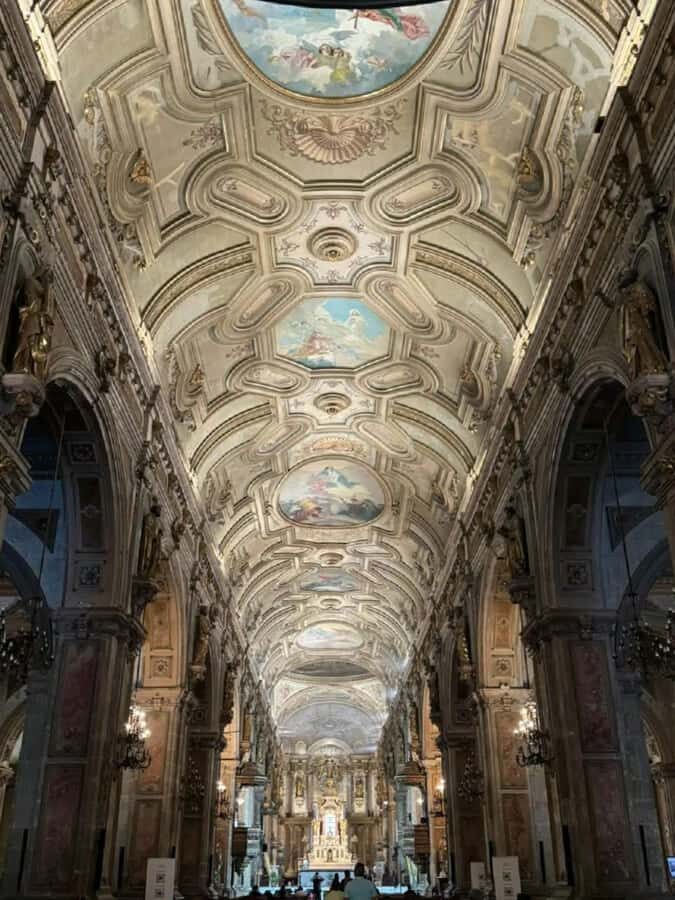
Mid-tour, you get a longer stop at Museo Historico Nacional. Plan on about 50 minutes here, which is long enough to leave with a clearer sense of the city’s timeline rather than only impressions.
This is the part of the tour that helps you connect the dots. Walking through streets gives you visuals. The museum stop gives you a backbone: what those visuals actually mean in Chilean history. One of the strongest bits of feedback tied to this kind of guided approach is that monuments become more meaningful when the guide connects them to the story behind them.
Also, this stop is where a guide’s interpretation really matters. In the feedback I saw, one guide named Marco was described as attentive and good at turning beautiful places into something with added meaning through references to Chilean history. Another guide named Andre Luiz received notes about English needing improvement and history explanations not always lining up cleanly. So, if language quality is critical for you, this is the moment where you’ll feel it most.
My practical advice for you: If you want to maximize the museum time, ask one simple question early in the stop, like what theme the museum is emphasizing today. It helps you watch for details instead of passively walking through.
You can also read our reviews of more city tours in Santiago Chile


Quick in-between moments: short photo stops that keep the flow
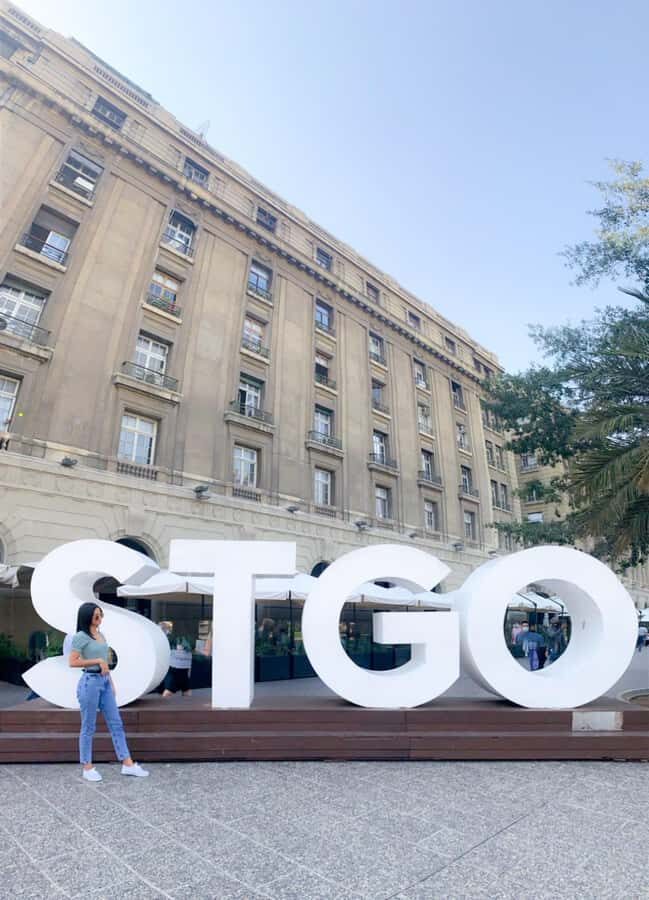
Throughout the middle and later portion of the tour, you’ll hit additional short photo stop, visit, and guided time moments (the schedule includes small windows of about 5 to 10 minutes). These are easy to underestimate—until you realize they’re doing a job.
They:
- keep the group moving without losing the chance to capture key visuals,
- give the guide time to explain small architectural or streetscape details that would be easy to miss solo,
- and prevent the tour from becoming one long block of walking.
If you like a tour that feels structured but not rigid, these little breaks are a big part of the experience.
Santa Lucía Hill finish: a view-based ending that seals the route
The tour ends at Santa Lucía Hill. Finishing with an elevated point is smart, because it helps you take everything you saw in the historic center and place it into a mental map.
Even though the tour time is only 2 hours total, this ending gives your brain closure. You’ve been moving through street-level sights, then you climb to see the bigger layout. It’s a practical way to confirm you understood where everything sits relative to each other.
What to bring for this ending: comfortable clothes and water. And yes, wear shoes you trust on uneven pavement. The finish is great, but it’s also where people with flimsy sandals tend to regret it.
Price and what you really get for $25
At $25 per person for about 2 hours, this tour is positioned as a high-ROI option for first-timers in Santiago’s historic core. You’re paying for more than walking: you’re paying for someone to connect the dots between monuments and street details in a way you likely won’t do on your own in the same time.
The value stacks up because:
- it’s small group (max 10), so your questions land,
- it includes live guiding in Portuguese, Spanish, and English,
- and the schedule blends photo stops with guided time, which keeps it efficient.
There’s also flexibility built in: you can cancel up to 24 hours before for a full refund, and you can reserve now and pay later. If your plans are fluid, that reduces the risk.
Bottom line for you: If you’re in Santiago for a short stay or you want your first day to have direction, this price feels fair for the combination of time, access, and interpretation.
Language and guide style: a small detail that matters
This tour is led by a live guide who can work in Portuguese, Spanish, and English. That’s a big advantage in Santiago, where many visitors bounce between languages and want the story to be clear—not guessed.
Still, language quality can affect how much you take away. One piece of feedback highlighted that English could use improvement with guide Andre Luiz, and that the historical knowledge wasn’t always on point. Another feedback praised guide Marco for being attentive and for giving lots of references that made landmarks feel more significant.
So here’s the practical move: if you’re booking specifically for English, choose the option that’s explicitly running in English, and don’t hesitate to ask a quick clarification before you meet. If you’re comfortable switching into Spanish or Portuguese support, you may enjoy it even more.
Who this walking tour suits best
This is a strong match if:
- it’s your first time in Santiago’s historic center and you want the route to make sense quickly,
- you like photo-worthy landmarks but also want explanations for what you’re seeing,
- you enjoy shorter museum time rather than a long standalone visit.
It may not be ideal if:
- you hate walking tours or you struggle with uneven ground (Santa Lucía Hill is part of the finish),
- you need perfectly polished English for every minute and every detail. In that case, a guide’s language skill becomes more important than the schedule.
Should you book this Santiago historic center walk?
If you want a structured way to learn Santiago’s core in only 2 hours, this is a good booking. The mix of big monuments (La Moneda, Plaza de Armas, the cathedral), street-level charm (Calle Nova Iorque, Calle Colorida), and an actual museum stop (Museo Historico Nacional) makes it hard to leave feeling like you just skimmed.
I’d book it especially if you value small-group guidance and you like tours where the guide connects buildings to stories. The only real reason to hesitate is English-language precision—if that’s a must for you, plan to verify the language setup for your specific tour time.
FAQ
FAQ
How long is the Santiago historic center guided walking tour?
It lasts 2 hours.
Where does the tour start and end?
It starts at Palácio de La Moneda and finishes at Santa Lucía Hill.
How much does it cost?
The price is $25 per person.
What languages are the guides available in?
The tour offers live guiding in Portuguese, Spanish, and English.
What’s the group size limit?
It’s a small group, limited to 10 participants.
What should I bring?
Bring water and comfortable clothes.
Is the tour wheelchair accessible?
Yes, it’s listed as wheelchair accessible.
Is free cancellation available?
Yes. You can cancel up to 24 hours in advance for a full refund.