REVIEW · SANTIAGO CHILE
Santiago: Hop-on Hop-off Bus Day Ticket with Audio Guide
Book on GetYourGuide →Operated by Turistik · Bookable on GetYourGuide
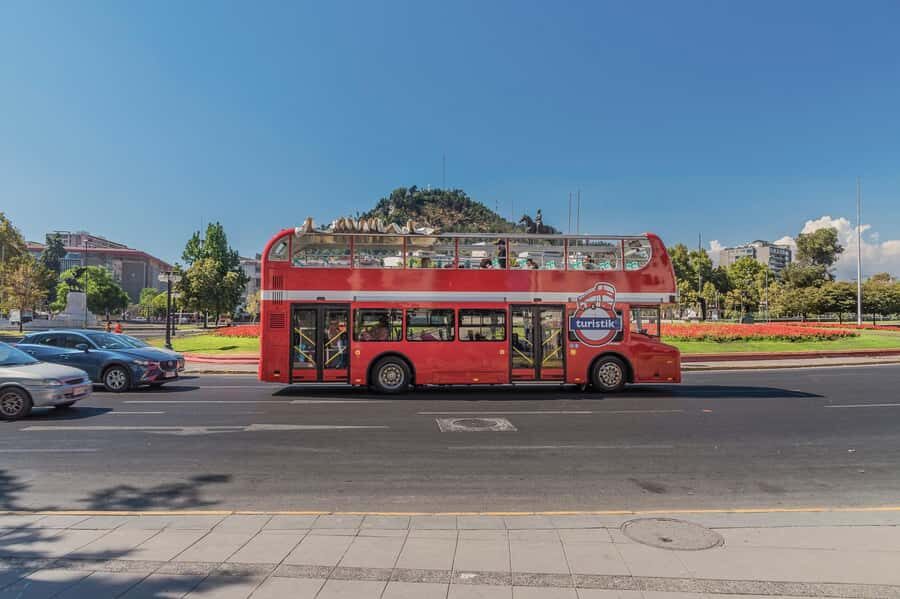
First time in Santiago and you still want order fast? This Hop-on Hop-off day ticket is a tidy way to see the big sights without locking yourself into a group schedule. I love the mix of old-town landmarks and modern city stops, and I especially like having an audio guide in multiple languages so you can move at your own speed. One thing to plan around: the bus runs Monday through Friday only, and to do the full route you need to board before 4:00 PM.
You start at Parque Arauco and roll across town toward places like Costanera Center and the historic core, with stops that make it easy to hop out, wander, and hop back later. The route is built around a smart sequence, including the Santiago cable car and funicular area for panoramic views from Cerro San Cristóbal.
Operating hours are 9:30 AM to 6:00 PM, and the ticket is valid for one day. If your schedule is tight, this is a great “cover the essentials” option, but you’ll get the most value if you give yourself time at each view stop rather than treating it like a quick photo sprint.
In This Review
- Key Things That Make This Bus Day Ticket Worth Your Time
- How the One-Day Santiago Loop Works (And How to Use It Well)
- Value and Price: What $50 Really Buys in Santiago
- Stop-by-Stop: What You’ll See and How to Plan Your Time
- Parque Arauco Mall (Av. Pdte. Kennedy 5413)
- Parque Bicentenario (Isabel Montt & Av. Bicentenario, Vitacura)
- Santiago Cable Car (Teleférico) Area
- Santiago Funicular (Pío Nono 445, Providencia)
- Plaza de Armas (Plaza de Armas 2)
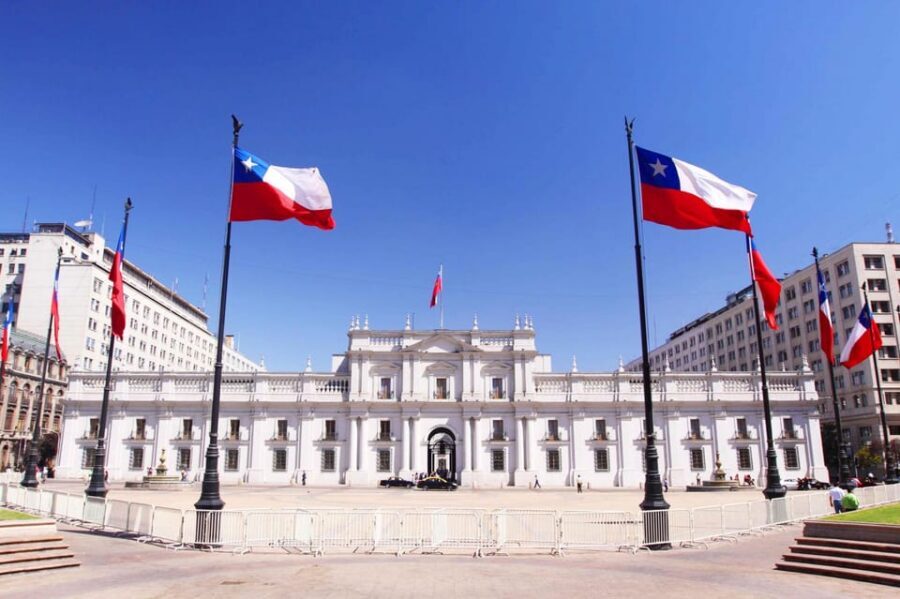
- La Moneda Palace (Teatinos 254)
- Santa Lucía Hill (Av. Alameda 390)
- Plaza de la Aviación (Av. Providencia 969)
- Costanera Center (Av. Vitacura 2653)
- Las Condes Interactive Museum (Isidora Goyenechea 3365)
- The Audio Guide Advantage: Turning Stops Into Context
- Timing Tips: How to Avoid a Hurry-Fast Santiago Day
- Who This Bus Pass Suits Best
- What You’ll Actually Feel During the Day
- Should You Book This Santiago Hop-on Hop-off Day Ticket?
- FAQ
- How long is the Santiago hop-on hop-off ticket valid?
- What time does the bus run?
- How many stops are on the route?
- Where does the tour start?
- Is the audio guide included, and what languages are offered?
- Are tickets for attractions included?
- What should I bring for the day?
Key Things That Make This Bus Day Ticket Worth Your Time

- Unlimited hopping for the day: get on, get off, repeat at 10 stops without rushing your whole day.
- San Cristóbal views built into the route: the Santiago cable car stop includes a ticket to the hill with 360° views.
- Old town plus modern Santiago: Plaza de Armas and La Moneda sit alongside places like Costanera Center and Parque Bicentenario.
- Audio guide in multiple languages: you’ll have spoken context in languages listed for the audio guide.
- A ride that helps you read the city: the route connects neighborhoods so you understand where things are and why the city feels the way it does.
- Staff can help you run the system: one verified booking specifically highlighted staff members Nathaly and Carlos explaining how it worked and the schedule.
How the One-Day Santiago Loop Works (And How to Use It Well)
This is a single-day pass that covers a full sightseeing circuit on the hop-on hop-off bus. You can ride as much or as little as you want within the operating window, then use the stops to shape your day. The goal is simple: hit the main urban attractions, but let you choose how long you linger.
Your timing is the key. The bus runs Monday through Friday from 9:30 AM to 6:00 PM, and you should board before 4:00 PM if you want the full route. If you board late, you might still see a lot, but you may not catch everything in the complete circuit.
I also like that you’re not stuck with just one language experience. The audio guide is included and offered in several languages, and there’s also a live guide listed for English, Spanish, and Portuguese. So if you want the quick context while you’re moving, you’ll have it.
Finally, bring the basics seriously. Comfortable shoes and water matter here, because you’ll walk at multiple stops—especially around the hills and viewpoints. Sunglasses help too, even if the day starts mild.
A few more Santiago Chile tours and experiences worth a look



Value and Price: What $50 Really Buys in Santiago

At $50 per person for a day ticket, the value comes from two things: transport + interpretation. You’re paying for a ride that links 10 major points of interest, plus audio guidance so your stops mean more than a set of random photos.
The cable car stop is especially important for value. The Santiago cable car option in the route includes a ticket to San Cristóbal Hill with 360° views, meaning you’re not just riding past the viewpoint—you’re set up to reach it.
That said, not everything is automatically included. Other tickets and entry fees are listed as not included, so if you decide to pay for extra attractions once you’re off the bus, you’ll need to budget for those. The good news is: you can still enjoy plenty of worthwhile sightseeing without extra paid add-ons, because many stops are public plazas, parks, and major viewpoints.
If you like structure but not strict schedules, this pass is a strong fit. If you prefer a long, slow day with deep museum time only, you might feel the urge to supplement with targeted tickets. But for first-time orientation across Santiago, this is a practical deal.
Stop-by-Stop: What You’ll See and How to Plan Your Time
Parque Arauco Mall (Av. Pdte. Kennedy 5413)
This is where the tour begins, and it’s a smart start. Parque Arauco is described as one of Chile’s top shopping centers with lots of dining and international brands. For many people, it’s the easiest place to organize your morning because you can grab snacks, water, and a quick meal before you head into the more historic areas.
How to use it: if you arrive early, treat this like your supply stop. If you’re hungry later, remember that some of the older areas have fewer convenient food options right at the plaza, so stocking up early is a simple win.
Possible drawback: if you’re not a shopping fan, it can feel a bit like a big mall start. Still, it’s functional—plus it sets you up for a full day.
Parque Bicentenario (Isabel Montt & Av. Bicentenario, Vitacura)
Next you hit a large park with lagoons and wildlife, which is a nice change from the city traffic rhythm. It’s a spot for walking, photos, and a breather before the day shifts toward viewpoints and downtown landmarks.
How to use it: give yourself 30–60 minutes here if the weather is good. Even a short loop helps you reset so the later hill walks don’t feel like nonstop effort.
Possible drawback: parks can swallow time if you’re not careful. If your goal is to prioritize Cerro San Cristóbal and old downtown, don’t let this stop steal your whole afternoon.
You can also read our reviews of more guided tours in Santiago Chile





Santiago Cable Car (Teleférico) Area
The route includes a stop near Los Conquistadores and Pedro de Valdivia Norte. From there, it’s a short walk to the cable car area, and this stop is special because it includes a ticket to San Cristóbal Hill with 360° views.
This is the panoramic piece of the day. Even if you’ve seen big cities from above before, Cerro San Cristóbal is a key Santiago signature. You get perspective on how neighborhoods stack and spread, and why the city looks the way it does.
How to use it: if you’re sensitive to heights or crowded lines, plan your ride calmly and keep your expectations flexible. Bring water and take your time when you’re up there.
Possible drawback: views depend on weather. If clouds roll in, you might get less visibility than you hoped.
Santiago Funicular (Pío Nono 445, Providencia)
From Bellavista up toward San Cristóbal Hill, the funicular connects parts of the area and is described as historic. This can add a second angle to the San Cristóbal experience: not just cable car views, but the route that gives you another way to move through the hill zone.
How to use it: if you’re already making the effort to reach the summit area, the funicular adds variety without requiring extra complicated planning.
Possible drawback: the hill area is a walking-and-transit mix. If you’re short on mobility, you’ll want to be careful about how you split your time between cable car, funicular, and on-foot segments.
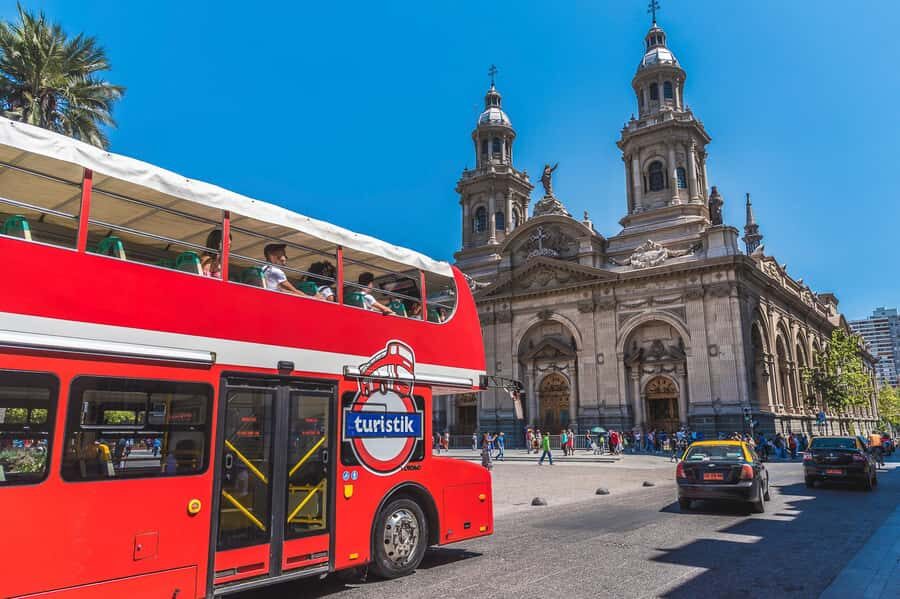
Plaza de Armas (Plaza de Armas 2)
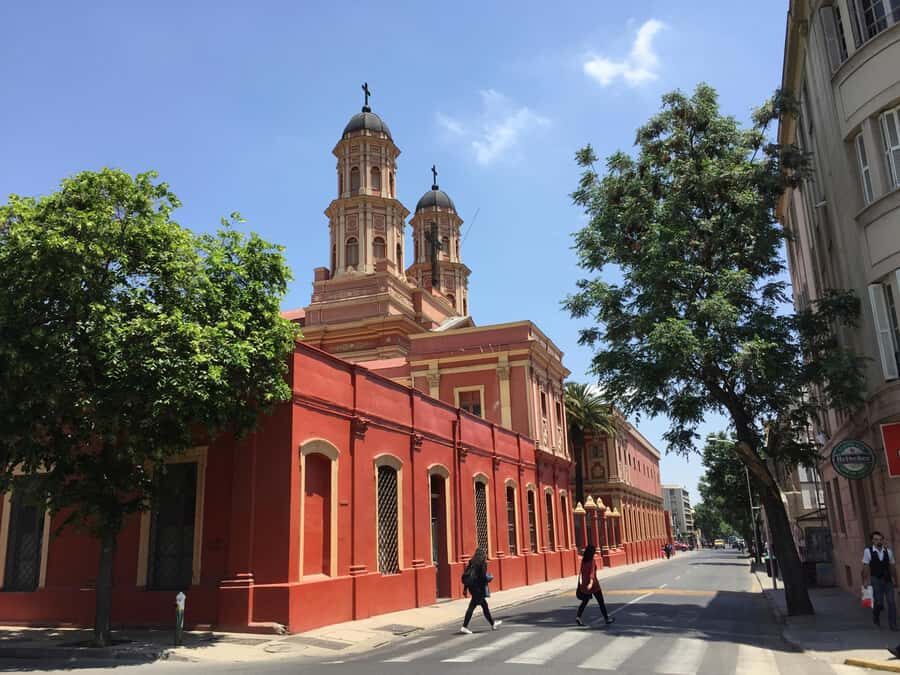
Now you switch to Santiago’s historic heart. Plaza de Armas is surrounded by major colonial landmarks, and this is the kind of place where you immediately understand why the center matters. It’s also a good anchor point because plazas are easy to navigate and easy to return to.
How to use it: treat this as your “first look” at the old center. Spend enough time here to orient yourself before you move on to government buildings and hill viewpoints.
Possible drawback: downtown plazas can get busy. If you’re hoping for quiet photos, you’ll likely want to go a little off peak.
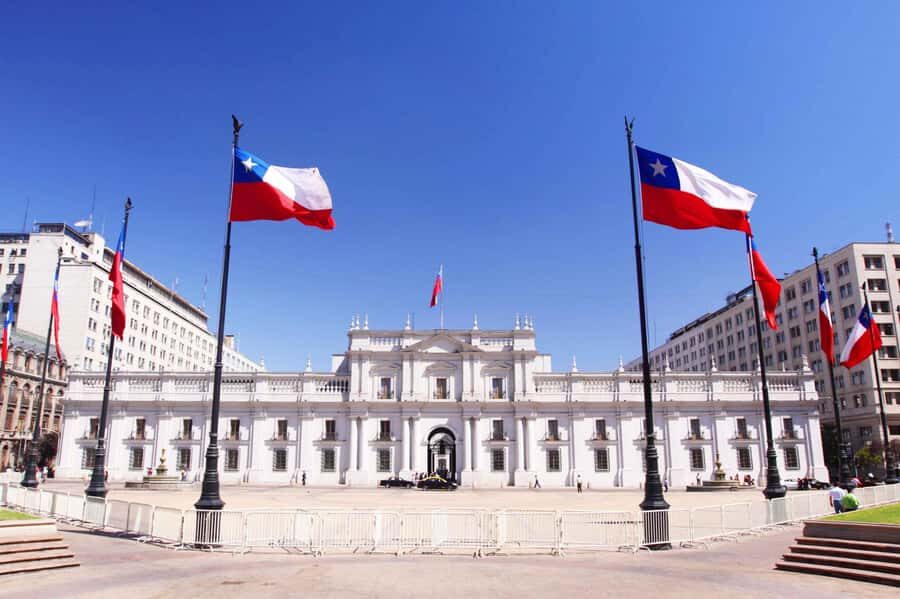
La Moneda Palace (Teatinos 254)
Right in front of Chile’s government headquarters, you’ll find La Moneda. It’s a major landmark, and the stop is built so you can stand in the right place to see the palace from the street and get the feeling of the city’s political center.
How to use it: pair it with your time in Plaza de Armas so you’re not hopping back and forth across the core. The audio guide can help here, because government and landmark sites make more sense when you know what you’re looking at.
Possible drawback: if you’re expecting to go inside, you’ll need to plan for entry separately since other entry fees are listed as not included.
Santa Lucía Hill (Av. Alameda 390)
Santa Lucía Hill is a historic urban hill with terraces and viewpoints, and it’s described as near the Lastarria district. This is a good follow-up after La Moneda because it gives you a different kind of Santiago view: less panoramic from a peak, more city views from a landscaped hill.
How to use it: if you have limited time, do the terraces that give you the best overview rather than trying to cover every corner. A short, focused climb can feel totally worth it.
Possible drawback: hills and terraces mean more walking than you might expect. Comfortable shoes aren’t optional.
Plaza de la Aviación (Av. Providencia 969)
This riverside park area is known for fountain and green spaces by the Mapocho River. It’s a calmer stop, and it’s a nice contrast between the heavy sightseeing moments.
How to use it: consider it a reset. If you’ve been on your feet since the hill areas, this is a place to sit for a bit and watch the river edge activity from a comfortable vantage.
Possible drawback: if you’re chasing only the biggest attractions, this might feel like a “rest stop.” Still, the pause can make the rest of your day more enjoyable.
Costanera Center (Av. Vitacura 2653)
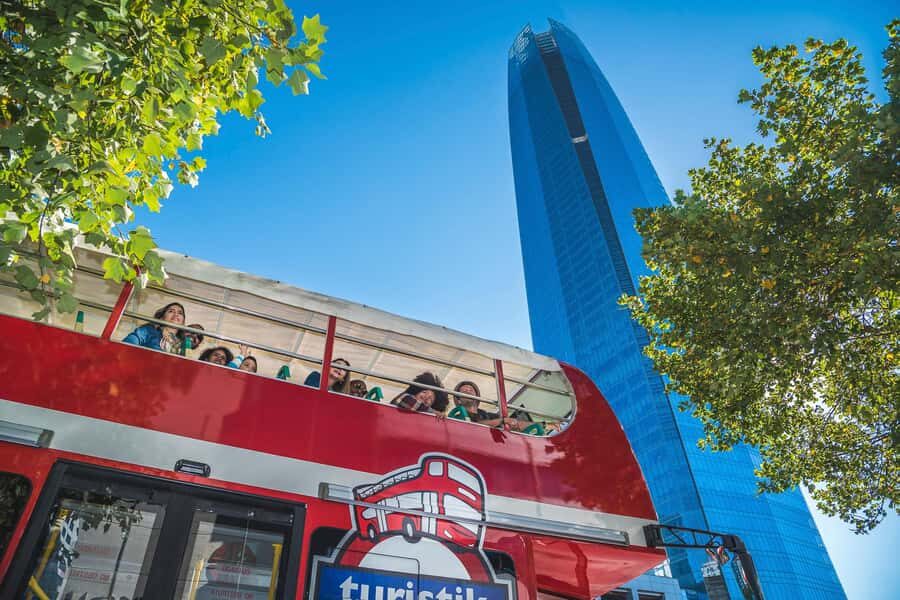
This is modern Santiago at full scale. Costanera Center is described as the largest mall in South America, and it’s next to the Sky Costanera observatory. Even if you don’t buy anything extra, the building itself is a landmark.
How to use it: if you want a clean, safe-feeling urban break with places to eat, this is where you can. You can also match this stop to earlier viewpoint time: after Cerro San Cristóbal, a city-center high-rise environment feels like a different way of seeing Santiago.
Possible drawback: it can be very mall-centered. If your travel style is more street and plazas, keep your visit here tighter.
Las Condes Interactive Museum (Isidora Goyenechea 3365)
The final stop points you to a modern restaurant area plus a museum with interactive experiences. The listing focuses on the interactive side, so this stop can be especially attractive if you like hands-on activities or you want a break from outside walking.
How to use it: if it’s hot or rainy, this is a sensible way to use an hour instead of just waiting it out.
Possible drawback: if you’re not interested in interactive museums, you might prefer to simply use this stop to end your day in the Las Condes area with food nearby.
The Audio Guide Advantage: Turning Stops Into Context

The audio guide is one of the best practical features here because it helps you connect what you see with why it matters. Instead of just collecting images, you get an easier sense of city layout, landmark meaning, and what each neighborhood represents.
It’s available in several languages listed for the audio guide, including English, Spanish, Portuguese, French, German, and Chinese. That flexibility makes the day friendlier if you’re traveling with someone whose language needs are different.
I also like that you can play it when you’re traveling between stops. That means you’re not wasting time only while standing still. Use it like a moving “field guide,” especially on the longer stretches between downtown and the more spread-out areas.
Timing Tips: How to Avoid a Hurry-Fast Santiago Day
This tour works best when you don’t treat every stop as a quick photo mission. The hill zone and viewpoint areas take the most time, so plan those for when you’re freshest.
A simple rhythm that works:
- Start strong in the morning at Parque Arauco.
- Use the park stop as your reset.
- Save your effort for the Cerro San Cristóbal area with cable car and funicular.
- Keep your downtown time practical: enough in Plaza de Armas and La Moneda to orient, then shift to Santa Lucía for a second perspective.
- Finish at Costanera Center and Las Condes if you want food and modern convenience.
Weather matters too. If Santiago skies look uncertain, prioritize viewpoints early so you’re not stuck with clouds later.
And yes, board before 4:00 PM if you want the full circuit. If you’re arriving from elsewhere, build buffer time so you’re not rushing at the first stop.
Who This Bus Pass Suits Best
This is a great fit if you want:
- A first-time Santiago overview with minimal planning pressure.
- A day that works even if your energy levels change mid-trip.
- A mix of downtown landmarks, parks, and modern city stops in one shot.
- A low-stress way to move across neighborhoods without hiring separate taxis for every segment.
It might be less ideal if you:
- Want deep museum time as your main activity for the day.
- Have only one day and you prefer a highly focused, ticket-heavy sightseeing plan.
- Need a strictly accessible experience beyond what walking and hill areas might involve. (The tour includes hill access through cable car and funicular, but it still involves getting around at the stops.)
What You’ll Actually Feel During the Day
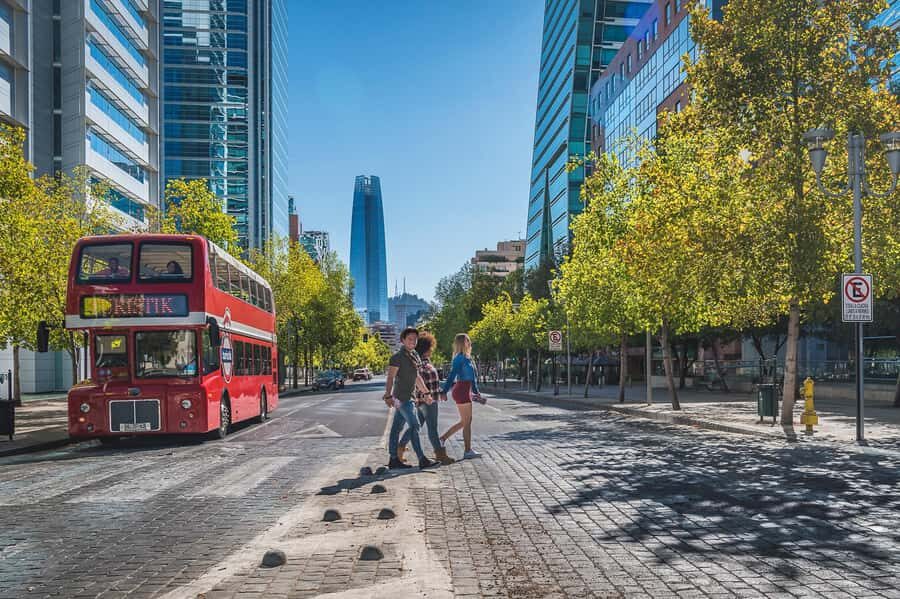
What stands out in a good way is how the route helps your brain map the city. You start in a commercial hub, cross into park areas, climb up toward views, then come back down into historic Santiago. By the end, you’re not just seeing places—you’re understanding connections.
You also get the chance to choose your intensity. If you feel energetic, you can linger at viewpoint stops. If you feel tired, you can shorten your time in spots like plazas and malls and still keep the day full.
And based on the kind of helpful staff service noted in a verified booking, you can expect clear explanations of how the bus system and schedule work. In particular, Nathaly and Carlos were highlighted for being super friendly and for explaining the system and hours in a way that makes this kind of hop-on plan much easier.
Should You Book This Santiago Hop-on Hop-off Day Ticket?
Yes, I’d book it if you’re aiming to see the core Santiago highlights in one day and you don’t want the stress of plotting transit links between distant neighborhoods. The value is strongest when you use the stops the way they’re intended: view first, wander second, and don’t try to do everything at once.
Skip it or supplement it if you’re the type who already knows exactly what you want to see and you’re planning to spend most of the day inside paid attractions. This pass is built for motion and orientation, not for long, ticketed deep dives at every stop.
If you’re flexible and want a practical Santiago day with real sightseeing payoff, this is a solid choice.
FAQ
How long is the Santiago hop-on hop-off ticket valid?
The ticket is valid for one day, with unlimited hop-on hop-off use during that day.
What time does the bus run?
The bus operates Monday through Friday from 9:30 AM to 6:00 PM.
How many stops are on the route?
The route includes 10 strategic hop-on hop-off stops.
Where does the tour start?
The tour begins at Parque Arauco.
Is the audio guide included, and what languages are offered?
Yes. An audio guide is included, with languages listed including English, Spanish, Portuguese, French, German, Chinese.
Are tickets for attractions included?
Other tickets and entry fees are not included, but the Santiago cable car stop notes that it includes a ticket to San Cristóbal Hill with 360° views.
What should I bring for the day?
Bring a passport or ID card, comfortable shoes, sunglasses, a camera, water, and weather-appropriate clothing.