REVIEW · EASTER ISLAND
Half Day Tour in Rapa Nui
Book on Viator →Operated by Agencia de Turismo NCP · Bookable on Viator
Ahu Akivi to Orongo in one guided loop is a focused way to understand how Rapa Nui people explain where they came from. This Cultural Beginning tour leans into oral tradition and the island’s north and central sites, so the stops feel connected instead of random “moai sightseeing.”
I love the tight, small-group feel (up to 6 people) and the way the guide brings each place down to human stories, not just facts. I also like the practical setup: pickup, air-conditioned private transport, and snacks plus soda keep the pace easy for a 2 to 4 hour outing.
The main drawback is cost and add-on fees: at $1,500 per person, you’ll likely want to budget for entrance costs not included at Rano Kau and Orongo. The other consideration is the walking/climb at Orongo area, which may feel harder if you’re avoiding uneven terrain.
In This Review
- Key things that make this tour worth your attention
- Cultural Beginning: why the stories matter more than the photos
- Price and logistics: what $1,500 buys you here
- Pickup, timing, and mobile ticket reality check
- Stop 1: Ahu Akivi and the sea-facing moai detail
- Stop 2: Puna Pau quarry, 180° views, and the pukao connection
- Stop 3: Rano Kau crater, volcano stories, and the greenhouse angle
- Stop 4: Orongo ceremonial village and the Birdman competition stakes
- The guide factor: patience, history storytelling, and names you’ll hear
- What to pack for a short tour with real walking
- Who this tour suits best
- Should you book this Cultural Beginning half-day tour?
- FAQ
- How long is the Half Day Tour in Rapa Nui?
- Is pickup offered?
- What are the main stops on this tour?
- Are entrance tickets included?
- Is bottled water included?
- What’s included in the price besides the guide?
- How many people are in the group?
- When does the tour start?
- What is the cancellation policy?
Key things that make this tour worth your attention
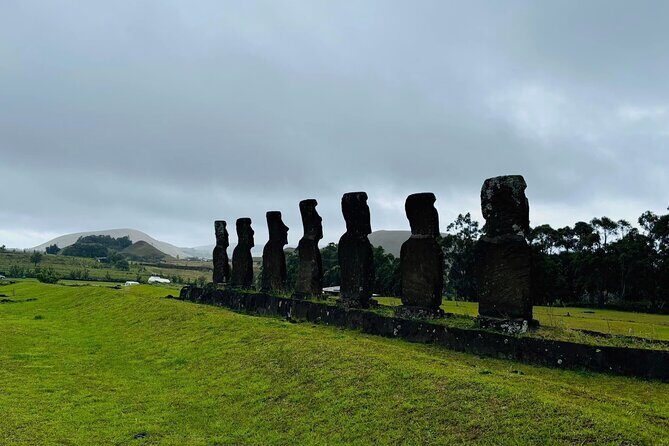
- Ahu Akivi’s sea-facing moai plus oral tradition tied to the island’s earliest answers
- Puna Pau quarry views with a direct connection to the famous red pukao
- Rano Kau’s crater story and Haumaka references linked to the volcano’s role
- Orongo ceremonial village and Birdman-era stakes, including why the competition mattered
- Small group size (max 6) with a paced guide who can slow down when questions pop up
Cultural Beginning: why the stories matter more than the photos
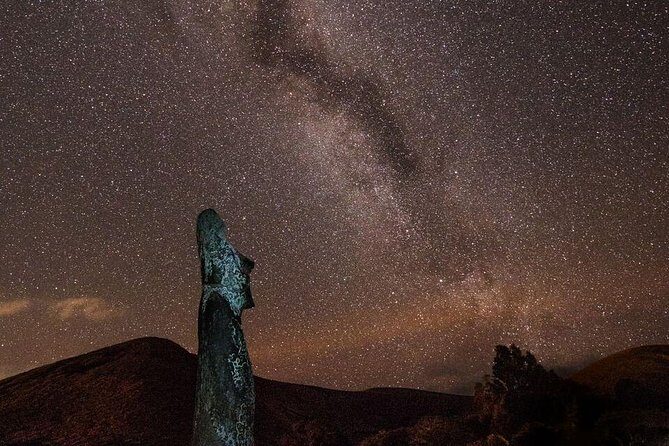
Rapa Nui is famous for statues. But the culture is also famous for how it explains the past. This tour is built around that second part. You’ll hear origin stories through oral tradition, and the guide connects the sites to how Rapa Nui people say they arrived and shaped their society.
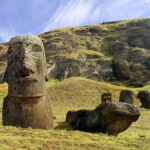
I like that the route targets the island’s north and central areas—the parts that connect strongly to the beginning narrative. It keeps you from bouncing around just to tick boxes. And it gives your photos context, so the moai feel like characters in an ongoing story, not background scenery.
You should also know the tour is designed to complement your overall understanding of Rapa Nui history. It’s not trying to cover everything on the island in one go. It’s trying to give you a strong “first layer,” then let you build from there.
You can also read our reviews of more tours and experiences in Easter Island.


Price and logistics: what $1,500 buys you here
At $1,500 per person, this isn’t a bargain. This is closer to a premium, small-group cultural experience. What you’re buying is mainly time saved and attention spent: pickup included, private transportation, and an air-conditioned vehicle.
The group size also matters. A max of 6 people keeps the guide’s pace flexible. That’s helpful on Rapa Nui, where weather can shift and questions are common. Several people who’ve taken tours with Nicolas mention they appreciated his patience and the time he took to explain details, not rush.
What’s included is also worth checking closely. You get snacks, soda/pop, and admission tickets for Ahu Akivi and Puna Pau (the quarry). You do not get admission tickets for Rano Kau and Orongo, so plan for those extra site fees in your budget.
Also, bottled water isn’t listed as included. The tour notes that you’ll carry local bottled water (rainwater), but it recommends bringing your own specific water anyway. That’s a small detail, but it can matter if you’re picky about water taste or have a sensitive stomach.
Pickup, timing, and mobile ticket reality check
The tour runs daily, with an opening window from 9:30 AM to 10:00 AM (Monday through Sunday). Your confirmation comes at booking time, and it includes the pickup schedule.
If you hate coordination, this is a relief. Pickup is offered, and the tour uses a mobile ticket, so you’re not juggling paper receipts at each gate. You’ll also have a clear end point: the tour finishes and you can leave to eat afterward (lunch is not included).
In the real world, the “2 to 4 hours” range is your clue to stay flexible. Rapa Nui timing can expand and contract with weather and how the guide handles questions. That doesn’t mean it’s sloppy. It means the tour is built to function even when conditions aren’t perfect.
Stop 1: Ahu Akivi and the sea-facing moai detail
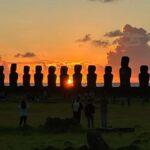
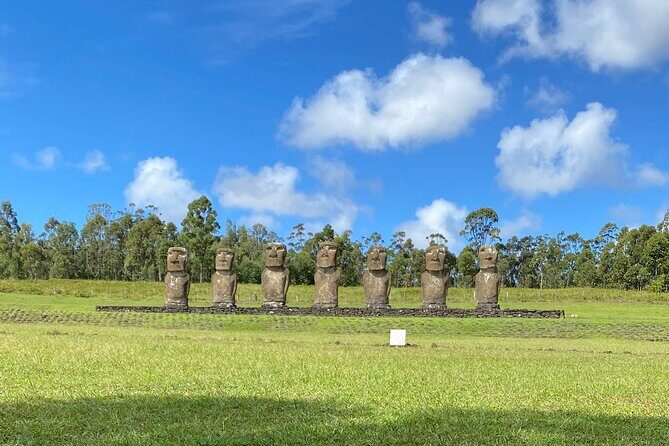
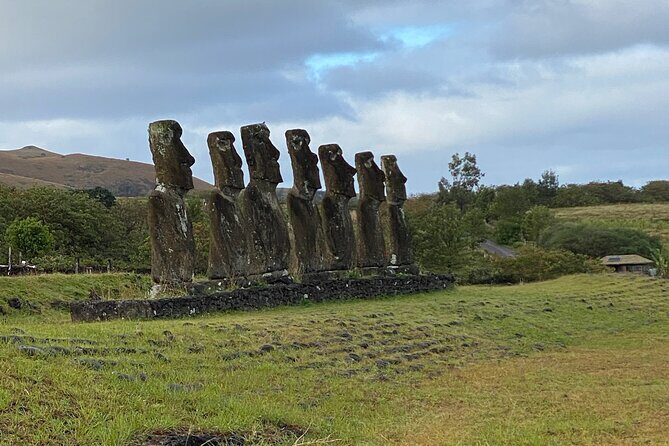
Ahu Akivi is where the tour sets its tone. You’ll start with a pickup-to-site ride of about 30 minutes, then spend around 1 hour exploring the ahu and its seven moai.
The big hook here is simple: Ahu Akivi is the only place on the island where the moai face the sea. That orientation matters for the stories tied to how people read space, power, and direction. It also changes how the site feels. You’re not just looking at statues. You’re standing in a viewpoint the creators intended.
The guide’s oral tradition framing is especially important at Ahu Akivi, because it’s one of the spots where “why this is here” beats “how tall is it” every time. If you want your visit to feel like more than a monument tour, this stop usually does the heavy lifting.
Admission for Ahu Akivi is included, so there’s one less cost item to manage. The time on site is also generous enough that you can slow down for photos without feeling like you’re sprinting through.
Stop 2: Puna Pau quarry, 180° views, and the pukao connection
Next comes Puna Pau, where the tour shifts from the moai themselves to what made their look possible. You’ll visit the pukao quarry and spend about 1 hour on site (with 30 minutes noted for included admissions).
This stop has two advantages that work together. First, you get panoramic views—up to 180° of the island—from a high perspective. Second, you see the quarry linked to the famous red cylinders placed on top of the moai: the pukao.
Even if you’ve heard about the pukao before, seeing the quarry in context is different. The story stops sounding like trivia and starts sounding like engineering and logistics—where material came from and how it traveled. It also makes the whole island feel like one large craft system, not isolated landmarks.
Admission ticket is included for this site too. That helps with value if you’re budgeting your day. The main practical note is to bring a steady windproof layer for the viewpoint. Quarry areas can be breezy, and comfortable helps your head stay clear for the story.


Stop 3: Rano Kau crater, volcano stories, and the greenhouse angle
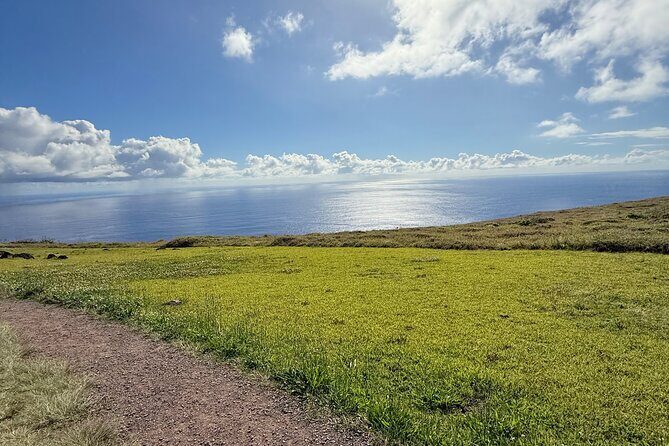
Rano Kau brings you back to origins through a natural feature. The tour gives you about 30 minutes at Rano Kau, with the guide focusing on the volcano and its largest crater.
One detail that makes Rano Kau more than just a dramatic look is the way it’s described as a natural greenhouse. That point connects climate, survival, and the island’s ability to sustain people and culture over time. If you’re the type who wants the “why” behind the “what,” this is a worthwhile stop.
The tour also references oral tradition, including that an important person named Haumaka visits here. That’s the tour’s pattern: it uses named figures and remembered events to give the place emotional weight.
Admission isn’t included at Rano Kau, so keep that in mind when you budget. Also, since your time here is shorter, it helps to come with a quick mindset: enjoy the viewpoint, listen for the story thread, and don’t expect a long independent hike.
Stop 4: Orongo ceremonial village and the Birdman competition stakes
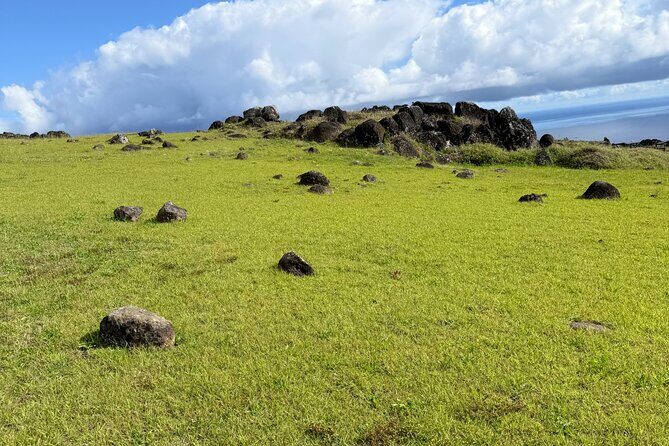
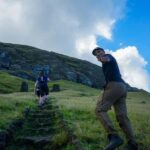
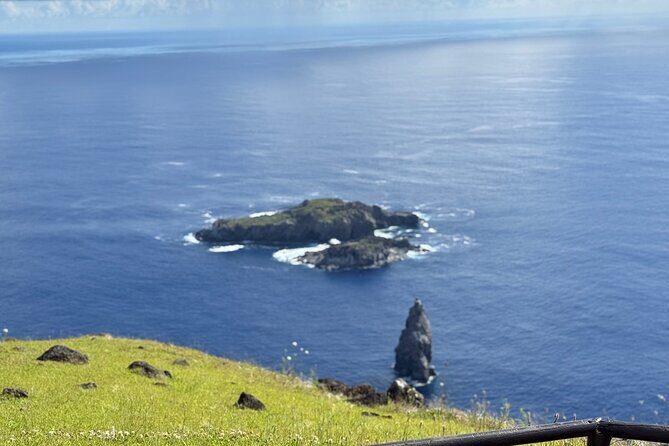
Orongo is the tour’s drama stop. You’ll climb in the Rano Kau area and then enjoy panoramic views before moving into the ceremonial village. Expect roughly 1 hour of the Orongo area time, with another 1 hour tied to the ceremonial village experience (the tour lists these in the flow of the climb and visit).
This is where the Birdman competition comes into focus. The stories emphasize that the best warriors had to risk their lives to try to become a supreme leader. That detail changes how you interpret the village. You’re not touring ruins. You’re touring a stage for high-stakes selection and leadership.
Orongo is also about movement and sightlines. The climb and the viewpoint time matter because they help you understand why the competition could function in that environment. You’re hearing about danger and signaling, and you’re seeing why people would take those risks.
Admission tickets aren’t included here either, so budget extra. And if you’re sensitive to uneven ground, wear shoes with solid grip. Orongo rewards people who can take their time.
The guide factor: patience, history storytelling, and names you’ll hear

What you get from this tour is strongly tied to the guide’s style. In the feedback provided, guides like Nicolas (often referenced as Nico or Niko) are highlighted for being patient, professional, and genuinely passionate about Rapa Nui history.
People also mention that the guide explained customs and even the meaning of words connected to places. That matters on Rapa Nui, because language is part of how the culture remembers itself. If you like feeling oriented—who did what, when, and why—this tour’s storytelling approach supports that.
There are also mentions of WiFi on board, and one response even calls out Starlink. I wouldn’t plan your entire trip around that, but it’s a nice bonus if you want to share photos or look up a few background terms during downtime.
What to pack for a short tour with real walking
This tour is short, but it includes climbing and outdoor time. Pack like you’re going to be outside longer than the clock says.
Here’s what I’d bring based on what’s included and what’s not:
- Comfortable shoes with grip for Orongo
- Sun protection (hat/sunglasses) plus a light layer for wind
- Your preferred water, since the tour notes rainwater bottled water but recommends bringing your own
- A small snack or energy backup, even though snacks are included
If weather turns, don’t panic. Rapa Nui weather can change quickly. The guide and agency approach has been described as helpful with alternatives when rain shows up, and the small group format can make those adjustments smoother.
Finally, charge devices ahead of time. A mobile ticket is convenient, but your phone still needs battery for photos and maps.
Who this tour suits best
This is a great fit if:
- You want context for Rapa Nui, not just a list of moai
- You care about origin stories and how oral tradition explains arrival and early life
- You prefer a smaller group (up to 6 people) and a guide who will slow down for questions
- You like history that connects nature, leadership, and culture
It may be less ideal if you want a full day of monuments across the entire island, because this is focused on the north and central sector and stays within a shorter time window. It’s also not the best choice if you avoid any climb at all, since Orongo involves going uphill and spending time on outdoor terrain.
If you’re traveling with older adults or mixed ages, the “most people can participate” note is encouraging. Also, feedback highlights that the guide adjusts pace and takes time. Still, it’s smart to be honest with yourself about your comfort on steps and slopes.
Should you book this Cultural Beginning half-day tour?
Book it if you want a strong first layer of meaning in a short time. The combination of Ahu Akivi’s sea-facing moai, the Puna Pau pukao quarry, and the origin-linked volcano and Birdman-era stories gives you a coherent narrative. That coherence is what makes this feel like value, not just transportation between famous spots.
I’d treat the $1,500 price as a premium for small-group attention and guided storytelling, plus included admissions for two major stops. Then factor in the extra entrance costs at Rano Kau and Orongo. If you’re the kind of person who enjoys listening and walking a little for deeper context, this is likely to hit your sweet spot.
Skip it if you’re shopping purely for the cheapest way to see moai. This tour is about culture and how the island’s people explain themselves. You’re paying for that.
FAQ
How long is the Half Day Tour in Rapa Nui?
The duration is listed as approximately 2 to 4 hours.
Is pickup offered?
Yes. Pickup from your accommodation is offered.
What are the main stops on this tour?
You’ll visit Ahu Akivi, Puna Pau (pukao quarry), Rano Kau, and Orongo.
Are entrance tickets included?
Admission tickets are included for Ahu Akivi and Puna Pau. Admission tickets are not included for Rano Kau and Orongo.
Is bottled water included?
Bottled water isn’t listed as included, and the tour recommends bringing your own specific water. It notes the excursions carry local bottled water (rainwater).
What’s included in the price besides the guide?
The tour includes private transportation, an air-conditioned vehicle, snacks, and soda/pop. It also uses a mobile ticket.
How many people are in the group?
The tour has a maximum of 6 travelers.
When does the tour start?
The meeting window listed is Monday through Sunday from 9:30 AM to 10:00 AM.
What is the cancellation policy?
Free cancellation is available up to 24 hours in advance for a full refund. Cancel at least 24 hours before the experience start time for the refund.