REVIEW · SANTIAGO
2-Hour Walking Tour of Yungay The Coolest Neighborhood in Chile
Book on Viator →Operated by Urbantours Chile · Bookable on Viator
Yungay rewards slow attention. In just two hours, you get a guided route through Santiago’s memory-focused museum and the old-street charm of Yungay. I especially like the mix of big meaning and everyday details, from the Museum of Memory and Human Rights to the hidden-feeling passage at Pasaje Adriana Cousiño. One drawback to flag: it’s a walking tour, so if your stamina is limited, the nonstop flow between stops may feel quick.
This is a tight neighborhood “orientation” that helps you see what makes Yungay different from the usual Santiago circuit. You’ll start at Quinta Normal Metro, end near Republica Metro, and you move through places where architecture, art, and civic life all show up. It’s also small—up to 30 people—which keeps the guide’s storytelling from getting drowned out.
For me, the real payoff is how the guide connects the dots: the civic-military period and human rights at the museum, then the neighborhood’s character in alleyways, plazas, and heritage corners. The tour is built for an afternoon, starting at 3:00 pm, and admission for each stop is listed as free, so you spend the money mostly on the route and the guide.
In This Review
- Key highlights in plain terms
- Why this 2-hour Yungay walk works so well
- Getting oriented at Quinta Normal (and where the tour begins)
- Parque Quinta Normal: the history-and-museums warm start
- Museum of Memory and Human Rights: what you’ll carry out of the stop
- Pasaje Adriana Cousiño: a 1920s time capsule you can walk through
- Restaurante Peluquería Francesa and Boulevard Lavaud: heritage that still works
- Plaza Yungay: the neighborhood square with real community energy
- Palacio Álamos: old architecture that changes how you read the streets
- Plaza Brasil: art-friendly streets and easy places to keep going
- Barrio Concha y Toro finale: architecture, history, and a clean metro exit
- Price and value: why $35 feels fair for what’s included
- Pace, group size, and what to expect on the street
- Who this tour fits best (and who may want to choose differently)
- Should you book this Yungay walking tour?
- FAQ
- How long is the 2-Hour Walking Tour of Yungay?
- How much does the tour cost?
- Where does the tour start and what time does it begin?
- Where does the tour end?
- Is the tour guide included, and are admissions included too?
- How big is the group?
Key highlights in plain terms
- Free entry at every stop: the route includes listed “admission ticket free” stops across the walk
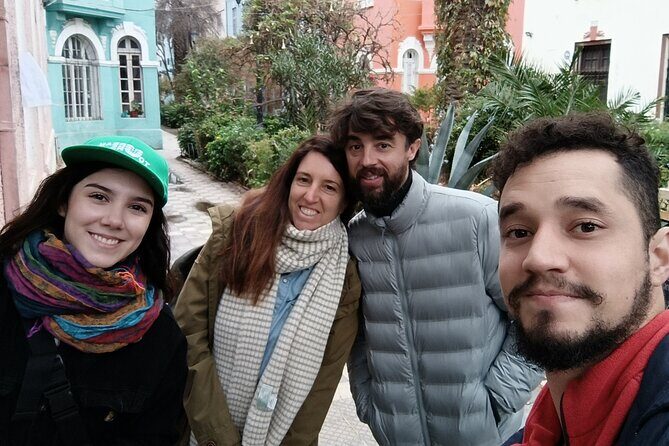
- Strong story focus: guides like MJ and Pedro are described as first-rate story tellers
- Architecture you can read on foot: 1920s-era design shows up in the streets, passages, and palaces
- Plazas with a purpose: Plaza Yungay and Plaza Brasil aren’t just scenery
- Small group size: capped at 30 travelers for a more personal feel
- Ends near Metro: you finish one block from Republica (Line 1), easy to continue exploring
Why this 2-hour Yungay walk works so well
Yungay is the kind of neighborhood you understand faster when someone points things out. This tour does that job in a smart, time-efficient way: you cover a bunch of key spots without turning it into a marathon. It’s also priced in a way that feels fair for what you get—a guided route plus free admission at the stops.
The walk is also well-balanced. You start in an area with museums and civic context, then you move into streets and spaces where you can feel the neighborhood’s day-to-day identity. That mix is what makes it more than just photos and quick sightseeing.
One more practical win: the route is positioned for an afternoon plan. If you’re in Santiago for just a few days and you want a neighborhood-focused experience, this is the kind of add-on that actually changes how you see the city afterward.
You can also read our reviews of more walking tours in Santiago

Getting oriented at Quinta Normal (and where the tour begins)
The meeting point is Quinta Normal Metro station, at Av. Matucana 466, Santiago. It’s a simple, public-transport-friendly start, which matters because it reduces the “where do I meet?” stress that can ruin an afternoon.
Starting in Quinta Normal also gives you a natural transition into Yungay. You’re not jumping in blind; the tour starts with a park area connected to museums and local history. Think of it as a warm-up that gets your brain switched from tourist mode to neighborhood mode.
The tour starts at 3:00 pm and lasts about 2 hours. With that timing, I’d plan to wear comfortable walking shoes and keep your phone battery ready—you’ll want to compare street details and architectural features as you go.
Parque Quinta Normal: the history-and-museums warm start
Stop 1 is Parque Quinta Normal, and it functions as more than a meetup spot. The key promise here is that you’ll see part of the park area filled with museums and history. That sets the tone for the whole tour: you’re walking a neighborhood, but you’re also learning how the city remembers itself.
What I like about this kind of opening is that it gives you context before you head into the more intimate street scenes. You’ll be better able to understand why the next stops matter beyond aesthetics.
The trade-off is that 15 minutes is short. You’re not touring the park like a standalone visit. You’re getting the “here’s what matters” version, and then moving on.
Museum of Memory and Human Rights: what you’ll carry out of the stop
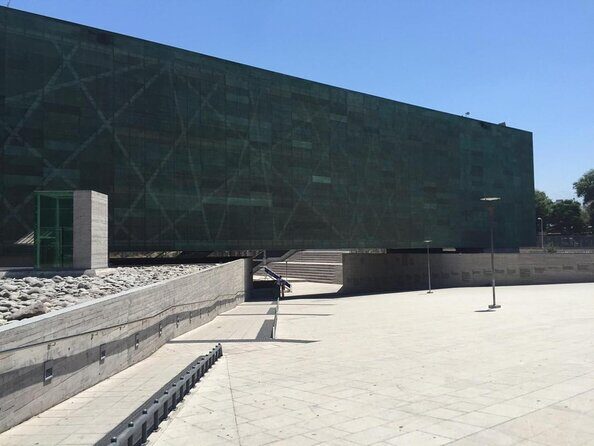
Stop 2 is the Museum of Memory and Human Rights. This is the anchor point for the tour’s civic side. You’ll be walking through the story of what happened in Chile’s civic-military period, and the museum’s role is to connect memory with human rights.
I like that this isn’t treated like a random museum stop. It’s positioned early enough that it frames your understanding of the rest of Yungay. When you later see civic spaces like plazas and heritage buildings, the experience feels more connected to people and community than to buildings alone.
At the same time, 15 minutes means you won’t absorb everything in one pass. If you want a slower, deeper museum visit, plan to return later on your own time. For this tour, the goal is orientation and key takeaways, not a full independent museum day.
Pasaje Adriana Cousiño: a 1920s time capsule you can walk through
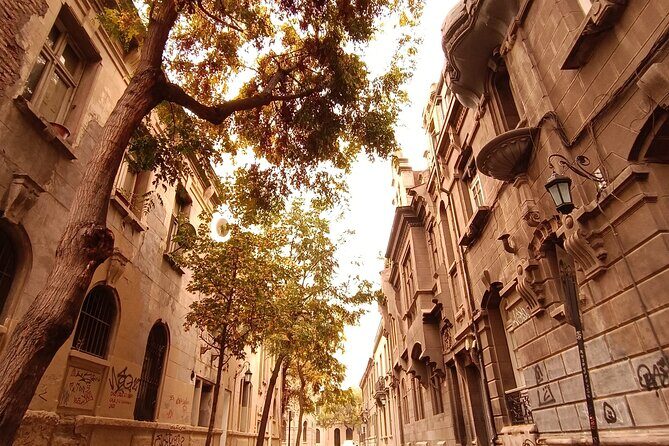
Stop 3 is Pasaje Adriana Cousiño, described as a passage from the 1920s with art and architecture. This is one of those moments where Santiago stops feeling like a grid and starts feeling like a story you can wander into.
What makes this stop click is that it’s compact. You’re in a small architectural pocket, and the guide can point out details you might otherwise miss—lines, materials, and design choices that signal a different era. It’s the kind of place that gives you something to look at while also moving the tour forward.
Potential drawback: if you’re expecting a huge, open-air attraction, a passage feels smaller than a cathedral-style stop. But in a tour this length, “small and pointed” is exactly the right size.



Restaurante Peluquería Francesa and Boulevard Lavaud: heritage that still works
Stop 4 takes you to Restaurante Peluquería Francesa – Boulevard Lavaud – Barbería Patrimonial, tied to Yungay’s patrimonial heritage. The standout feature here is simple: there’s a hairdresser in the front, tying daily life directly to the building’s heritage identity.
I like this stop because it shows you that history isn’t just behind glass. People still use these places. You’re not only seeing preserved architecture; you’re seeing it in action—work, commerce, and routine happening in older spaces.
The watch-out is that this kind of place can feel more “pass-through” than “sit-and-enjoy.” The tour gives you 15 minutes, so you’re observing and learning, not settling in for a long meal or conversation.
Plaza Yungay: the neighborhood square with real community energy

Stop 5 is Plaza Yungay, described as the most important square in the neighborhood and where community events are celebrated. This is where your walk shifts from specific buildings to the idea of shared public space.
Plazas are often just pretty, but here the emphasis is on function—where people gather, celebrate, and do neighborhood life. When you listen to the guide’s explanation, you start noticing that the square’s design and position aren’t random. It’s a hub.
Time is again the limiter: 15 minutes won’t make you a regular. But it will give you enough orientation to recognize why Yungay locals likely use this space even when you’re not around.
Palacio Álamos: old architecture that changes how you read the streets
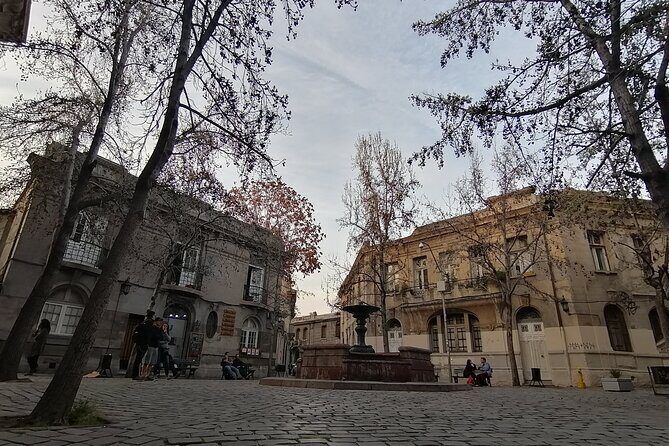
Stop 6 is Palacio Álamos, an old palace with beautiful architecture. This is the “wow, look up” stop, the moment where the tour reminds you that Yungay includes formal heritage buildings, not only street art and cozy alley vibes.
In my view, palace-like architecture is useful on a neighborhood walk because it anchors you in scale. You start comparing: big civic-looking structures, smaller storefront heritage, and intimate passages. When you can make those connections, the neighborhood stops being a collage and becomes a coherent place with layers.
The practical side: 15 minutes is enough to notice key features and understand why the building matters, but not enough for a detailed architectural tour. If you fall in love with it, you can always come back later for a longer look.
Plaza Brasil: art-friendly streets and easy places to keep going
Stop 7 is Plaza Brasil, described as a square full of art, with bars and restaurants around it. This stop feels like a reset. After heavier topics and historic buildings, the energy becomes social—less about memory and more about what a neighborhood does with its public spaces.
I like that this is also a practical “you can stay awhile” moment. Even if the tour doesn’t include coffee or a meal, you can use Plaza Brasil as a launch point for your own post-tour plan.
Drawback: the presence of nearby bars and restaurants can mean more noise and more street activity. It’s not a problem, but it’s good to know what you’re walking into.
Barrio Concha y Toro finale: architecture, history, and a clean metro exit
Stop 8 is Barrio Concha y Toro, the final point for appreciating the area’s history and architecture. This is where your neighborhood reading skills kick in: you’ve seen plazas, passages, and patrimonial building styles, so the streets start making more sense as you go.
The tour ends at Plaza Libertad de Prensa, at Santiago Palaciego – Concha y Toro 33. The key convenience: you finish one block from the Republica metro (Line 1). That’s a big deal if you’re trying to keep your afternoon efficient and avoid long taxi waits.
So if you like your sightseeing with a clean exit ramp, this ending is a plus.
Price and value: why $35 feels fair for what’s included
At $35 per person for about 2 hours, you’re not just paying for a walk—you’re paying for guided interpretation. The tour includes the tour guide, and the stops are listed with admission tickets as free.
That combination matters. A lot of neighborhood tours either:
- charge you for tickets you don’t get value from, or
- keep it too casual, without enough guiding to explain what you’re actually looking at.
Here, you’re getting a structured route plus the guide’s storytelling, and you’re not paying extra museum fees on top. The tour also doesn’t include coffee or tea, so bring your own plan for a snack stop if you want one during or after.
If you’re trying to pick the best use of one afternoon in Santiago, this is the kind of price point that makes sense even if you’re traveling with a couple of must-sees already on your list.
Pace, group size, and what to expect on the street
The maximum group size is 30 travelers. That’s large enough to feel lively, but small enough that your guide can still guide the moment-to-moment flow. The reviews you’ll see tend to praise story skills and a personable style, and that lines up with a setup like this.
The walking itself is spread across eight stops, each around 15 minutes, so the pace is steady rather than stop-start. If you like to linger at corners and read plaques on your own, you may want extra time after the tour near the places that interest you most.
What I think you should do is treat the tour like a map you walk, not a finish line. Use it to find what you want to revisit later—because the best neighborhood sightseeing often happens after you learn where to look.
Who this tour fits best (and who may want to choose differently)
This tour is ideal if you want:
- a neighborhood-focused introduction to Yungay
- a guided explanation that connects architecture and public space with real civic meaning
- an afternoon plan that ends easily near metro
You’ll probably enjoy it most if you like street-level details like passages, heritage storefronts, and plazas with a story. It’s also a good choice if you already know you want to get out of the most tourist-heavy zones.
If you have mobility limits or you prefer long museum time with minimal walking, you might find the stop-by-stop rhythm too tight. In that case, you could still use the tour as a reference for what to prioritize—but plan separate, slower visits to the places that matter most.
Should you book this Yungay walking tour?
I’d book it if you want an efficient afternoon that changes how you see Santiago. The biggest reasons are practical: free entry on the route, a strong guide-led story approach, and a clean metro-friendly finish near Republica. Also, a high rating like 4.9 with a strong recommendation rate is a good sign that this isn’t just a casual stroll—it’s a real neighborhood explanation.
I would skip or reconsider if you need lots of time at museums, hate walking on schedules, or want a food tour vibe. This is not designed for long meal stops. It’s designed for a focused walk with meaning—and then you take the thread and keep exploring on your own.
If you’re the type who likes to leave a city with specific places to revisit, this is a strong bet.
FAQ
How long is the 2-Hour Walking Tour of Yungay?
It lasts about 2 hours.
How much does the tour cost?
The price is $35.00 per person.
Where does the tour start and what time does it begin?
It starts at Quinta Normal metro station (Av. Matucana 466, Santiago) and the start time is 3:00 pm.
Where does the tour end?
The tour ends at Plaza Libertad de Prensa and you finish one block from the Republica metro (Line 1).
Is the tour guide included, and are admissions included too?
The tour includes a tour guide. Each listed stop shows admission ticket free.
How big is the group?
The maximum group size is 30 travelers.
If you want, tell me what else you’re planning for Santiago that week (museums, day trips, markets), and I’ll suggest the best way to stack this tour with minimal backtracking.