REVIEW · HANGA ROA
Easter Island: Full-Day Tour to Anakena
Book on GetYourGuide →Operated by GRAY LINE CHILE · Bookable on GetYourGuide
Moai, volcano craters, and a white-sand beach in one day. What makes this full-day route work is the mix: big coastal statues early, volcanic sites mid-morning and afternoon, then real downtime at Anakena. You’re also not stuck staring at stone for hours; the stops are paced so you can actually absorb the place.
I love the way the tour strings together Ahu Tongariki and the volcanic “moai quarry” at Rano Raraku in a single loop. It’s an efficient hit of the island’s signature scenes, plus you get an on-the-ground guide who can explain why these monuments look the way they do. I also really like the human side of the experience from the guides, especially the energy I saw from Bruno and the patient explanations from Vincent, including how civil wars, tsunamis, and earthquakes affected the statues and what restoration work had to fix.
One consideration: this tour is weather-dependent and not wheelchair-friendly, so you’ll want to be flexible. Also, the national park entrance fee isn’t included, so the final total depends on that USD 100 add-on.
In This Review
- Key things you’ll remember from this Easter Island tour
- Getting oriented in Hanga Roa and heading to the coast
- Ahu Akahanga to Tongariki: a moai primer without the lecture fatigue
- Rano Raraku’s Cantera de los Moais: the quarry where moai began
- Keep the story moving: Ahu Nau Nau and the ceremonial village feel
- Rano Kau crater: the island’s biggest volcanic viewpoint
- Anakena Beach: white sand, cave stops, and time to exhale
- Why the guides make this tour feel worth it
- Price and value: what you’re paying for, and what costs extra
- What to bring and how to plan your day
- Who should book this Anakena day tour
- Should you book this Full-Day Tour to Anakena?
- FAQ
- How long is the Easter Island full-day tour to Anakena?
- When does the tour start?
- Where is pickup and where do I get dropped off?
- What’s included in the price?
- What is not included?
- Do I need to bring anything?
- Is the tour suitable for wheelchair users?
- Is this tour for cruise ship passengers?
- Does the tour run in all weather?
- Can I cancel for a refund?
Key things you’ll remember from this Easter Island tour
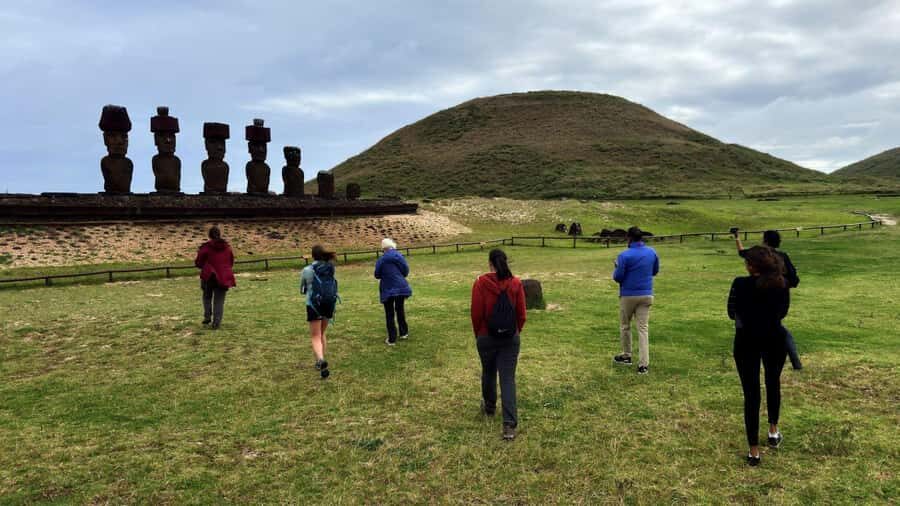
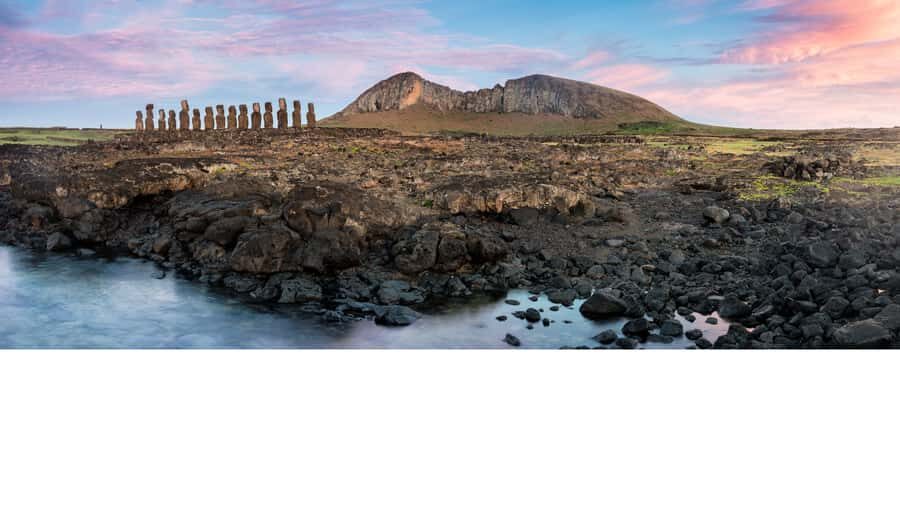
- Ahu Tongariki’s oceanfront moai: 15 giant statues lined up near the shore
- Rano Raraku’s Cantera de los Moais: the famous quarry area with 390+ moai figures
- A picnic lunch by a volcanic crater: you eat surrounded by the same stone landscape that shaped the monuments
- Rano Kau crater visit: the largest volcanic crater on Easter Island, with dramatic views
- Anakena Beach time plus cave stops: white sand, a gorge with small caves, and nearby beaches for relaxing
Getting oriented in Hanga Roa and heading to the coast
Most full-day Easter Island plans either feel rushed or feel too slow. This one lands in a practical middle: you start in Hanga Roa and get picked up from your hotel, so you’re not spending your morning figuring out logistics. Once you’re rolling, the island starts teaching you its logic—coast first, then volcanic centers, then back toward the sea again.
You’ll see both the north and the southeast coasts as you move between ceremonial sites. That matters because Easter Island’s moai aren’t just scattered randomly; they’re tied to specific places and sightlines. Even if you’ve seen photos, you’ll notice how the ocean, cliffs, and human-made platforms all frame the statues.
Along the early route, you’ll stop at moai sites such as Ahu Akahanga before you get to the day’s biggest coastal moment. It’s a good build-up: quick hits first, then the big payoffs.
A few more Hanga Roa tours and experiences worth a look
Ahu Akahanga to Tongariki: a moai primer without the lecture fatigue
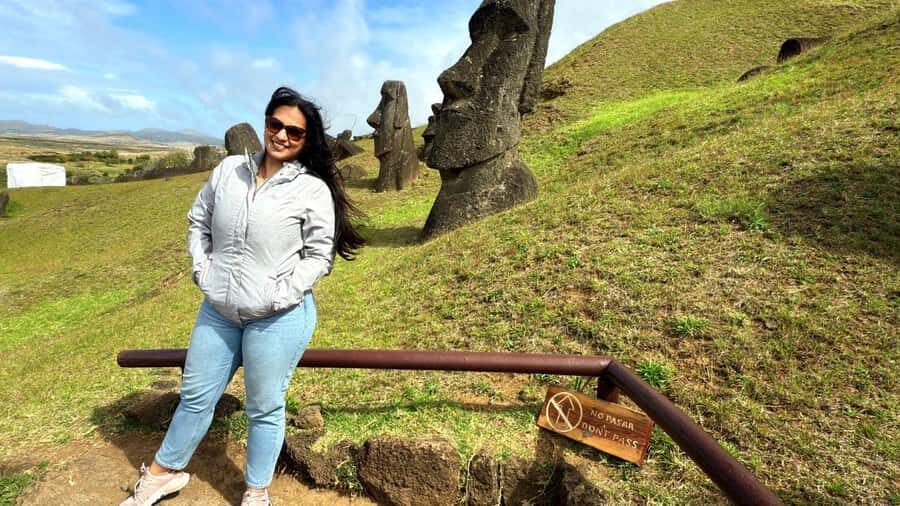
Stopping at Ahu Akahanga early is smart if you want to understand what you’re looking at. You get a taste of the ceremonial village layout before you reach the iconic shore lineup.
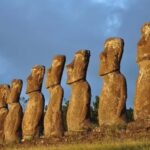
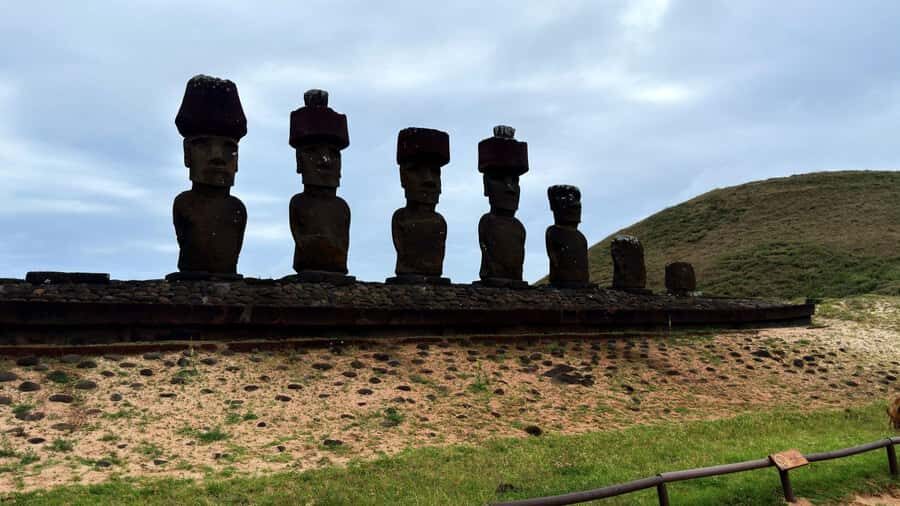
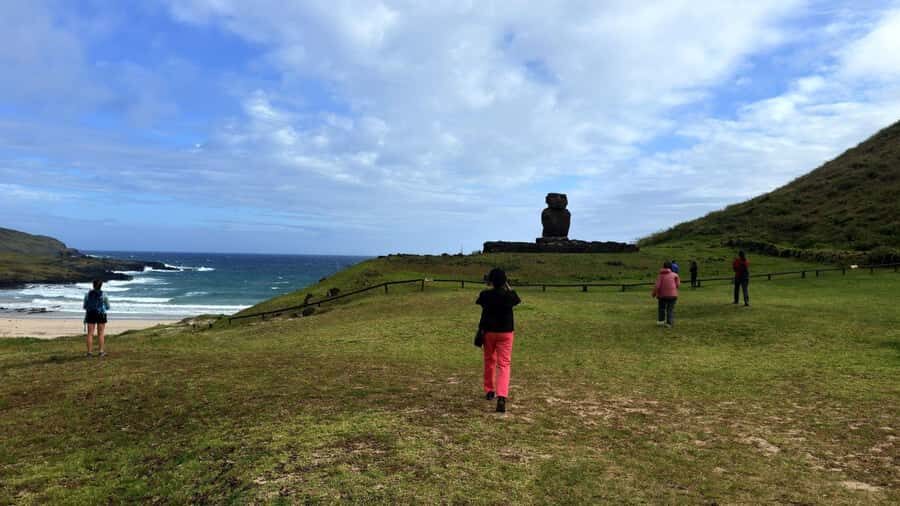
Then comes Ahu Tongariki, and this is where the tour earns its reputation. The site has 15 giant moai statues, positioned very close to the ocean. Standing there, you get a sense of scale that photos can’t quite carry. The statues aren’t just tall; they feel heavy in place, like they belong to the shoreline the way waves belong to sand.
What I liked most is that the guide doesn’t treat the moai like a single static “must-see.” With a good guide, you start noticing how restoration and survival played a role in what you see today. In conversations I found especially clear (from Bruno’s style of passionate storytelling and Vincent’s calm explanations), the tour connects the monuments to island life—what happened during conflict, how natural disasters damaged things, and what it took to bring them back.
Rano Raraku’s Cantera de los Moais: the quarry where moai began
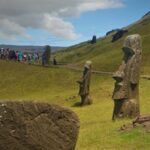
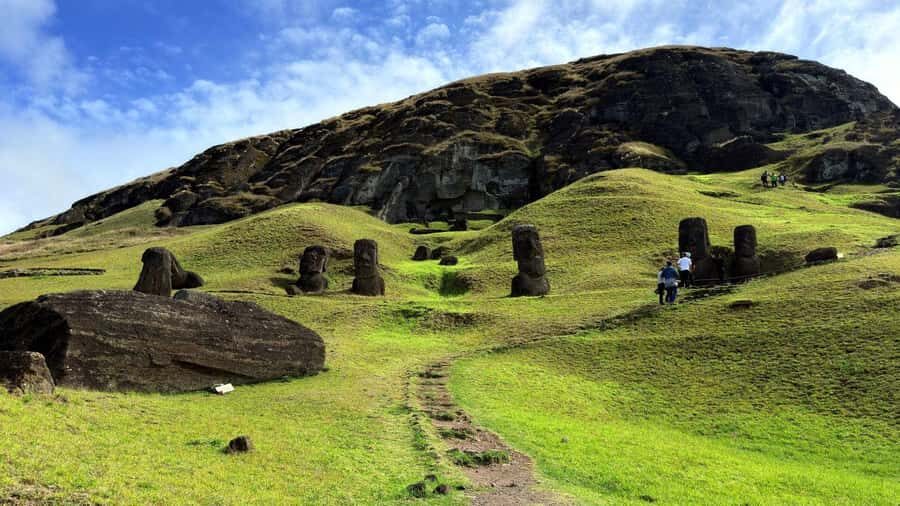
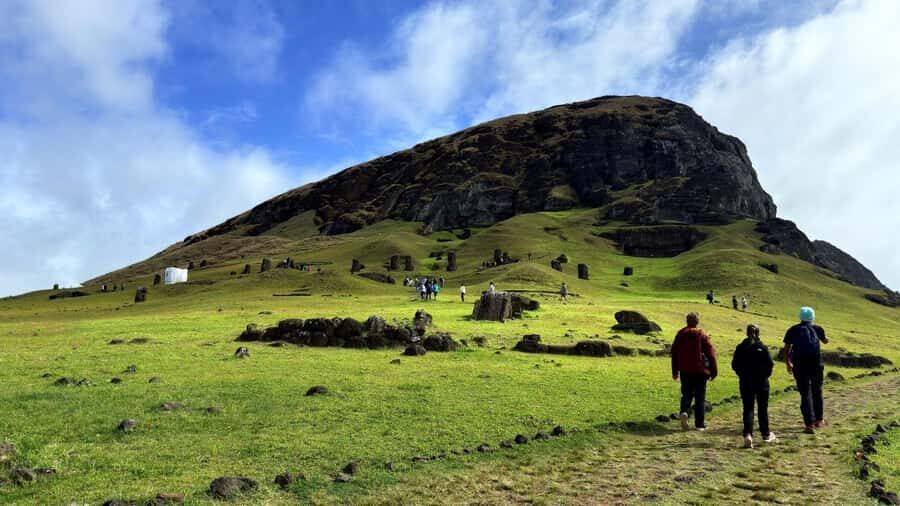
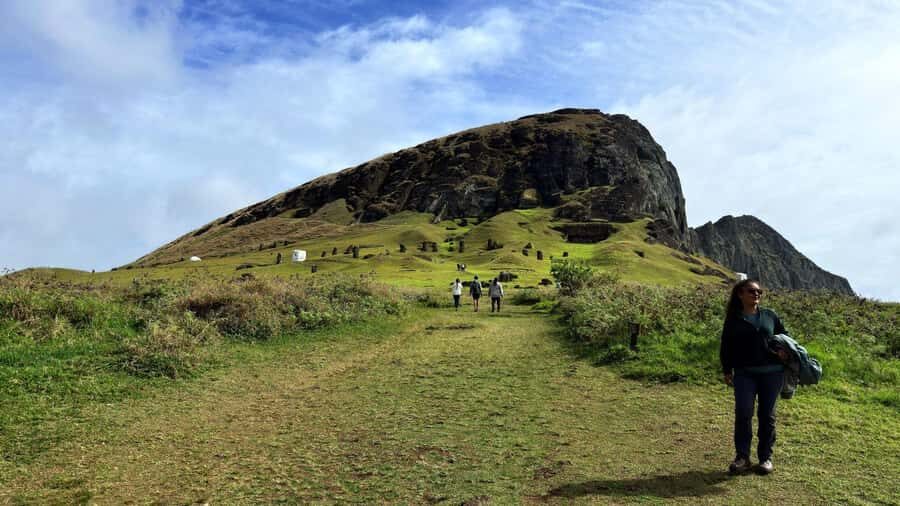
If Ahu Tongariki is the finished product, Rano Raraku is the origin story. The tour takes you to the volcanic crater and the famous quarry area known as the Cantera de los Moais, where you can find more than 390 figures.
This stop is special because it changes your mindset. Instead of seeing moai as objects placed on platforms, you see them as something carved, worked, and left behind in a landscape shaped by volcanic stone. Even if you already know the island’s moai are carved from volcanic tuff, being on-site makes it feel real, not academic.
You’ll also understand why timing and pace matter here. This isn’t a place you want to race through, but it’s also not the kind of stop where you want to linger without context. The guide helps you look at what’s finished versus what’s in-progress, and how the quarry’s setting tells you how the island’s builders worked.
And yes, lunch is included—and it’s not just “somewhere convenient.” You have a picnic lunch at Rano Raraku, so you’re eating right in the middle of the scenery that made the moai possible. It’s one of those small touches that turns a checklist tour into a day you actually remember.
Keep the story moving: Ahu Nau Nau and the ceremonial village feel
After Rano Raraku, the itinerary continues with more impressive moai structures, including Ahu Nau Nau. This is where the tour stops feeling like a string of monuments and starts feeling like a sequence.
Ahu Nau Nau helps you zoom out from the quarry context and back into ceremonial spaces. The Ahu format gives you a way to compare sites: where you get the statues placed, how the platform space frames the figures, and how each location interacts with its surroundings. You don’t need to be a moai expert to see differences—you just need time and a guide willing to explain without turning it into homework.
What I appreciated here is the balance: you’re seeing plenty, but you’re also given enough breathing room to take photos, step back, and process. In particular, the approach I liked from Vincent was that he took the time to answer questions and keep the explanations easy to follow, even when the topic got heavy (disasters and conflict, and how restoration decisions shaped what survives).
Rano Kau crater: the island’s biggest volcanic viewpoint
The highlight list includes Rano Kau, and it deserves its place. This is where you visit the largest volcanic crater of Easter Island, and the views bring the day full circle.
After time spent among moai—stone carved and placed—you finally get more open sky and crater scale. Rano Kau also gives you a break from the constant face-to-stone interaction, and that matters, because by this point the day has built a lot of visual intensity.
This stop is also a good reminder that Easter Island’s story isn’t only about monuments. The island’s geology is the reason the moai are what they are, and it’s the reason much of the rest of the environment looks the way it does. A strong guide ties that together without overdoing it.


Anakena Beach: white sand, cave stops, and time to exhale
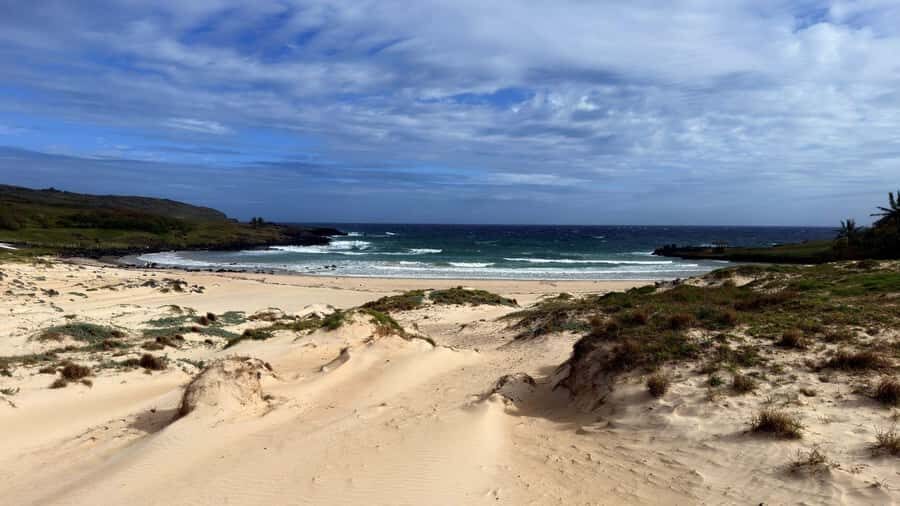
Then the tour shifts gears in the best way: from stone and crater drama to Anakena Beach. This is one of the island’s best swimming beaches, and the white sand feels like a reward after hours of walking and looking.
Anakena also has deep cultural context. It’s described as a landing point for the island’s first settler, Polynesian chief Hotu Matu’a. Even if you don’t read every detail before you arrive, standing on the beach with the moai sites in your brain makes the place feel bigger than a simple swim stop.
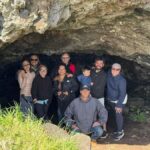
Between beach time, you’ll visit two small caves within a gorge. This adds variety without turning the day into an endurance event. The caves give you a quick change of pace and texture—cooler, more shaded—before you pop back into open light.
You’ll also have chances to stop near the nearby beaches of Poike and Ovahe. Even if you don’t swim there, the option to relax matters. This part of the day is where you start feeling like you lived the place, not just visited it.
Why the guides make this tour feel worth it
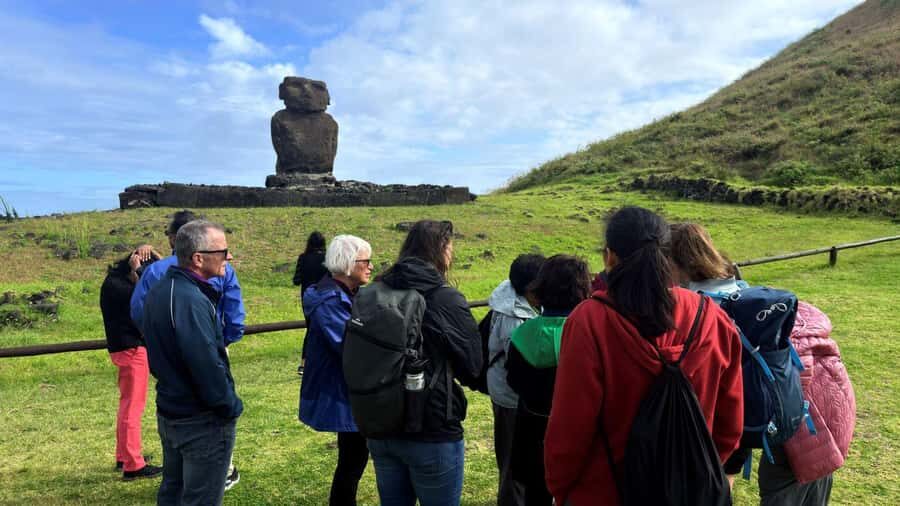
This tour’s reviews consistently point to one thing that you can’t fake: guides who genuinely love what they’re showing you. In my experience-style takeaway, this matters because Easter Island can be confusing fast. There are moai, ahu platforms, volcano craters, and named spots—if the explanations are weak, it becomes a blur.
With guides like Bruno, the storytelling tends to feel enthusiastic and personal, the kind that makes you want to ask follow-up questions. With Vincent, the value is how he handles the heavy topics patiently, explaining how civil wars, tsunamis, and earthquakes took a toll on the statues, and how restoration work helped create what you see today. That context changes everything: you start seeing the moai as survivors, not just monuments.
And the practical side matters too. The guided format in English and Spanish keeps you from missing important points while you’re trying to watch the scenery. You’ll still have time for photos, but you’ll also have a framework for what you’re seeing.
Price and value: what you’re paying for, and what costs extra
The price is $171 per person for an 8-hour full-day tour, with hotel pick-up and drop-off and a picnic lunch at Rano Raraku. That’s not just convenience. On Easter Island, saving time on transport and avoiding the hassle of piecing together stops is a real part of the value.
The main extra cost is the Rapa Nui National Park entrance fee (USD 100), which is not included. That means your total spend depends on the number of people in your group and whether you’d otherwise pay the entrance fee through a different arrangement.
So is it good value? If you only have one day and you want the big hits—Ahu Tongariki, Rano Raraku, Rano Kau, and Anakena—this is a strong way to get there without building your own day from scratch. If you’re staying longer and planning to return for extra sights, you might compare costs with other tours. But as a one-day “get it right” option, this one makes sense.
What to bring and how to plan your day
This tour asks you to bring a towel, and that’s a good hint that you might get time for relaxing by the water at Anakena. Comfortable walking shoes help too, since moai areas and crater viewpoints involve real terrain.
One more planning point: it only operates under good weather conditions. If Easter Island weather is shifting on you, keep your schedule flexible. Also, the tour is not suitable for wheelchair users, so you should plan for uneven ground.
If you want a smoother experience, pack for a full day—sun protection, water, and something that keeps you comfortable at the beach. You’ll have a lot of scenery time, and you’ll want to enjoy it instead of rushing through it.
Who should book this Anakena day tour
This is a great fit if:
- You want a full-day, structured route that covers iconic moai sites plus a beach finish
- You prefer guided context, especially explanations about the island’s dramatic history and restoration
- You’re staying in hotels in Hanga Roa and want pickup/drop-off
It’s probably not the right fit if:
- You’re a cruise ship passenger (this tour is only considered for passengers staying in hotels)
- You need wheelchair accessibility
- You hate “big day” schedules and you’d rather spread monuments across multiple shorter outings
Should you book this Full-Day Tour to Anakena?
I’d book it if you want the most meaningful mix of moai, volcano-crater scale, and actual beach time in a single day. The best part isn’t just the list of places—it’s the way the guide explanation helps the sites connect, especially around how natural disasters and restoration shaped the monuments you see today.
Skip it or choose an alternate plan if the national park fee is a dealbreaker for your budget, or if weather is likely to be questionable. Also, if you’re a cruise passenger or need wheelchair access, this isn’t your tour.
If you’re staying in a hotel and you want one day that feels complete, this is a solid choice.
FAQ
How long is the Easter Island full-day tour to Anakena?
The tour duration is 8 hours.
When does the tour start?
You’ll need to check availability to see starting times.
Where is pickup and where do I get dropped off?
You’ll be picked up from your hotel on Easter Island and dropped back in Hanga Roa at the end of the tour.
What’s included in the price?
Hotel pick-up and drop-off, a guided tour (English and Spanish), and a picnic lunch at Rano Raraku are included.
What is not included?
The Rapa Nui National Park entrance fee (USD 100) is not included.
Do I need to bring anything?
You should bring a towel.
Is the tour suitable for wheelchair users?
No, it is not suitable for wheelchair users.
Is this tour for cruise ship passengers?
No. It’s only considered for passengers staying in hotels, not cruise ship guests.
Does the tour run in all weather?
It only operates under good weather conditions.
Can I cancel for a refund?
Yes. You can cancel up to 24 hours in advance for a full refund.