REVIEW · PUNTA ARENAS
From Punta Arenas: Pali Aike National Park
Book on GetYourGuide →Operated by REBEL VIAJES SPA · Bookable on GetYourGuide
A spot of scorched earth and old myths.
That’s what you get when you head into Pali Aike National Park, where basaltic lava turns the ground into something like a lunar set. I like that the day mixes geology you can walk on with human stories that stretch back thousands of years. One drawback to weigh: this is a long full-day outing, and you may still need to budget for the park entrance fee since it’s not included.
Two things I really like. First, you get the named highlights in a single push—Escorial del Diablo and La Morada del Diablo are the big-ticket stops. Second, the group stays small (up to 10) with a bilingual English/Spanish guide, which makes a tough, remote place feel more understandable. The consideration I’d flag is logistics: there have been verified reports of missed pickup with little communication, so you should confirm details early and be ready with a backup plan.
In This Review
- Key highlights at a glance
- Basalt Lava Walking at Pali Aike, Where the Ground Looks Cooked
- Punta Arenas to the Steppe: A Long Day With a Real Trek
- Escorial del Diablo: The Volcanic Feature You’ll Talk About Later
- La Morada del Diablo Crater: When the Myths Match the Geology
- Pozos del Diablo and Laguna Ana: Variety Beyond the Dark Rock
- Pali Aike Cave: Evidence of Very Old Human Presence
- The Tehuelche Name and the Stories You’ll Hear on the Walk
- Price and Value: What the $140 Covers (and What It Doesn’t)
- Who This Tour Suits Best, and Who Might Struggle
- Logistics Reality Check: Transfers Matter Here
- Should You Book Pali Aike From Punta Arenas?
- FAQ
- Where does the tour start?
- How long is the tour?
- How much walking time should I expect?
- Is the guide bilingual?
- What’s included in the price?
- Are meals included?
- Is wheelchair access available?
- Can I bring a pet or a drone?
Key highlights at a glance
- Basaltic lava walking through an arid Patagonian steppe with a very “otherworldly” feel
- Escorial del Diablo and La Morada del Diablo craters, among the park’s can’t-miss drama
- Pali Aike Cave for clues tied to very old Magellanic presence
- Pozos del Diablo and Laguna Ana for variety beyond just rock and dust
- Small group (max 10) and bilingual guide support on the ground
Basalt Lava Walking at Pali Aike, Where the Ground Looks Cooked
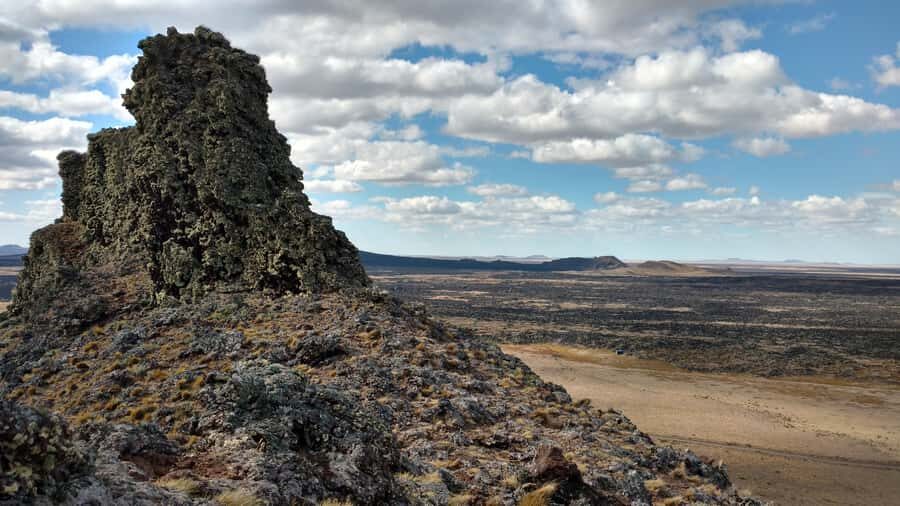
Pali Aike National Park covers about 5,030 hectares, but what makes it special isn’t size—it’s what the Earth did here. The main attraction is terrain shaped by several major volcanic eruption periods, leaving wide areas of basaltic lava. When you’re on foot, that geology isn’t just scenery. It’s the reason the ground looks and behaves the way it does: dark rock, volcanic cones, and hardened flows that create natural routes through otherwise harsh steppe.
This is also an easy park to understand on the fly. The description is clear about how the geology drives the living world. The area sits in the arid Patagonian steppe, so expect flora and fauna that match that dry environment rather than lush “green Patagonia” fantasies. You’re coming here for a planet-like walk, not a garden stroll.
And the myths aren’t decoration. The name Pali Aike comes from the Tehuelche language (aonikenk) and is tied to the idea of a desolate place or a place of evil spirits. That matters because it changes how the stops feel. You’re not just reading a science label—you’re hearing a story attached to the terrain.
You can also read our reviews of more tours and experiences in Punta Arenas.

Punta Arenas to the Steppe: A Long Day With a Real Trek
The tour runs about 690 minutes (so, roughly a full day). You leave Punta Arenas with a shared transfer, then spend around 3 hours trekking through the park to hit the main points.
Why does this matter for your planning? Because remote Patagonia rewards a calm pace. You’ll want your body ready for a steady walk on rocky, volcanic ground. Even if the pace isn’t described as extreme, the setting is. Dark volcanic rock can be unforgiving under the sun, and steppe conditions can be dry and windy. The tour’s only explicit “bring” item is sunscreen, which tells you the company expects you to manage sun exposure yourself.
Group size is limited to 10 participants, and that’s a practical advantage here. In a place like this, you don’t want a massive line of people stretching out the route and slowing down the guide’s ability to explain what you’re seeing. A smaller group also helps the experience feel more like a shared conversation than a passive bus ride.
Escorial del Diablo: The Volcanic Feature You’ll Talk About Later
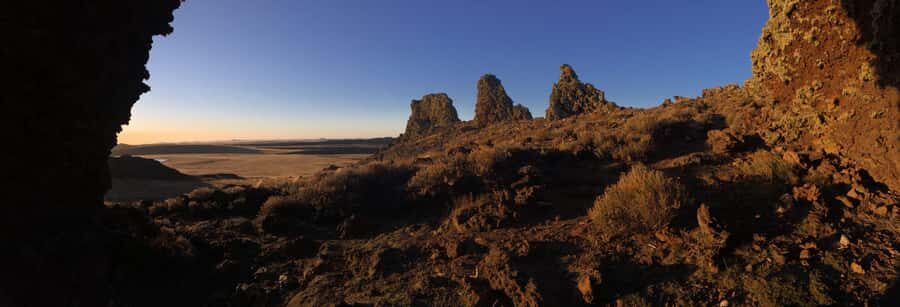
If you remember just one named stop, make it Escorial del Diablo. The tour highlights it as an unmissable point, and the name alone sets expectations: think rough, volcanic ground tied to a dramatic reputation.
What it means in real terms is that you’re walking through a zone shaped by volcanic activity—lava that cooled into hardened rock fields. In many volcanic parks, those areas act like natural terrain mazes. You can’t just “look around.” You move through the shapes, and your attention stays on the textures: fractures, layered rock, and the way the land channels your steps.
This is also a good place to slow down. When you’re surrounded by basaltic formations, it helps to let the guide’s explanation do its job: you’ll start connecting what you see—black cones, lava flows, and volcanic features—to why the park looks the way it does. That’s the difference between taking photos and actually understanding the place.
La Morada del Diablo Crater: When the Myths Match the Geology
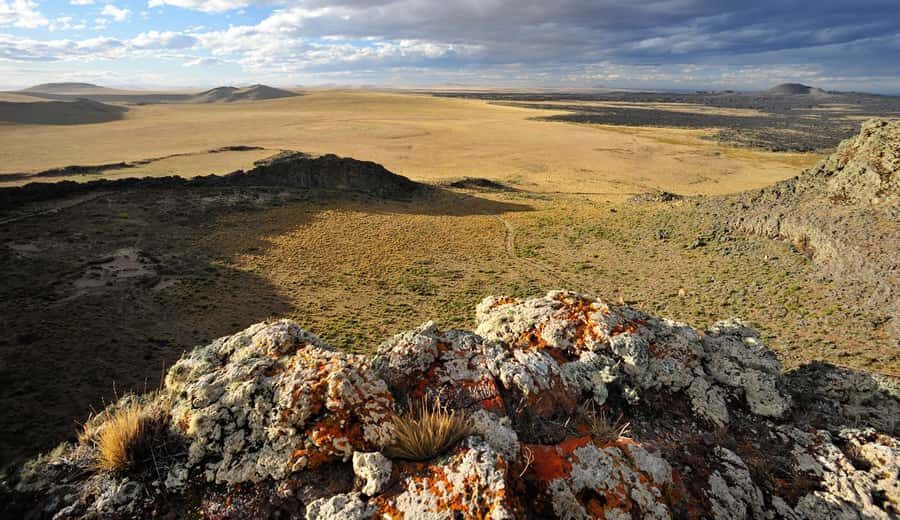
The tour treats La Morada del Diablo as another top highlight, and it’s easy to see why. A crater stop isn’t just a view; it’s a shape. Craters concentrate the story of volcanic events into a single, readable feature.
Here’s what I’d focus on: how “emptiness” becomes interesting. The park’s name links it to desolation and evil-spirit storytelling, and a crater makes that feeling physical. Even without going full dramatic, craters tend to make you notice scale—how the Earth collapsed inward, how wind and sun have worked the surface, and how the terrain can guide both your route and your imagination.
You’ll likely appreciate this stop even more if you enjoy places where the myth isn’t separate from the facts. The tour framework connects legend and landscape in a way that doesn’t feel forced: the name comes from local language tradition, and the guide uses it to bring meaning to the geology.
Pozos del Diablo and Laguna Ana: Variety Beyond the Dark Rock
Not every major stop is all-black rock. The tour includes Pozos del Diablo and Laguna Ana, which is a welcome change when you’ve been walking volcanic terrain for hours.
Pozos del Diablo fits into the same theme as the other Diablo-labeled sites: the name suggests a place of pits or holes, likely tied to volcanic action and erosion. In practical terms, this is your chance to keep your eyes open for how volcanic terrain creates variations—depressions, pockets, and uneven ground that can change how you experience the walk.
Then Laguna Ana adds a different element: water. A lagoon in an arid steppe is instantly useful for understanding the region. Even if it’s not described as a giant spectacle, it breaks the monotony and gives you something to measure the environment against. Where the land stays dry, water can shift what birds and other small wildlife you might notice. It also gives your group a mental reset between the more intense crater-and-volcanic-feeling stops.



Pali Aike Cave: Evidence of Very Old Human Presence
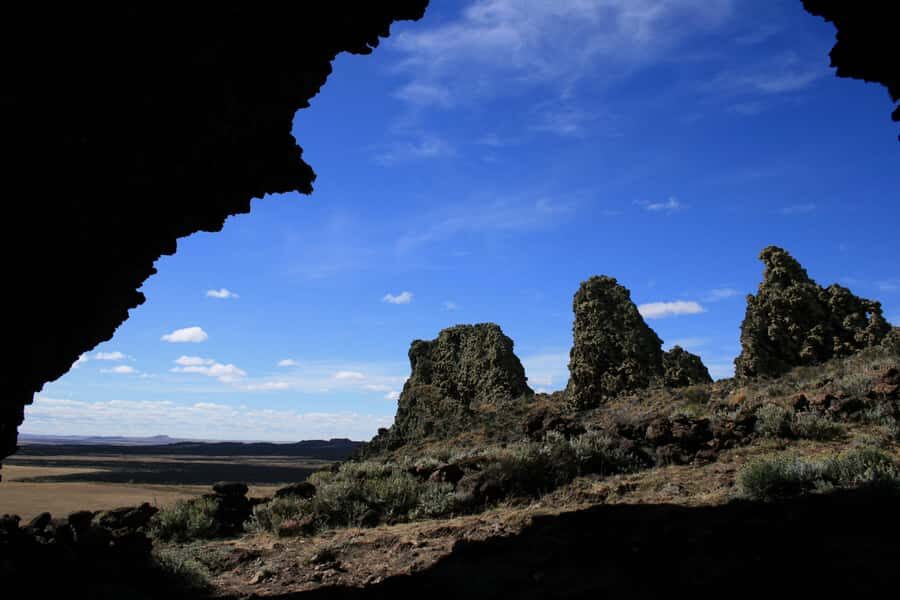
One of the best reasons to do this tour is Pali Aike Cave. The tour description mentions evidence of Magellanic inhabitants found here. It also points to a timeline where humans arrived about 12,000 years ago, using the area as shelter and living in coexistence with the mega fauna of the time.
This isn’t a “museum cave.” You’re on a day trek in open terrain, so the cave stop is likely about what the site represents, not elaborate indoor exhibits. But the payoff is real: you get a sense of how people survived at the edge of extreme conditions, using the land as protection and as part of their life.
If you like history that’s tied to geography (not just dates on a page), this is your moment. The park’s volcanic shapes aren’t only Earth science—they’re part of why humans stayed. Evidence like that helps you see the terrain as something practical and inhabited, not only eerie and empty.
The Tehuelche Name and the Stories You’ll Hear on the Walk
The tour is explicit about the meaning of Pali Aike in Tehuelche (aonikenk): desolate place or place of evil spirits. That’s not just trivia. In places with dramatic geology, the “why” behind names often ends up being the best emotional guide for visitors.
You can also expect the day to connect these stories to the park’s cast of characters: prehistoric animals such as the mylodon, plus references to people like aonikenk inhabitants, explorers, ranchers, and scientists. Even if some of those roles are only briefly touched, it points to the park’s layered meaning—spiritual language, survival, and later scientific attention.
My practical advice: lean in when the guide says the name again and again. In this context, repetition is the point. It helps your brain label what you’re seeing so the walk sticks long after you’re back in Punta Arenas.
Price and Value: What the $140 Covers (and What It Doesn’t)
The tour price is listed at $140 per person, and that’s a fair starting point for a full-day, small-group outing in remote Patagonia. But you should do your budget math.
Here’s what’s included:
- Shared transfer
- Bilingual tour guide (English and Spanish)
- A trek through major park points over about 3 hours of walking time
What’s not included:
- Entrance fee to Pali Aike National Park
- Meals
- Accident insurance
Value-wise, the main question is whether you’ll use the guide time well. In a park like this, explanation helps a lot because volcanic terrain can look similar from a distance. A bilingual guide also helps you follow details like place names (Escorial del Diablo, La Morada del Diablo, Pozos del Diablo) and connect them to what you’re walking on.
If you prefer all-in pricing with meals included, this may feel more like a half-free, half-a-la-carte day. You’ll probably want to plan snacks or a simple meal approach so you don’t get stuck thinking about food while you’re trying to enjoy the scenery and the stops.
Who This Tour Suits Best, and Who Might Struggle
This trip is best for people who like active sightseeing. You’ll be trekking for about 3 hours, and the ground is volcanic, so you need decent mobility and comfort walking on uneven terrain.
It’s not suitable for wheelchair users, based on the tour’s information. Also, it’s not set up for people bringing extra items: pets aren’t allowed, drones aren’t allowed, and alcohol and drugs aren’t allowed.
Who will likely love it:
- People interested in geology and landscape formed by volcanic eruption periods
- History-minded travelers who like very old human traces, especially around caves
- Travelers who want a small group experience instead of a crowded hike
Who might pass:
- If you’re trying to minimize walking time, this day is built around trekking
- If you hate long days, the total duration (690 minutes) might feel like a grind rather than an adventure
Logistics Reality Check: Transfers Matter Here
Now the not-so-fun part. There are verified reports of the provider not picking people up and lacking communication. That’s the kind of thing that can wreck a tight Patagonia schedule.
So here’s what you should do:
- Confirm pickup details well before departure time.
- Make sure you have a clear contact path for the provider on the day of the trip.
- If you’re staying only a night in Punta Arenas, build a little buffer in your plan so this doesn’t force a bigger headache.
This isn’t about fear. It’s about protecting your day in a place where distances and timing are not forgiving.
Should You Book Pali Aike From Punta Arenas?
I’d book this if you want a rare mix: basalt lava walking, big named volcanic features like Escorial del Diablo and La Morada del Diablo, plus a history stop at Pali Aike Cave tied to very old human presence. The small-group setup and bilingual guide also help you get real value from the time in remote Patagonia.
I’d be cautious if you rely on smooth transport with zero hassle. With the pickup/communication issues reported in verified cases, don’t treat the transfer as a background detail. Treat it as a main checklist item.
If you’re the type who likes practical planning and also loves geology-and-myth days, Pali Aike is the kind of outing you’ll remember for its textures and its name-based storytelling.
FAQ
Where does the tour start?
It departs from Punta Arenas.
How long is the tour?
The duration is listed as 690 minutes.
How much walking time should I expect?
There’s trekking of approximately 3 hours to reach the park’s main points.
Is the guide bilingual?
Yes. The tour includes a bilingual tour guide in English and Spanish.
What’s included in the price?
Included are the shared transfer and the bilingual tour guide.
Are meals included?
No. Meals are not included.
Is wheelchair access available?
No, it is not suitable for wheelchair users.
Can I bring a pet or a drone?
No. Pets and drones are not allowed.