REVIEW · PUERTO NATALES
Puerto Natales: Full day tour Torres del Paine
Book on Viator →Operated by Ruta Chile · Bookable on Viator
You can see a lot in one day. This Torres del Paine full-day tour is a smart intro: hotel pickup, big-name viewpoints, and plenty of chances for wildlife in their natural habitat. The one thing to keep in mind is that it’s built around short walks and long photo stops, so it won’t feel like a hardcore hike.
I especially like how the day is paced. Your guide keeps the driving moving, then adds quick perspective stops—so you get the famous scenery without needing to plan every turn yourself. The other big win is the wildlife potential: red foxes, condors, guanacos, and ñandúes show up often enough to make the detours feel worth it.
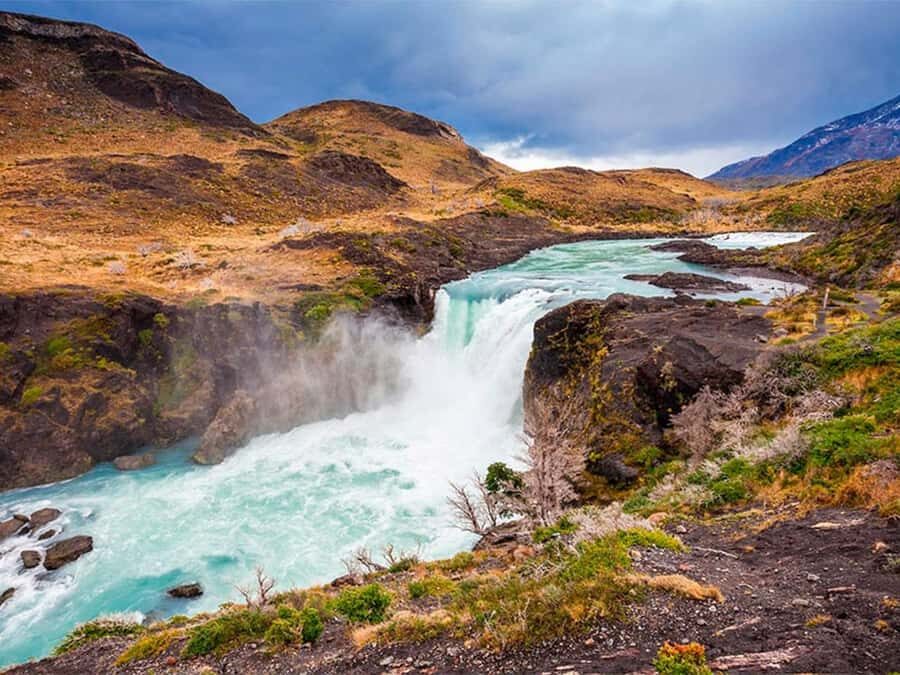
If you’re expecting the waterfall to be right at your feet all the time, temper that. One person felt the Salto Grande stop was shorter and the viewpoint wasn’t as close as the photos suggest, and there can also be days where the weather limits what you can see clearly.
In This Review
- Key things you’ll notice on this Torres del Paine full-day tour
- A one-day Torres del Paine plan from Puerto Natales
- Price and what you pay for (and what you don’t)
- Getting to the park: the rhythm of stops and photo breaks
- Cerro Castillo: quick legs and cafeteria time
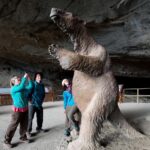
- Milodón Cave Natural Monument: a prehistoric pause
- Laguna Amarga: panoramic views and wildlife odds
- Mirador Salto Grande: a short walk to the waterfall viewpoint
- Lakes Nordenskjöld and Pehoé: guanacos, ñandúes, and quiet drama
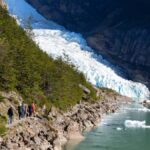
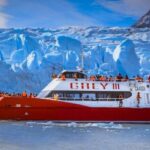
- Gray Glacier sector: lenga forest walk and icebergs
- Guides, comfort, and the one weakness: sound and timing
- What to bring for a cold, windy one-day Patagonia hit
- Who this tour is best for (and who may want something else)
- Should you book this full-day Torres del Paine tour from Puerto Natales?
- FAQ
- What time does the tour start?
- How long is the full-day Torres del Paine tour?
- Where is the tour located?
- Is hotel pickup and drop-off included?
- What languages are the guides?
- Is food included in the price?
- Are admission tickets included for Torres del Paine and Milodón Cave?
- How many people are in the group?
- Does the tour run in bad weather?
- What is the cancellation policy?
Key things you’ll notice on this Torres del Paine full-day tour
- Hotel pickup and drop-off in Puerto Natales keeps the day simple and low-stress.
- Bilingual guiding (English or Spanish) with real explanations, not just scenery callouts.
- Multiple Paine sectors in one day: Laguna Amarga, Salto Grande, Lakes Nordenskjöld/Pehoé, and Gray Glacier.
- Wildlife along the route: condors and red foxes are a real possibility, plus guanacos and ñandúes.
- Mostly lookout time with a few short walks, so it’s beginner-friendly for many people.
- Gray Glacier icebergs and lenga forest are the main payoff in the afternoon.
A one-day Torres del Paine plan from Puerto Natales
Puerto Natales is the launchpad for Torres del Paine. This tour is designed for people who want the park’s major moments without committing to a multi-day trek.
You start early—pickup begins at 7:30 a.m. from your hotel—and you’ll be back in town around 7:30 p.m. to 8:00 p.m. That’s a long day, but it’s also a very efficient one. You’re basically buying access to a full route of scenic stops, timed with the day’s best viewing opportunities.
The vibe here is relaxed. You’re not hiking between valleys all day. Instead, you ride, stop, walk briefly, take photos, and repeat. It’s a great fit if this is your first time in the region and you want to get oriented fast.
A few more Puerto Natales tours and experiences worth a look
Price and what you pay for (and what you don’t)
The listed price is $96 per person for about 10 hours on the road. At first glance, that sounds like a “transport + guide” deal, and that’s exactly what it is.
What’s included:
- Guide throughout in Spanish or English
- Transportation by car, minibus, or bus
- Hotel pickup and drop-off
What’s not included:
- Food and drinks
- Entry tickets for Torres del Paine National Park
- Entry ticket for Cueva del Milodón (Milodón Cave)
That last part matters for budgeting. Even if the tour feels affordable compared to longer excursions, you’ll still need to plan for park and cave admissions. I’d also suggest planning for lunch on your own, because the day includes a stop where you’ll be thinking about food and timing.
Booking-wise, this is a popular day trip. It’s commonly booked about 40 days in advance, which tells me you should reserve sooner rather than later if you’re traveling during busier periods.
Getting to the park: the rhythm of stops and photo breaks
The day runs on a steady rhythm. Drive segments are broken up by short walks and scenic pull-offs. This matters because Torres del Paine is one of those places where visibility can change quickly—wind, clouds, and light all shift fast.
A typical stop structure you’ll see:
- quick roadside moments for views
- a short walk where the viewpoint is close but not immediate
- a longer photo pause where the guide helps you orient
That’s also why it works for different fitness levels. Many people can do “step out, walk a little, take in the view, get back on the van” without needing trekking gear.
One practical tip: this is an all-weather operation, but it’s still Patagonia. Even in good conditions, it can be cold and breezy. Dress like you expect wind.
Cerro Castillo: quick legs and cafeteria time
Your first major stop is Villa Cerro Castillo. You arrive after about 30 minutes and roughly 36 km of route.
This is not the star of the day. Think of it as a reset stop:
- stretch your legs
- grab coffee or something warm at the cafeteria services
- use the restroom if you need it
There’s a 15-minute window here. That’s short, so don’t treat it like a lunch break. More importantly, don’t show up without layers. The early part of the day can feel colder than you expect.
Milodón Cave Natural Monument: a prehistoric pause
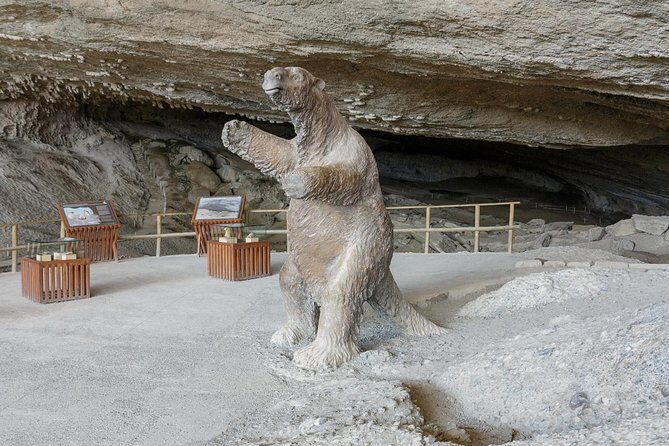
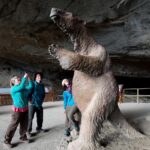
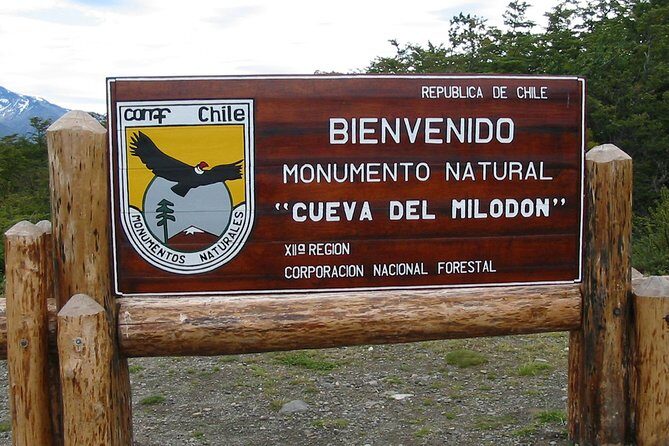
Next up is Milodón Cave (Cueva del Milodón Natural Monument), with about 40 minutes on site.
This stop is a smart way to vary the scenery from pure mountain-and-lake views. You’ll learn about the giant ground sloth (Milodón)—an extinct herbivorous animal—and the area’s prehistoric connection.
You should plan for an entry fee here, since it’s not included. Also, don’t expect a long museum-style experience. This is a focused, time-bounded stop that’s meant to keep the overall park route on schedule.
One note that might save you disappointment: a couple of people felt the cave was the least satisfying part of the itinerary. If you’re the type who wants maximum time at viewpoints, you may consider this the “use it for context” stop rather than the headline.
Laguna Amarga: panoramic views and wildlife odds
After Milodón Cave, you head through the Laguna Amarga sector.
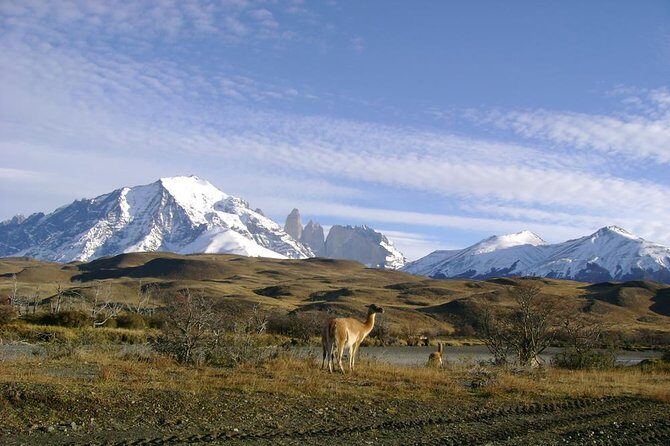
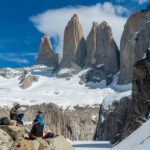
The stop itself is brief—around 5 minutes—but it’s there for a reason. Laguna Amarga is often used as a vantage-and-wildlife corridor. Here you can catch panoramic views and, with a bit of luck, see red foxes and condors.
This is where a guide makes a difference. A good guide doesn’t just point. They help you look properly—where to scan, what to look for, and what landmarks to use when you’re trying to identify peaks in a big, windy horizon.
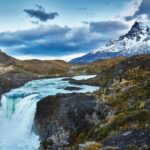
Mirador Salto Grande: a short walk to the waterfall viewpoint
Then comes Mirador Salto Grande. The walking portion is listed as about a 10-minute walk to the viewpoint.
The stop time includes about 25 minutes, which is enough to:
- walk out to the view
- take photos
- admire the waterfall for a few cycles of cloud and light
Still, there’s a caution here. One person felt their viewpoint was farther from the falls than expected, and that the time at the spot felt shorter than advertised. So if you’re coming specifically for the most up-close waterfall photos, expect a “viewpoint experience” rather than a “stand right beside it” experience.
Also, keep your lens ready. Condensation and wind can make it tricky to focus. Patagonia weather is not gentle with gear.
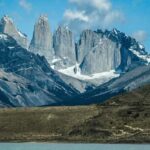
Lakes Nordenskjöld and Pehoé: guanacos, ñandúes, and quiet drama
From Salto Grande, you continue toward Lakes Nordenskjöld and Pehoé. This part of the day is often where animals steal the show.
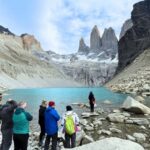
You’ll have about 20 minutes here. The region is known for guanacos and ñandúes, and you’ll be on the lookout while the guide works the route past the best angles.
This is a good stop if you like wildlife without needing a dedicated safari-style outing. You’re not waiting in one place for hours. You’re moving through the scenery and catching animal sightings as they happen.
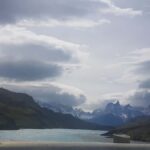
One practical upside: you’ll usually get enough time to grab a couple photos without rushing. Another upside is perspective. Seeing the lakes from the roadside viewpoint helps you understand where the park’s big water sits relative to the surrounding massif.
Gray Glacier sector: lenga forest walk and icebergs
The afternoon is the payoff. You move into the glacier sector for about 1.5 hours.
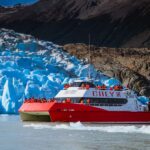
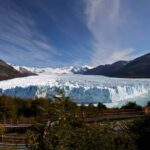
You’ll step into a lenga forest walk and then look out for the icebergs of Gray Glacier. This is a classic Torres del Paine moment: cold light, moving ice shapes, and a stillness that hits you after a day of driving.
Bring layers even if it looks sunny. The wind tends to make glacier-viewing feel colder than expected. If you get the chance to stop in the open for photos, try to do it slowly—Patagonia’s weather changes fast, and your best angle can last only a few minutes.
Also remember: glacier views are weather-dependent. If clouds roll in, the scene can look different than you planned for. That doesn’t always mean bad—it just means you need to stay open to what you’re seeing today.
Guides, comfort, and the one weakness: sound and timing
The quality of this tour is tied heavily to the guide. The strongest praises you’ll hear are about guides being friendly, informative, and genuinely invested in explaining what you’re looking at.
Names that have come up in past experiences include Jhon, Natalie, Gabriel, Kathy, Guillermo, David, Walter, Hector, and Eduardo. Different personalities, same overall goal: help you understand the park while keeping the day running smoothly.
The guide also affects how wildlife moments feel. Seeing condors from a distance is cool. Understanding what you’re seeing—why they hang around, what the terrain suggests—makes it feel like more than a random sighting.
Comfort is generally good. One person noted a smooth, comfortable ride. Another liked the minibus setup and the fact that there were only a few walking segments. This is not an endurance trip.
The weak spot is usually audio and timing. One group said the guide didn’t use a mic in the van, so they could barely hear. Another felt the Gray Glacier portion and lunch timing created a trade-off. Those aren’t guaranteed problems, but they’re real enough that you should plan like the day will require flexibility.
My simple advice: bring a snack or plan how you’ll handle lunch timing, and be ready to enjoy the stops even if clouds change your photo lineup.
What to bring for a cold, windy one-day Patagonia hit
This is a full-day outdoors plan, even if the walking is short.
Pack like you’re expecting wind and sudden chill:
- Layered clothing (base layer + warmer layer + wind-resistant outer layer)
- Warm hat and gloves
- Sun protection (Patagonia sun can still bite)
- Comfortable walking shoes for short trails and uneven ground near viewpoints
- A camera with battery capacity for cold weather
Also, bring patience for the schedule. You’re moving through multiple sectors, and each viewpoint depends on where the day is at—weather included.
Who this tour is best for (and who may want something else)
This tour shines for:
- First-timers who want a strong sampler of Torres del Paine
- People who don’t want a multi-day hike
- Travelers who like wildlife spotting during scenic drives
- Anyone who values a guided day with minimal planning
It may not be ideal if you:
- Want lots of long hiking time (this is mostly lookouts and short walks)
- Are chasing a very specific, close-up waterfall photo at Salto Grande
- Need plenty of unhurried time at one spot—this day is designed to cover many sectors
If you’re traveling with older relatives, this style can actually work well. One experience described it as mostly van time with strategic walking stops, which is exactly how it plays.
Should you book this full-day Torres del Paine tour from Puerto Natales?
I’d book it if you want the “big greatest hits” version of Torres del Paine in one day. The combination of hotel pickup, bilingual guiding, and multiple major sectors (Laguna Amarga, Salto Grande, lakes, and Gray Glacier) is a strong value for $96, especially when you factor in that you’re avoiding route-planning stress.
I’d think twice if your top priority is maximum hiking mileage or if you’re very sensitive to how close a viewpoint is. In that case, a more hiking-focused plan might fit you better.
My final take: if you’re short on time and you want to come away with a real sense of where Torres del Paine’s best scenery lives, this is a practical, well-run way to do it.
FAQ
What time does the tour start?
The tour start time is 7:30 am.
How long is the full-day Torres del Paine tour?
It’s approximately 10 hours.
Where is the tour located?
The tour is based in Puerto Natales, Chile and visits Torres del Paine National Park and nearby stops.
Is hotel pickup and drop-off included?
Yes. Hotel pickup and drop-off are included.
What languages are the guides?
The guide provides the tour in Spanish or English.
Is food included in the price?
No. Food and drinks are not included.
Are admission tickets included for Torres del Paine and Milodón Cave?
No. Entry/Admission for Parque Nacional Torres del Paine and Entry/Admission for Cueva del Milodón are not included.
How many people are in the group?
The tour has a maximum of 40 travelers.
Does the tour run in bad weather?
It operates in all weather conditions, but it also requires good weather. If it’s canceled due to poor weather, you’ll be offered a different date or a full refund.
What is the cancellation policy?
You can cancel for a full refund if you cancel at least 24 hours before the experience’s start time. If you cancel less than 24 hours before, the amount paid is not refunded.