REVIEW · SANTIAGO
Museo Chileno de Arte Precolombino Admission Ticket
Book on Viator →Operated by Museo Chileno de Arte Precolombino · Bookable on Viator
Ancient Chile hits hard downtown. With a Museo Chileno de Arte Precolombino ticket, you get a smart, human look at Pre-Columbian Chile in an 1805 Customs House-turned-museum, and I love how the permanent show links deep history to modern indigenous identity. I also like the straightforward Spanish-and-English context that helps you understand what you’re looking at without feeling lost. One watch-out: the lower spaces can be quite dark, and some signage is hard to read if your eyesight isn’t great.
This is an easy, self-guided stop that works for couples and families alike, especially if you want something educational in the middle of a city day. Plan on around two hours at a calm pace, and keep in mind the museum experience is smaller than you might expect from the title.
In This Review
- Key things to know before you go
- Museo Chileno de Arte Precolombino in Santiago: Why this museum is worth your time
- Entering a 1805 Neoclassical Customs House
- Chile before Chile: What you’ll see in the permanent exhibition
- A clear self-guided route (and how to pace your two hours)
- Tickets, hours, and getting checked in without stress
- When your phone ticket acts up
- Discount tickets you should know about
- How group size affects the vibe
- Museum value: is the $17 ticket money well spent?
- Cafe time and the little extras inside the museum
- What kind of traveler will love this (and who might want a bigger museum)
- Should you book the Museo Chileno de Arte Precolombino ticket?
- FAQ
- How long does the Museo Chileno de Arte Precolombino admission ticket take?
- What’s included with the ticket?
- Is there food included?
- What are the museum’s opening hours in 2025 and 2026?
- Can children visit without an adult?
- Are discounted tickets available?
- What if my ticket access or app doesn’t work on arrival?
- Can I cancel and get a full refund?
- Is the museum near public transportation?
Key things to know before you go
- Historic building setting: the museum sits in a neoclassical structure built in 1805, originally the Royal Customs House
- Permanent exhibition focus: the main show, Chile before Chile, covers a long timeline from early human presence to today
- Two-language support: Spanish and English explanations are available for items
- Self-paced visit: you’re not rushed, and the layout is made for walking through in a good flow
- A real city break: there’s an on-site cafe and a small gift shop
- Plan for lighting: some areas (especially downstairs) can be dim, so bring your reading patience
Museo Chileno de Arte Precolombino in Santiago: Why this museum is worth your time
If you only have a limited number of museum hours in Santiago, I’d still put the Museo Chileno de Arte Precolombino on your short list. It’s not a giant warehouse of objects. It’s more like a focused journey through how people lived, made art, and carried cultural memory across thousands of years in this long, varied country.
The museum’s big theme is Chile before Chile. That phrasing matters. Instead of treating pre-Columbian cultures as a separate “past,” the exhibition frames them as roots that continue in present-day indigenous communities—through genes, artistic expression, and historical experience. That’s the kind of narrative that sticks, especially when you’re traveling and trying to understand a place beyond a postcard view.
You’ll also appreciate how practical the experience feels. The ticket is straightforward, the visit is self-guided, and the museum is open most days during daytime hours. For a city trip, it’s a low-friction way to add depth without needing a full-day commitment.
A few more Santiago tours and experiences worth a look


Entering a 1805 Neoclassical Customs House
The museum is housed in one of Santiago’s distinguished colonial-era buildings. Built in 1805 in a neoclassical style, it originally served as the colonial government’s Royal Customs House. That origin gives the place a quietly powerful feel: you’re walking through a building built for trade and entry points, then turning that meaning toward cultural exchange and human stories.
Why I think that matters to you: the setting helps you slow down. A lot of museums feel generic inside. Here, the architecture already gives you context that Chile was shaping its identity long before it became the modern country you see today.
Also, this museum is conveniently located near public transportation, so you’re not forced into a complicated transport puzzle just to reach it. It’s the kind of stop you can pair with other central Santiago sights without turning your day into logistics.
Chile before Chile: What you’ll see in the permanent exhibition
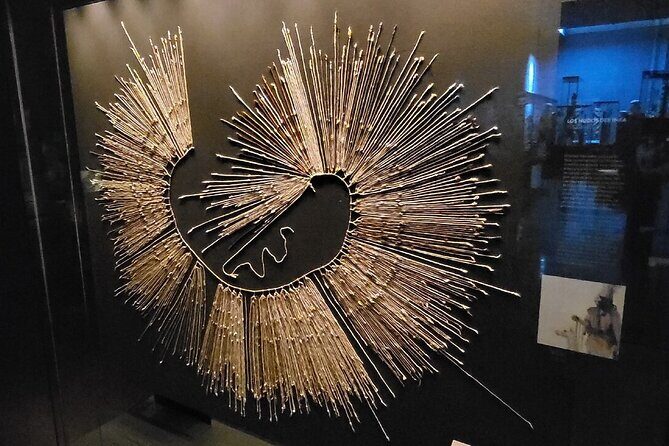
The permanent exhibition—Chile before Chile—is the heart of your visit. The exhibit’s premise is simple and compelling: more than 14,000 years ago, humans first entered the territory that is now Chile. Since then, different peoples have lived across changing landscapes, and their descendants—today’s indigenous communities—are part of what Chile is.
Here’s what that means as you walk through:
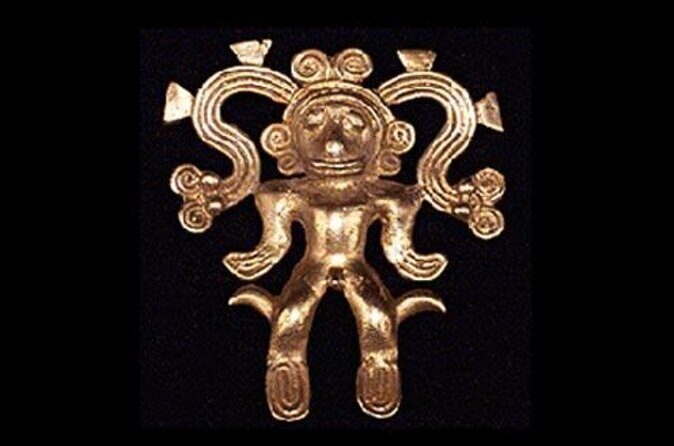
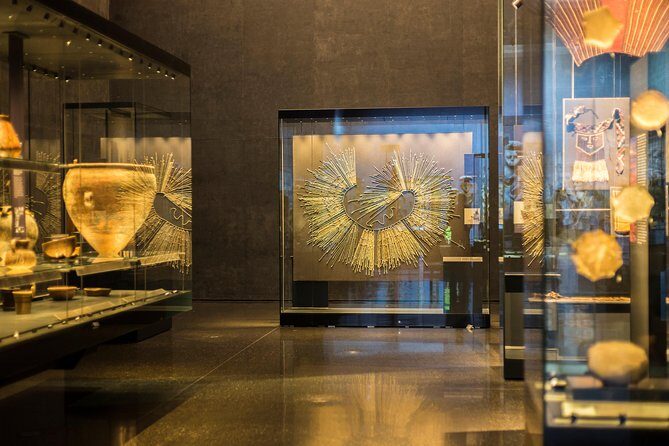
- You’ll encounter artwork and cultural objects connected to ancient inhabitants and how those traditions echo in present identity.
- You’ll see how art functions as more than decoration. It can be a record of knowledge, a way to communicate, and a tool for continuity.
- You’ll get a clear story arc that tries to connect time periods rather than treating them as unrelated chapters.
The museum also provides Spanish and English explanations for items. That’s a big deal for value. You don’t need to be a history expert to make sense of what you’re seeing. If you’re traveling with someone who reads fast but knows little background—or someone who wants historical context but can’t handle long textbook-style panels—the bilingual support helps.
One small practical note from experience patterns: the collection is presented in a way that supports a smooth walk-through. It’s not chaotic or randomly scattered. You’ll likely find it easier to stay oriented than in some museums where everything feels like separate rooms with no narrative thread.
A clear self-guided route (and how to pace your two hours)
Your time here can be surprisingly satisfying, partly because it’s not built to exhaust you. Expect around two hours total for a relaxed visit, with the ticket time allocated for about a 30-minute admission window for entry and viewing the core exhibition areas. In real life, many visitors linger longer because the objects are detailed and the building invites slow wandering.
To get the most out of your visit, use a two-pass strategy:
First pass (20–40 minutes):
Focus on getting the big timeline and the main themes. Don’t try to read everything. Just identify the sections that seem most connected to your interests: early settlement stories, regional culture differences, and the bridge to today’s indigenous identity.
Second pass (45–75 minutes):
Slow down for the objects that catch your attention. Look for patterns: similar materials, recurring motifs, and how different cultures express identity through craft. If you’re traveling with someone who likes comparisons, this is where you’ll feel the value.
A note on lighting: one common complaint is that the bottom level can be quite dark and signage can be hard to read. If you know you’re sensitive to dim conditions, plan to spend more time where the lighting is clearer and be ready to move closer to labels when you need them. If you’re traveling with kids, bring patience for reading-time—some areas take longer when the light isn’t bright.
Tickets, hours, and getting checked in without stress
This is a ticket-based entry. You’re booking an admission ticket to the Museo Chileno de Arte Precolombino. Pre-booking is especially helpful because it prevents you from arriving and hoping for availability at the door.
Hours are consistent across both 2025 and 2026:
- Tuesday to Sunday: 10:00 AM to 5:00 PM
The museum is closed Mondays, so plan your route accordingly if you’re mapping out a tight itinerary.




When your phone ticket acts up
Even if your ticket is booked ahead of time, don’t panic if an app doesn’t work on arrival. The check-in staff can handle reservations and print them if needed. That’s a comfort factor worth knowing because it reduces the chance of turning a smooth museum visit into a stressful delay.
Discount tickets you should know about
Discounts aren’t for everyone; they’re for specific groups:
- Chilean nationals, foreign residents in Chile, and students can buy discounted tickets directly at the museum entrance with ID.
And if you’re traveling with kids:
- Children must be accompanied by an adult.
How group size affects the vibe
The experience caps at 15 travelers. That matters more than you’d think. In a smaller museum, big crowds can shrink your attention span fast. A max group size like this helps keep the visit calmer and makes it easier to move between rooms without constant bottlenecks.
Museum value: is the $17 ticket money well spent?
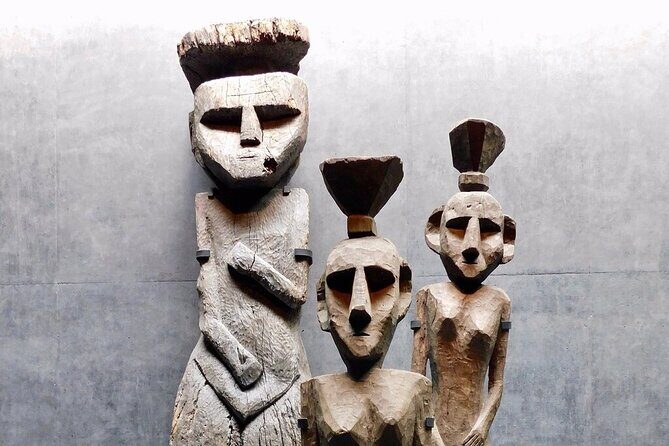
At about $17 per person, this ticket is a practical value for what you get: entry to a permanent exhibition built around a major theme, a historic building with real atmosphere, and bilingual explanations that help you understand objects you might otherwise pass by.
Here’s how I’d judge the value for you:
- If you want context and connection, not just photos of artifacts, the exhibition’s narrative focus is worth it.
- If you like self-paced museums, this works because the flow is set up for walking through at your own speed.
- If you only want a quick stop, you might feel it’s a bit small—but you’re also paying for targeted entry, not for a full half-day of sprawling galleries.
Also, the museum includes a cafe. That means your visit doesn’t have to end when you get museum-fatigued. You can reset in place and turn “I’ll just grab something” into a smooth part of the experience rather than a whole new planning task.
Cafe time and the little extras inside the museum
There’s a cafe inside the museum, and it’s a great option when you want to recharge without leaving the building. One of the best travel habits is not treating museum time and food time as separate day missions. Here, they’re conveniently connected.
There’s also a cute gift shop. It’s small, but it gives you an easy way to bring home something tied to what you saw.
One charming detail from recent visit experiences: music can pop up in hallways near the exhibit areas, including opera singing. It’s not something you should count on, but it’s a reminder that this museum is part of everyday city life, not a sterile “only look, don’t touch” zone.
What kind of traveler will love this (and who might want a bigger museum)

This museum is especially good for you if:
- You want an educational experience that’s easy to fit into a city day
- You like self-guided browsing with support in Spanish and English
- You’re curious about how modern Chilean identity ties back to indigenous cultures
- You prefer museums where you can move through without constant pressure
You might want to think twice if:
- You expected a very large, multi-exhibition museum experience
- You’re sensitive to dim spaces and struggle with reading in low light
- You need a heavy-handed guided explanation (this ticket experience is built for your own pace, not long lectures)
One review note also suggests that sometimes only one main exhibition may be available. That doesn’t mean it will always be the case, but it’s a reason to check what’s currently running if you’re planning around specific exhibits beyond the permanent display.
Should you book the Museo Chileno de Arte Precolombino ticket?
Yes—if you want a smart, manageable museum stop that connects deep pre-Columbian time to present-day Chilean identity, this is a strong booking. At $17, it’s priced like a practical city experience rather than a luxury add-on, and the bilingual explanations do real work to make the objects understandable.
I’d especially book it if:
- You’re on a first trip to Santiago and want one cultural anchor that isn’t only about colonial buildings or modern neighborhoods
- You want something that won’t eat your whole day
- You like the idea of seeing how art, history, and identity get linked across thousands of years
Skip it only if you’re hunting for a massive museum with lots of changing temporary exhibits and bright, evenly lit galleries. For most visitors who want meaning without stress, the ticket is well worth it.
FAQ
How long does the Museo Chileno de Arte Precolombino admission ticket take?
The experience is listed as about 2 hours on average, and the admission portion is timed at around 30 minutes for entry and viewing.
What’s included with the ticket?
The ticket includes museum admission.
Is there food included?
No. Food and drinks are not included.
What are the museum’s opening hours in 2025 and 2026?
Tuesday to Sunday, 10:00 AM to 5:00 PM. The schedule listed covers both 2025 and 2026.
Can children visit without an adult?
No. Children must be accompanied by an adult.
Are discounted tickets available?
Yes. Chilean nationals, foreign residents in Chile, and students can buy discounted tickets directly at the museum entrance by showing an ID.
What if my ticket access or app doesn’t work on arrival?
If you have trouble accessing tickets on your device, the desk can check you in and print your reservation.
Can I cancel and get a full refund?
Yes. Free cancellation is available up to 24 hours in advance for a full refund.
Is the museum near public transportation?
Yes. It’s noted as being near public transportation.