REVIEW · SAN PEDRO DE ATACAMA
Astronomical Tour with Guide and Pick Up San Pedro de Atacama
Book on Viator →Operated by Astrotour · Bookable on Viator
San Pedro de Atacama at night feels unreal. This astronomical tour is built for one job: getting you from a dark street to sharp views of the southern sky using manual and computerized telescopes, plus an expert guide who helps you actually find what you’re looking at.
Two things I really like: first, the tour includes pickup and then settles you into a proper viewing setup with blankets and chairs. Second, you get real guided targeting, using an astronomical laser pointer so constellations and standout objects make sense.
The main drawback to plan around is that your wow-factor depends heavily on conditions. With a bright moon or clouds, you may spend more time on the moon and planets and less on the Milky Way.
In This Review
- Key points before you go
- San Pedro de Atacama Night Sky: Why 9:30 pm Works So Well
- Telescopes and Guides: Getting From Stars to Real Objects
- Inside the 2.5 Hours: Pickup, Dark-Sky Setup, and the Turn-Taking Rhythm
- Moon Phase and Visibility: When the Milky Way Shows Up (or Doesn’t)
- What You Can Expect to See: Planets, Clusters, Galaxies, and Southern Constellations
- Photography, Snacks, and Drinks: Comfort That Makes Night Viewing Easier
- Language and Group Size: What to Expect With Up to 16 People
- Value at $38: Why This Feels Like a Good Deal
- Pickup Boundaries: The One Detail That Can Catch You
- Should You Book This Astro Tour in San Pedro de Atacama?
- FAQ
- What time does the astronomical tour start?
- How long is the tour?
- Is pickup from my accommodation included?
- What’s included during the tour?
- Can I still see the night sky with a bright moon?
- What happens if the weather is bad?
Key points before you go
- Two-and-a-half hours built around telescope turns, so everyone gets a real look rather than a quick drive-by
- Multiple telescopes (manual and computerized) aimed at planets, clusters, galaxies, and stars depending on the season
- Southern-sky laser pointers and guided explanations to help you spot constellations fast
- Snacks, coffee/tea, soda, and alcoholic beverages included, which matters because nights can get cold
- Pro astro photos are part of the package, with better results on moonless nights
- Group size is capped (max 16), but language mix and timing can still affect how smooth it feels
San Pedro de Atacama Night Sky: Why 9:30 pm Works So Well
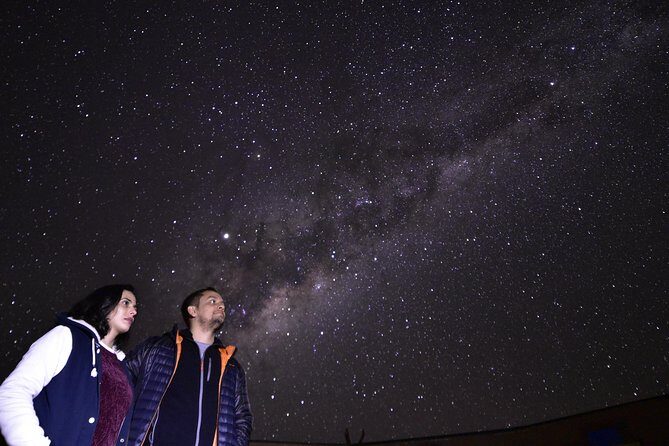
This tour starts at 9:30 pm, which is a smart time in the desert. The sky is usually well dark by then, and you’re not stuck watching the night “warm up.” If you’ve already spent the afternoon doing Valle de la Luna or museums, this is the nightcap that actually lives up to the hype.
San Pedro is famous for clear air, but the best part here is that the experience is designed for the conditions Atacama is good at: cold, dry nights and strong contrast against the dark sky. You’re not relying on luck. You’re relying on a plan, a guide, and equipment meant for night viewing.
You can also read our reviews of more guided tours in San Pedro de Atacama
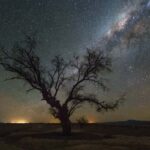
Telescopes and Guides: Getting From Stars to Real Objects
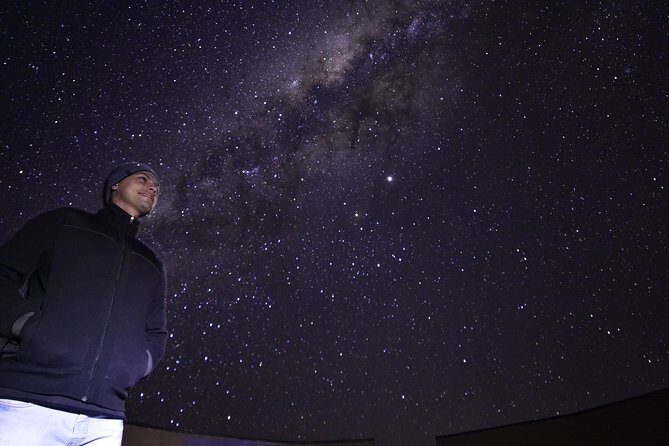
The heart of the tour is the telescope setup. You’ll use a mix of high-end telescopes—including computerized help for tracking and manual viewing. The guide targets objects in the sky and then brings you in for your turn.
In my experience, the difference between casual stargazing and this kind of guided viewing is speed. A good guide gets you pointed at something you can actually recognize. With Atacama, that can mean planets, star clusters, and galaxies that most people would never find on their own—even with an app.
Guides also seem to vary by night, and their language approach matters. I’ve seen hosts like Patricio and Nathan running tours with clear explanations and lots of back-and-forth. But sometimes the group is mixed in Spanish and English. When translation happens on the fly, it can feel a bit uneven, especially if the group is large or everyone is trying to ask questions at once.
Inside the 2.5 Hours: Pickup, Dark-Sky Setup, and the Turn-Taking Rhythm
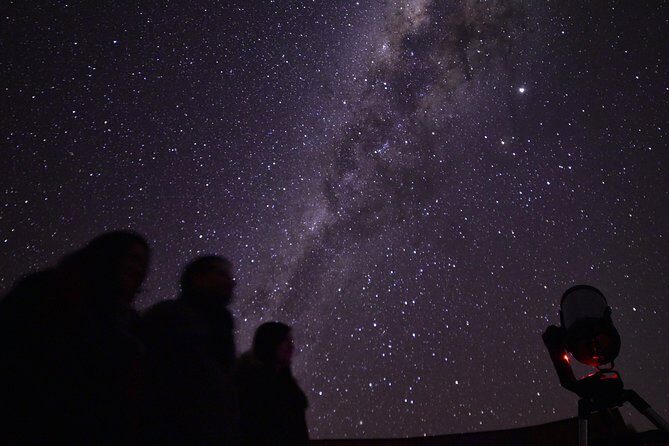
Your evening usually unfolds like this: pickup from your accommodation, a short drive out of the busier area, then telescope time in a set viewing space. You’ll sit in chairs with blankets, which is not a small detail—cold hands ruin your night fast.
A big thing to understand is the format: you’ll rotate through the telescopes. That’s the reason the tour works for most people. It’s also why one common complaint shows up—waiting. If the night is busy and everyone takes their turn slowly, you can feel like you’re stuck waiting for your eyes to finally get their moment.
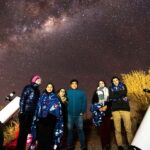
A second practical point: photography takes time. The tour includes astro photography (noted as without moon), and you also get a professionally taken souvenir photo. That means part of the experience can become a photo-production line, especially when the group crowds around the camera setup.
Moon Phase and Visibility: When the Milky Way Shows Up (or Doesn’t)
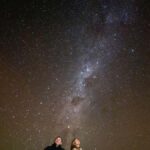
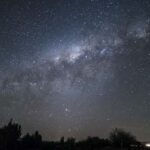
In this part of Chile, the moon can either boost the experience or flatten it. With a bright moon, you may lose the delicate Milky Way view. You’ll still see plenty—especially the moon itself and planets—but it won’t feel like the iconic dark-sky photo everyone imagines.
That’s why you’ll see two types of reactions:
- On new moon / very little moon, the sky can look dramatically deeper, and the telescope views feel like a real reveal.
- On full or near-full moon, it can still be stunning, but the contrast changes what’s visible.
What I like about the tour approach is that it doesn’t panic when the moon is up. Some nights still produce standout views of the moon and planets, and guides keep shifting targets. Still, if you’re traveling with a single mission—catching the Milky Way in all its glory—try to choose dates when you’re more likely to have moonless conditions.
What You Can Expect to See: Planets, Clusters, Galaxies, and Southern Constellations
Depending on the time of year, the guide will point the telescopes at different targets. The program is built for a range: planets, clusters, galaxies, and stars with high-definition viewing when conditions allow.
You also get orientation help. An astronomical laser pointer guides you through the main constellations of the southern hemisphere. That matters more than people expect. Even if you’re not memorizing star names, being able to connect a constellation shape with what you’re being shown helps you leave with a mental map instead of just a pile of photos.
The telescope views can also surprise you in a different way: you see shapes and colors that are hard to spot with the naked eye. One reason Atacama stargazing hits so hard is that the atmosphere is often steady and dark-adapted viewing is genuinely better than you’d expect back home.
One realistic note: you’re not getting space-telescope results. The atmosphere sits between you and deep space, and telescopes still have limits. The tour uses reflecting telescopes with concave mirrors, which capture lots of light, but atmospheric “noise” sets the ceiling for magnification and fine detail.
Photography, Snacks, and Drinks: Comfort That Makes Night Viewing Easier
Included items are part of the reason this tour feels relaxed rather than stiff. You’ll have snacks, coffee and/or tea, soda/pop, and alcoholic beverages. There’s also a W.C. available.
Why does this matter? Because stargazing is a slow activity. You need to stay comfortable enough to pay attention while the guide explains what you’re seeing and while you wait for your telescope turn.
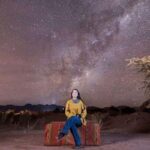
Photography is another big value piece. The tour includes astro photography without moon, plus a professionally taken souvenir photo that’s meant to look good with the stars and the telescope setup. Even when conditions shift, you should still come away with a photo or two that captures the night in a way your phone often can’t.
Do keep expectations realistic: if the moon is bright or clouds roll in, the Milky Way-style photo might not be the star of the show. But the moon and planets can still look impressive through the telescope.
Language and Group Size: What to Expect With Up to 16 People
Group size is capped at 16 travelers, which is a key difference from the huge mass tours. Still, “small” doesn’t automatically mean “quiet.” If the group is multilingual and the guide has to split attention between translation and telescope handling, the pacing can feel a little chaotic at times.
Some tours run with a guide doing primary explanations in one language and a second person translating. When the translation gets busy—like when multiple people are looking through telescopes at once—that can cause lag. On certain nights, English gets slightly rushed, and you might not catch every detail.
Here’s the practical takeaway: if you’re comfortable with basic astronomy terms or you just want to see the objects, you’ll likely be fine. If you need every line of explanation in English to enjoy it, choose your expectations carefully and plan to focus on the visual experience first.
Value at $38: Why This Feels Like a Good Deal
At $38 per person, this tour is priced like a budget activity—but it includes a lot of the stuff that usually costs extra in astronomy: pickup, telescope-guided viewing, time outdoors in a real setup, and included refreshments.
Your money is going to cover three things you can’t easily DIY at the same quality level:
- A guide who can find targets quickly
- Telescopes and a viewing setup
- A professional photo souvenir
Is it always a perfect Milky Way night? No. But the price is what makes the risk feel worth taking. Even on less ideal nights, you’re usually still left with memorable telescope views—especially moon and planets—and a souvenir photo that gives you something more than just blurry selfies under streetlights.
Pickup Boundaries: The One Detail That Can Catch You
Pickup is included from your accommodation. But there’s an important catch: they don’t pick up from certain sectors—en ayllu de Cucuter, Tulor, Coyo, Solor or Quitor.
If you’re staying in any of those areas, don’t assume the van will find you. Ask ahead where the closest pickup point is, or plan for an easy walk or short route to the meeting area. This is the kind of small detail that can decide whether your tour starts smoothly or starts stressful.
Should You Book This Astro Tour in San Pedro de Atacama?
If you want an easy, guided introduction to the southern sky, I’d book this. It’s a strong fit for couples, families, and photographers who want the night sky plus the comfort extras—blankets, chairs, snacks, and drinks—without having to manage equipment.
Book it especially if:
- You want telescopes and guided pointing, not just an app on your phone
- You like learning while you look (guides like Patricio and Nathan are a big part of the experience quality)
- You care about the professional souvenir photo
Consider skipping or at least temper expectations if:
- You’re chasing only the Milky Way. A bright moon can reduce that wow-factor.
- You dislike group logistics. Some nights involve waiting turns and photo production time.
If you do book, set yourself up for success: aim for a night with darker conditions when possible, and dress for cold desert air even if you plan to rely on included hot drinks.
FAQ
What time does the astronomical tour start?
The start time is 9:30 pm.
How long is the tour?
It runs for about 2 hours 30 minutes (approximately).
Is pickup from my accommodation included?
Yes, pickup is included from accommodations, but there are exceptions. They do not collect from en ayllu de Cucuter, Tulor, Coyo, Solor or Quitor.
What’s included during the tour?
Included are pickup, blankets and chairs, astro photography (without moon), alcoholic beverages, coffee and/or tea, soda/pop, snacks, and a W.C.
Can I still see the night sky with a bright moon?
You may still see plenty, especially the moon and planets. The overall visibility and Milky Way results can be different depending on moon brightness.
What happens if the weather is bad?
This experience requires good weather. If it’s canceled due to poor weather, you’ll be offered a different date or a full refund.