REVIEW · SAN PEDRO DE ATACAMA
Guided tour to the Tatio Geyser breakfast at Geyser Blanco
Book on Viator →Operated by Molantur · Bookable on Viator
Five a.m. hits fast. This El Tatio sunrise tour turns San Pedro de Atacama into a cold, steamy science show, then you warm up with breakfast at Geyser Blanco. I like the hands-on walking at the fumaroles and I like the guides who explain what you are seeing, not just where to stand. The main drawback is the early start and serious cold, with temperatures reported around minus 10 to minus 20°C.
You’ll cover a few different altitude zones, so plan on slow breathing and careful footing. With a maximum of 15 people and a moderate fitness level requirement, it feels like an actual small adventure rather than a cattle-call. Still, be ready for mostly Spanish commentary on some departures, and make sure you understand how your guide will help with English if you need it.
In This Review
- Key things to know before you go
- Why El Tatio at dawn is worth the early wake-up
- Breakfast at Geyser Blanco: warming up the right way
- The Putana River ford: a quick change of scenery at high altitude
- Machuca food stop: goat cheese and llama empanadas
- Guide quality and language: science talk that actually helps
- Transport, timing, and the reality of the roads
- What to pack for minus temperatures and a warm breakfast
- Price and value: how $90 stacks up
- Who should book this Tatio + Geyser Blanco breakfast tour
- Should you book Molantur’s El Tatio breakfast tour?
- FAQ
- What time does the tour start?
- How long is the tour?
- Is admission included for the geyser areas?
- How much walking is involved?
- How big is the group?
- Are children allowed?
- Does the tour run in any weather?
- Can I cancel for free?
Key things to know before you go
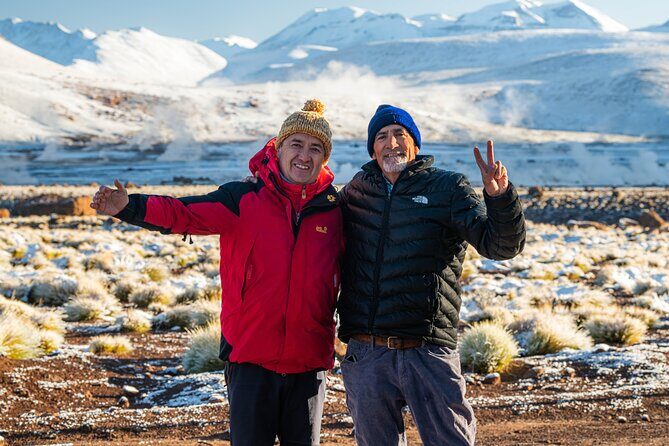
- El Tatio sunrise means real geothermal drama: fumaroles reported up to 10 meters.
- Breakfast at Geyser Blanco is tied to the season: thermal bath timing can shift by month (September through April vs other months).
- Two hours of walking at high altitude: give your legs time, and take short steps.
- A small-group format (max 15): easier pacing, better photo stops.
- You may spot wildlife on the plateau: vicuñas and Andean flamingoes have been seen on this route.
- Pickup happens between 4:00 and 5:00 AM: you’ll want a plan for sleep and warm layers.
Why El Tatio at dawn is worth the early wake-up
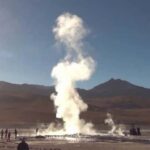
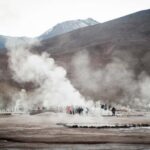
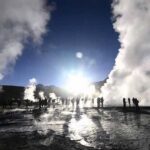
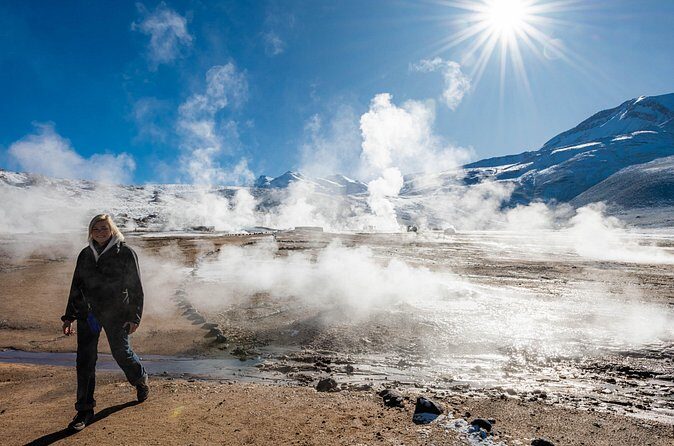
If you only do one high-altitude geyser outing in San Pedro, El Tatio at sunrise is the one that makes people talk. The big draw here is the visual contrast: dark desert night giving way to steam, with the geothermal field sitting under the Andes mountains. Expect constant motion from the ground. Fumaroles can climb to around 10 meters, and the cold is part of the spectacle. You’re not just watching geysers. You’re watching heat fight the night air.
The tour includes about two hours of walking around the geothermal area. That walking time is why this works better than a quick drive-by. You get to move with your group, choose your angles for photos, and actually feel how widespread the activity is. Just remember the footing: the ground can be uneven, and frost plus early-morning low temperatures can make everything slippery.
What I’d plan for (and pack for) is the temperature shock. One traveler noted the cold as a real factor in the valley before sunrise, and the tour info points to minus 10 to minus 20°C conditions. If you show up in city-style layers, you’ll be fighting the weather instead of enjoying the geysers. You want to be warm enough that you can stand still for those steam clouds without getting miserable.
You can also read our reviews of more guided tours in San Pedro de Atacama
Breakfast at Geyser Blanco: warming up the right way
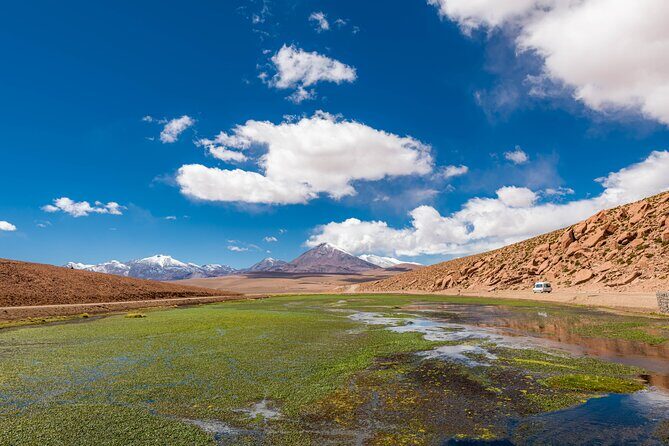
After the El Tatio cold, the day pivots toward comfort. The stop at Las Termas de Geyser Blanco is where the tour shifts from frozen steam to a warmer start to breakfast.
Here’s the key detail: the tour is described with a seasonal swap. During the winter period, you enjoy a thermal bath. For months from September through April, you get a spectacular breakfast at Geyser Blanco, described as a river with internal geysers. In plain terms, you’re eating close to geothermal features, and the setting feels more special than a standard breakfast stop because the heat and water are still part of the scene.
This is also one of the best moments to slow down. You’ve been walking and breathing thin air. Breakfast gives you a reset. One review specifically praised how the guide prepared a tasty breakfast and took time to explain things, not rush everyone out the door. That matters, because at sunrise geyser destinations, time can feel like a race.
One consideration: if you’re booking specifically for a bath, don’t assume every season and every departure will match your expectations. There was an account where the thermal bath experience didn’t happen, despite being described. If this is a must-do for you, I’d ask the operator what is included on your exact departure date.
The Putana River ford: a quick change of scenery at high altitude
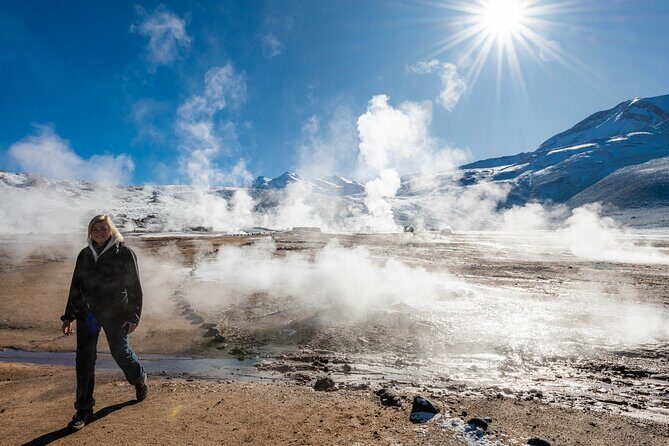
Between the geothermal stops and the food in Machuca, you’ll get a short nature moment at Vado del Rio Putana. The tour describes it as a ford area, plus a return back toward San Pedro.
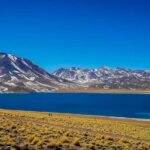
This stop is brief, about 20 minutes, so don’t expect a long hike. Instead, think of it as a viewpoint break where the plateau setting takes center stage. The route sits above 4,200 meters, and at that altitude, the sky and light can feel different. You may notice more sparse vegetation, and you’re more likely to see birds and small wildlife than in lower regions.
One traveler said the guide pointed out wildlife and made the day feel a bit like a safari at times. Specific animals mentioned included vicuñas and Andean flamingoes, which tells you that the area isn’t just rocks and steam. It’s living high country, and your guide’s scanning skills can turn a quick stop into a memorable moment.
Practical tip: at 4,200+ meters, you can feel wind and cold more than you expect. Even if the sun is out, your body will still feel the altitude. Take the short stop to move gently, sip water if you have it, and avoid big bursts of effort.
Machuca food stop: goat cheese and llama empanadas
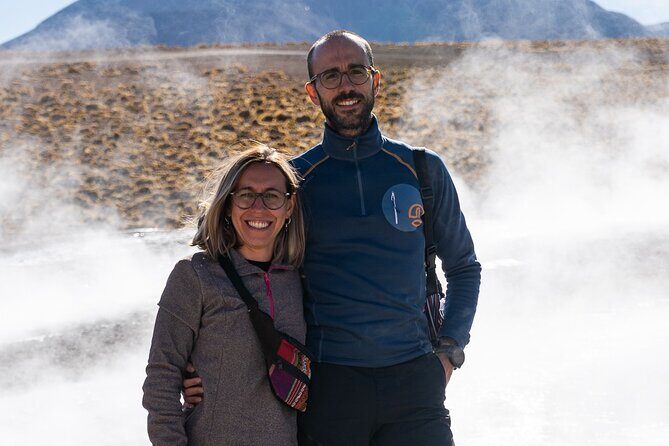
Next up is Machuca, a small town stop built into the tour for a food-and-community moment. You’ll have about 30 minutes here, which is long enough to eat without turning it into a long detour.
What to look forward to is the local food: goat cheese and llama meat empanadas prepared by people in the area. It’s a nice contrast to the sterile feeling some tour stops can have. Instead of grabbing a snack in a tourist strip, you’re eating something rooted in what locals make.
There’s also an altitude reality check here. One account mentioned breathing difficulty while climbing optional church steps in Machuca. That likely means there’s sometimes a small climb or viewpoint option during the town stop. If that is offered on your departure, take it slow. The trick at altitude is simple: short steps, steady pace, and time.
If you’re the type who gets cold during long meals, warm up while you eat. This stop can be chilly, and you’ll likely still be running on sunrise timing. Food is your easiest “thermal regulation” tool.
Guide quality and language: science talk that actually helps
The best version of this tour is when the guide turns the geysers from a photo-op into understanding. Many people loved the explanation and the extra patience around photos. One guide, named Nata, stood out for being attentive and for translating everything so an English speaker felt included. That is what you want on a tour like this: clear answers to the what-and-why, plus support if language is a problem.
Still, not every departure may match your language needs. One review complained that commentary was mostly in Spanish even though the guide could speak English. Another praised translation and comfort from the guide’s approach. So here’s my practical advice: when you book, note your language preference. If you have an English-only need, ask how your guide will handle it.
Also pay attention to how the guide handles timing. Several comments pointed to guides taking time for photos and to explain history and science behind what you were seeing. That approach is helpful because El Tatio is visually intense. Without context, it’s easy to only remember the steam. With context, you remember how geothermal systems work and why the timing matters.

Transport, timing, and the reality of the roads
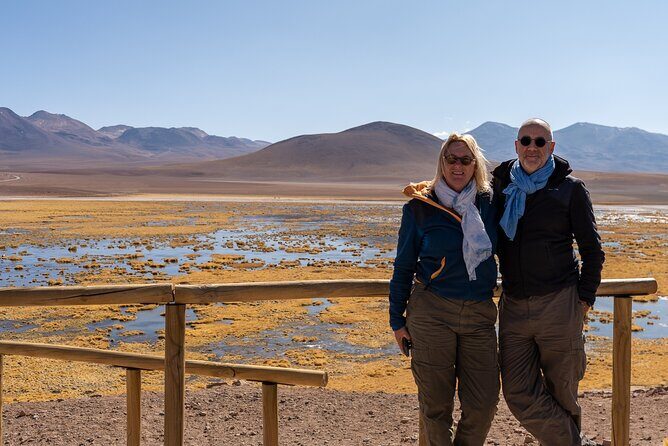
This is an early-day outing with a 6 to 7 hour total duration that includes travel time. The pickup window is between 4:00 AM and 5:00 AM, depending on the day and the departure schedule.
Two things are worth planning for:
- You might not get picked up exactly when you think. One report said they were ready at 4:00 AM but pickup happened closer to 5:00 AM.
- Road conditions can affect how long travel feels. There was a note about odd driving and an unusual road that stretched the trip.
So build in buffer time. Set two alarms. Wear layers you can adjust quickly. Have your warm hat and gloves accessible, not buried in a backpack.
Group size helps here. With a maximum of 15 travelers, the van or vehicle shouldn’t feel like a packed bus. That makes it easier to handle bathroom breaks, photo requests, and pacing at different stops.
Drop-off is described as returning you to a central place, and at least one person reported it worked well since their lodging was walkable. If your hotel is far from the center, confirm where you’ll be dropped.
What to pack for minus temperatures and a warm breakfast
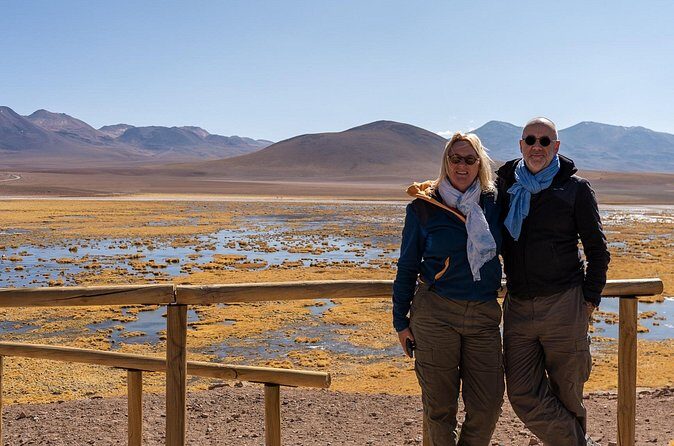
The tour info calls out extreme cold at El Tatio, and the sunrise timing makes that cold feel sharper. So pack for comfort first, photos second.
Your essentials:
- Warm winter layers (base layer, mid-layer, and a real insulated outer layer)
- Gloves and a hat that cover your ears
- Warm socks and footwear with grip
- Sunglasses (sun over snow can be harsh)
- A scarf or neck warmer
One review was direct: don’t ignore the advice to bring warm winter clothes. That is not seasonal overstatement. Minus temperatures at a geothermal field can turn a “quick walk” into an uncomfortable shuffle.
Also, altitude can hit your lungs even if you’re fit. One person said they felt heavy and had trouble breathing during optional church steps. That’s common at altitude. Your job is to keep effort small and steady. The tour gives you enough time to enjoy the stops if you move at a human pace.
Price and value: how $90 stacks up
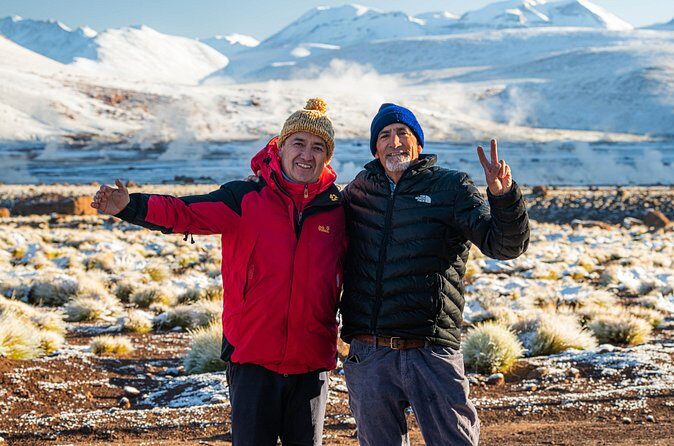
At $90 per person for a 6–7 hour day, this is not a cheap tour. But value is strong if you care about both the main geothermal field and the geothermal breakfast setting.
Why it can feel worth it:
- El Tatio admission is included.
- Geyser Blanco admission is listed as free.
- Other stops (Putana ford and Machuca food time) are described as included without extra admission fees.
- You get multiple distinct experiences in one morning: geothermal walking, a warm food/thermal moment, a high-altitude plateau break, and a local food stop.
Where value can feel shaky:
- If you were expecting a thermal bath regardless of the month, seasonal differences can matter.
- If communication is limited (Spanish-heavy commentary for some departures), you may feel like you’re watching without understanding.
Overall, $90 is most fair when you go into it with the right expectations: this is a sunrise geothermal walk day, not a relaxed sightseeing loop.
Who should book this Tatio + Geyser Blanco breakfast tour
This tour is a strong match if:
- You want sunrise at El Tatio and not just a quick photo stop.
- You’re comfortable with moderate physical fitness and can handle about two hours of walking at high altitude.
- You like guides who explain science and show wildlife when possible.
You might want to reconsider if:
- You hate early mornings and hard cold mornings.
- You have mobility limits that make walking in uneven ground difficult.
- You’re traveling with kids under 5, since the tour does not allow children under that age.
Altitude note: if you’ve never been above 4,000 meters, take it slow. It’s not a challenge race. The goal is to enjoy the geothermal features and let your body adjust.
Should you book Molantur’s El Tatio breakfast tour?
Book it if you want the full Atacama geothermal contrast: cold steam at El Tatio, then breakfast at Geyser Blanco tied to real geothermal scenery. The small-group size, the chance to learn from the guide, and the mix of walking + warm break make it feel like a true morning adventure.
Skip or adjust expectations if you are counting on specific thermal-bath timing or if you rely on English commentary with no flexibility. In that case, do a quick check with the operator before you commit.
One last smart move: compare booking options carefully. One person advised booking through a different platform for reward-credit reasons and said they would not use another service again. That’s not about the tour itself, but it can affect your wallet if you care about points.
If you’re ready for an alarm-clock sunrise, cold hands, and a guided morning that mixes nature and food, this is a very solid choice.
FAQ
What time does the tour start?
Pickup is scheduled between 4:00 AM and 5:00 AM.
How long is the tour?
The total time is about 6 to 7 hours, including travel time.
Is admission included for the geyser areas?
Yes. Admission is included for Geyser del Tatio, and admission is free for Las Termas de Geyser Blanco. Other stops are described as free.
How much walking is involved?
You’ll walk for about two hours at Geyser del Tatio, and the tour also includes shorter stops at other locations.
How big is the group?
The tour has a maximum of 15 travelers.
Are children allowed?
Children under 5 years old are not allowed.
Does the tour run in any weather?
This tour requires good weather. If it is canceled due to poor weather, you’ll be offered another date or a full refund.
Can I cancel for free?
Yes. You can cancel up to 24 hours in advance for a full refund.