REVIEW · EASTER ISLAND
Easter Island: Rapa Nui Stargazing Tour
Book on GetYourGuide →Operated by GREEN ISLAND TOURS LIMITADA · Bookable on GetYourGuide
Stargazing on Rapa Nui feels different at night. This tour turns the Southern Hemisphere sky into a story you can follow, with telescope viewing and Polynesian navigation lessons tied to real Rapa Nui sites. I especially liked how you learn the why behind the stars, not just the names.
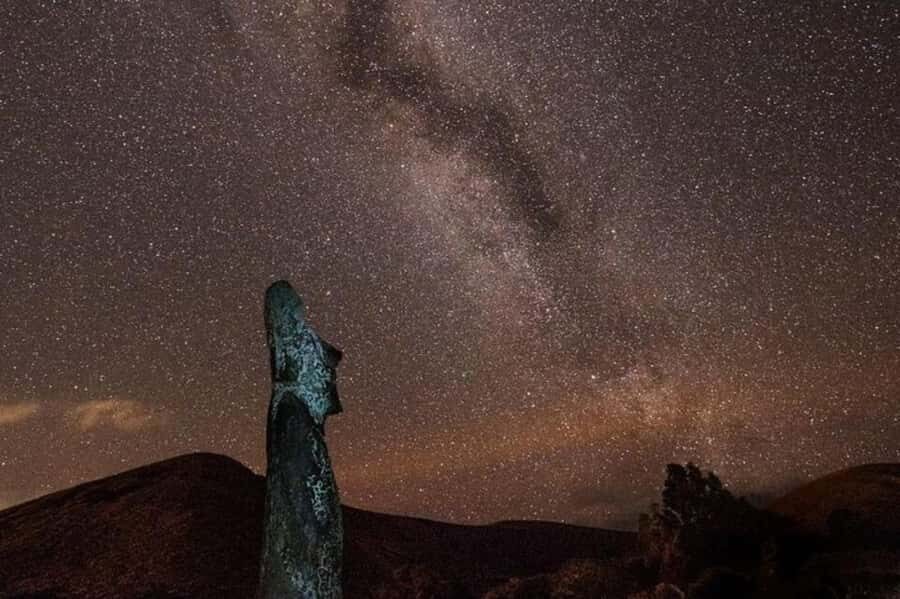
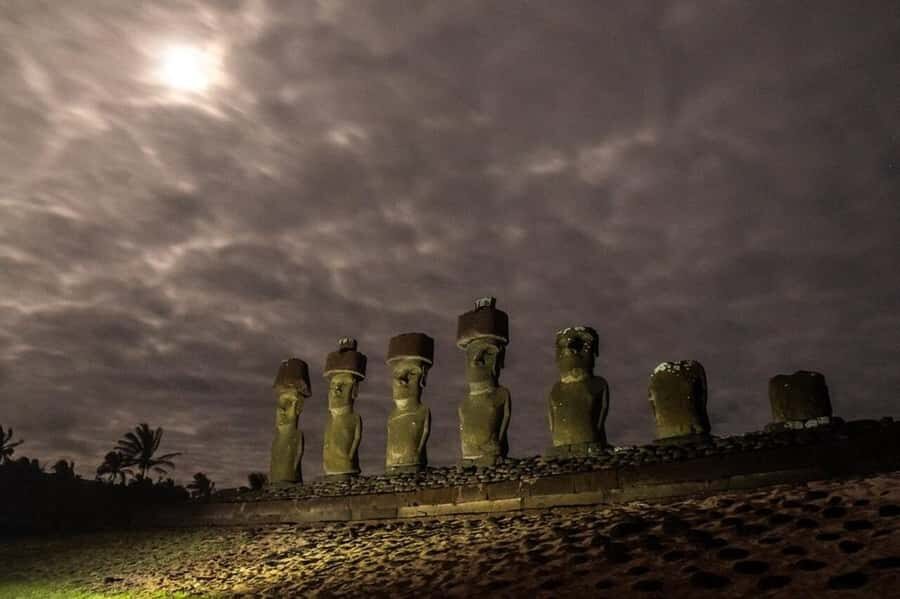
Two things I really liked: the telescope session at a remote observation spot, where you get a clear look at stars and planets, and the hands-on feeling of the whole experience—learning plus viewing plus photos. You also get access to Ahu Nau Nau at night, which gives the sky an unforgettable foreground. (Small bonus: the guide’s singing can make the evening memorable.)
One possible drawback: this depends heavily on conditions. If the weather is poor, the tour may be rescheduled or refunded, and if it’s too close to a full moon, it won’t run—so plan your trip with some flexibility.
In This Review
- Key points to know before you go
- Polynesian navigation meets telescope night on Rapa Nui
- Meeting at Katipare and the 19:00/21:00 seasonal start
- Telescope time at a remote observation site
- The lesson portion: constellations, navigation, and Rapa Nui sky clues
- Coffee break and the traditional observatory stops
- Ahu Nau Nau at night: moai silhouettes and photo options
- Price and what you get for $140 per person
- Who this Easter Island stargazing tour is best for
- Should you book this tour?
- FAQ
- Where does the stargazing tour meet?
- What time does the tour start?
- How long is the tour?
- How much does it cost?
- Is hotel pickup included?
- Do I need a National Park ticket?
- What’s included with stargazing and photos?
- Are there snacks or drinks included?
- Is the tour affected by the moon?
- What about cancellation and bad weather?
Key points to know before you go
- Telescope viewing of stars and planets from a remote observation site
- Learn how Polynesian voyagers used the night sky for navigation
- Ahu Nau Nau at night plus a included digital photo
- Small group size, maximum 12 travelers, for a more focused experience
- Coffee break with hot chocolate and local cake during the night program
- No wheelchair access, and uneven ground can be a factor at night
Polynesian navigation meets telescope night on Rapa Nui
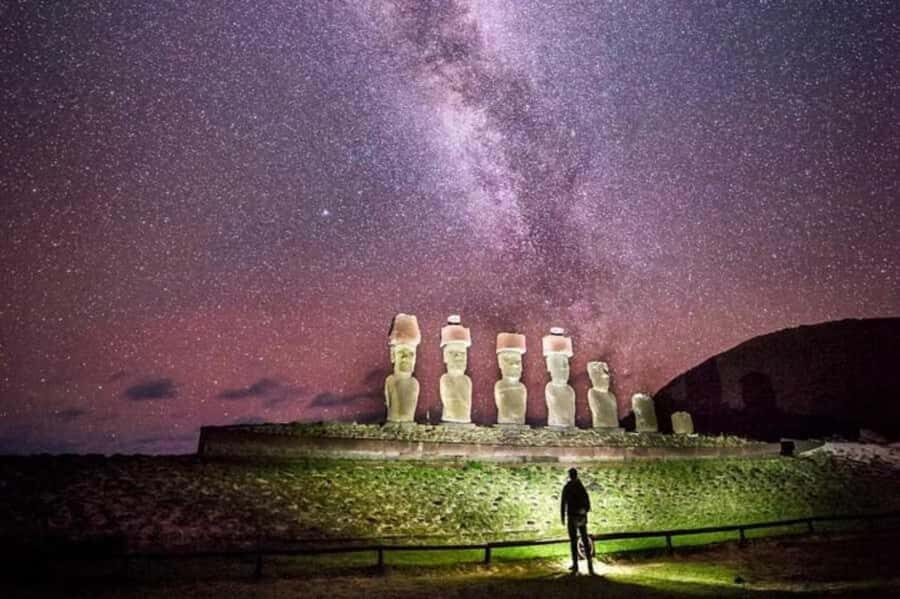
Rapa Nui is remote by day. At night, it feels even more open—like the sky has room to breathe. This tour’s main idea is simple: you’ll connect the constellations you see to the way Polynesian voyagers traveled and settled across long ocean stretches.
What makes it more than a typical stargazing walk is the mix of skills. You don’t just point at the sky. You learn the basic astronomy behind what you’re seeing, then you connect it to archeo-astronomy on Rapa Nui—the links between sky patterns and the island’s cultural landmarks. That blend gives the constellations meaning fast, even if you’re starting from scratch.
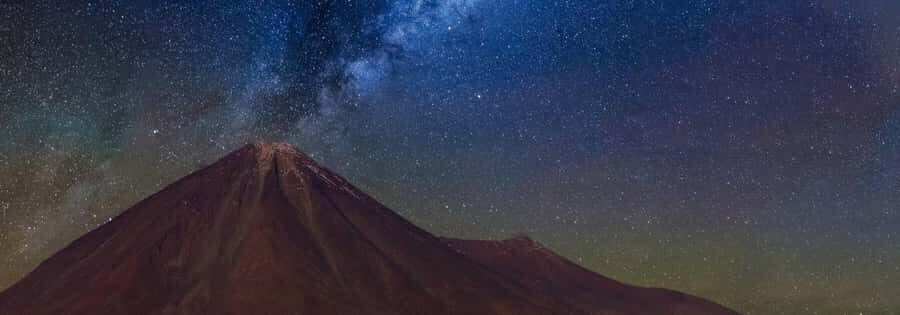
And yes, the viewing is the payoff. You’ll get stars and planets through a telescope, and you’ll see sky regions that belong to the Southern Hemisphere. If you came to Easter Island for the moai and you want to add something truly different, this is a strong way to do it.
You can also read our reviews of more tours and experiences in Easter Island.

Meeting at Katipare and the 19:00/21:00 seasonal start
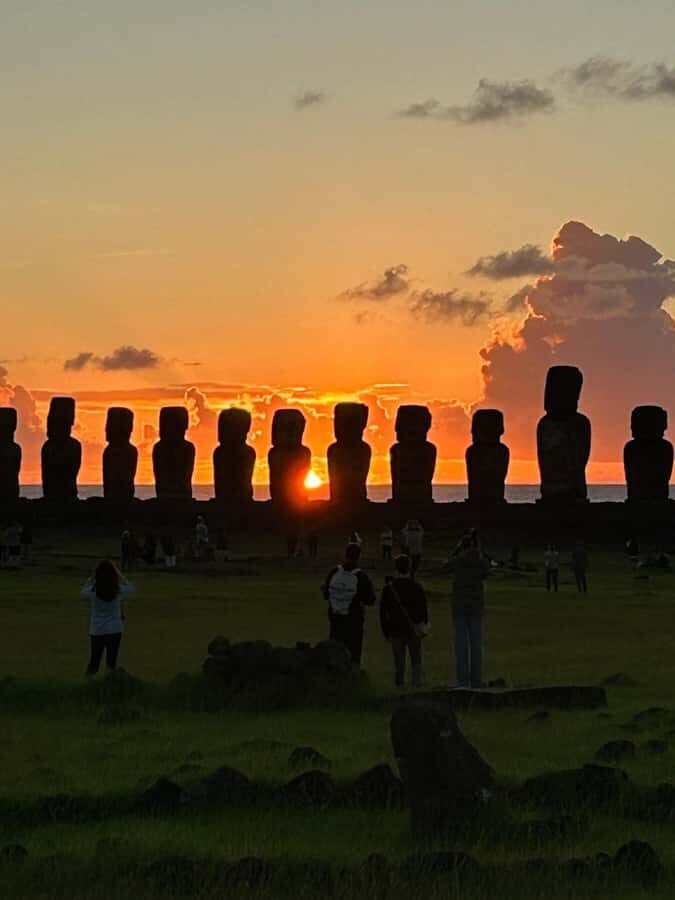
You meet in front of Katipare Library (Centro Lector Katipare) in Katipare, Hanga Roa. The start time changes by season: 21:00 in summer and 19:00 in winter. So before you set your evening plans, double-check the time on your confirmation.
You won’t get hotel pickup. Instead, the tour includes hotel drop-off after it ends. That’s helpful for planning dinner and timing your ride back—just remember you’re doing this as a true night activity, not a late-afternoon add-on.
One more practical note: this tour isn’t available close to the full moon, specifically 4 days before and 2 days after. The reason is obvious once you’ve done much stargazing—bright moonlight washes out faint objects—so they keep the sky conditions as dark as possible.
Telescope time at a remote observation site
The heart of the experience is the telescope session. You’ll head out to a remote observation site where you can view stars and planets through the telescope, not just with your eyes.
What I like about this setup is the contrast it creates. In a place like Rapa Nui, the night sky can be spectacular to the naked eye. The telescope adds detail, and it makes the explanations click. When you connect a constellation pattern to what the guide is pointing out, you stop thinking of the sky as random dots.
Small groups help here. With a maximum of 12 travelers, the guide can keep an eye on timing and make sure you can see what’s being highlighted. It’s also easier to manage the flow when everyone’s waiting for their turn at the optics.
Night footing matters. One review flagged uneven ground and suggested something like a lighted helmet for older travelers. I’d treat that as a gentle warning: wear supportive shoes, move slowly, and bring (or borrow) a small light if you need it to step safely.
The lesson portion: constellations, navigation, and Rapa Nui sky clues
Before you look through the telescope, you’ll get guided commentary that ties together a few themes:
- Basic astronomy, so you understand what you’re actually seeing
- The history of Polynesian voyaging and settlement
- Navigational techniques using the night sky
- Archeo-astronomy on Rapa Nui, linking sky knowledge to place
That structure matters because it changes your experience from passive to active. You start noticing how constellation shapes and star positions can guide decisions, especially over ocean distances where you don’t have coastlines as references.
This also helps you enjoy the “Southern Hemisphere” part. If you’ve never seen this sky before, you might not have much context. The guide’s job is to give you a mental map—then you can recognize patterns quickly while the telescope and explanations reinforce each other.
Language options are English and Spanish, and the tour guide provides live commentary throughout the night. If you’re comfortable switching between languages while learning, you’ll likely find it easy to follow the key points.
Coffee break and the traditional observatory stops
After the initial astronomy teaching and the main viewing moment, the tour continues to traditional observatory sites around the island. This is where the night takes on a more grounded feel. You’re not just looking upward; you’re learning how specific places on Rapa Nui relate to watching the sky.
There’s also a planned pause: a coffee break with hot chocolate and local cake. On a night like this, that matters more than you’d expect. It gives you a break from standing still, helps you warm up, and gives your brain a moment to absorb what you just learned.
Expect walking and some outdoor time on uneven terrain. The experience is designed for a group, not a wheelchair tour, and night visibility can make simple footing feel trickier. If you get cold easily, dress for it—this is a night activity in an open environment.
Ahu Nau Nau at night: moai silhouettes and photo options
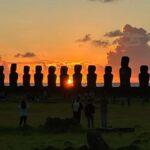
One of the most memorable parts of this tour is the night access to Ahu Nau Nau. Seeing moai with the stars behind them changes the whole mood of Easter Island. During the day, moai are landmarks. At night, they become frames—something to anchor the sky view so it feels like you’re inside the island’s story.
You also get photography support here. A digital photo is included, and there’s an option to take your own photos. That’s important, because a telescope night can produce strong star images—but only if you can position your phone or camera the way you want.
One review mentioned that private star photos on phones via tripod are allowed. You don’t have to bring gear, but if you own a small tripod or you’re thinking about capturing longer shots, bring it. At minimum, plan to use the time well: arrive ready to try a few angles rather than waiting until the moment feels perfect.
Also: expect a dark setting. If you’re taking photos, use your eyes first. Then shoot. That order helps you avoid the common mistake of spending ten minutes fiddling with settings while the sky moment passes.
Price and what you get for $140 per person
At $140 per person for about 3 hours, you’re paying for more than a casual stargazing session. You’re essentially buying four things at once:
- A guided night program with live astronomy and navigation explanations
- Telescope viewing from a remote observation site
- Night access to Ahu Nau Nau plus an included digital photo
- Comfort extras like hot chocolate and local cake, plus a coffee break
That package can be good value if you want a guided, structured experience that includes the moai site element and not just sky spotting. The telescope and the cultural connection are the big “cost drivers,” because they require specific timing, equipment, and staff.
Is it worth it if you mostly want photos? It can still be, because the included digital photo and the Ahu Nau Nau access give you more than “we looked up for a bit.” If you already know constellations and you just want self-guided sky time, then the price may feel steep. But if you want the story behind the stars and the night-site contrast, the tour’s design fits the goal.
Who this Easter Island stargazing tour is best for
This tour fits best if you enjoy learning while you’re doing. If you like connecting history, culture, and science—without it turning into a lecture—you’ll probably have a great time.
It’s also a good fit for:
- Couples and small groups who want a focused nighttime plan
- First-time visitors who want the Southern Hemisphere sky explained clearly
- Travelers who care about photography and want both a guided photo moment and time to try your own
A few reasons it might not fit everyone:
- Not suitable for wheelchair users
- You need good weather, or the tour is rescheduled/refunded
- It’s not available close to the full moon, so it may limit your date choices
And keep in mind the group cap: up to 12 travelers. That’s a plus for attention and pace, but it also means you’re still in a group setting—less private than a bespoke night guide.
Should you book this tour?
I’d book this if your Easter Island trip includes time for a real night activity and you want more than a quick look at stars. The combo of telescope viewing, Polynesian navigation context, and Ahu Nau Nau at night makes it feel like a complete experience rather than a single highlight.
Book it with two practical expectations: weather matters, and footing is something to take seriously at night. If you’re comfortable dressing warm, walking carefully, and showing up ready to learn, this is a strong value pick for a memorable evening on Rapa Nui.
FAQ
Where does the stargazing tour meet?
You meet in front of Katipare Library (Centro Lector Katipare) in Katipare, Hanga Roa, Easter Island.
What time does the tour start?
Meeting time depends on the season: 21:00 in summer and 19:00 in winter.
How long is the tour?
The tour lasts about 3 hours.
How much does it cost?
The price is $140 per person.
Is hotel pickup included?
No. Hotel pickup isn’t included. You meet at Katipare Library, and the tour includes hotel drop-off.
Do I need a National Park ticket?
Yes. You’ll need your National Park ticket for entry.
What’s included with stargazing and photos?
You’ll have telescope viewing at a remote observation site, a live guided experience, a digital photo included, and you’ll have the option to take your own photos.
Are there snacks or drinks included?
Yes. There’s a coffee break, with hot chocolate and local cake included.
Is the tour affected by the moon?
Yes. The tour is not available close to the full moon (4 days before and 2 days after the full moon).
What about cancellation and bad weather?
If weather is poor, the tour may be canceled and you’ll be offered a different date or a full refund.