REVIEW · HANGA ROA
Rapa Nui: 3 Excursions with Hotel Transfers
Book on GetYourGuide →Operated by Aku Aku Turismo · Bookable on GetYourGuide
Rapa Nui is full of moai, and this plan keeps it focused. I love the way the mix of Orongo and quarry stops explains how the island’s sacred life and statues connect. I also like that you get guided time at multiple “must-see” places, not just a bus loop. One thing to keep in mind: it’s a lot of outdoor walking in sun and wind, so comfortable shoes and real water habits matter.
The real standouts are the ceremonial stops near the craters plus the statue-making story at the quarries. With guide Uca (English/Spanish), the pacing stays lively, even on the shorter half-day. A possible drawback is the full-day schedule is dense, so you’ll want to protect your energy for Anakena Beach at the end.
In short: if you want structure, transfers, and a clear route through the island’s biggest sites, this setup delivers. Just plan for the practical side of Rapa Nui weather and time outdoors.
In This Review
- Key Things That Make This Tour Worth Your Time
- How the Rapa Nui Days Work From Hanga Roa
- Half-Day 1: Orongo, Rano Kau Crater, and the ceremonial side of the island
- Half-Day 2: Puna Pau headdress stone, Ahu Akivi, and Tahai Village
- Full Day Overview: Southeast and Northeast, plus the stoneworks backbone
- Rano Raraku Quarry: The statue “source” stop you’ll remember
- Ahu Tongariki and Te Pito Kura: the biggest moai moments
- Anakena Beach: the hour of free time that makes the tour feel complete
- Why the Price Makes Sense for a Transfer-Heavy Island
- Who This Tour Fits Best (and who might not love it)
- Practical Tips Before You Go (so the day feels easier)
- Should You Book This Rapa Nui Package?
- FAQ
- How many excursions are included in this Rapa Nui experience?
- Is hotel pickup included?
- What sites will I see on the tours?
- Are meals included?
- Do I need a national park ticket?
- What languages are the guides?
- Is the tour suitable for wheelchair users?
- What should I bring for the trip?
- What is the cancellation policy?
- How long is the experience valid once activated?
Key Things That Make This Tour Worth Your Time
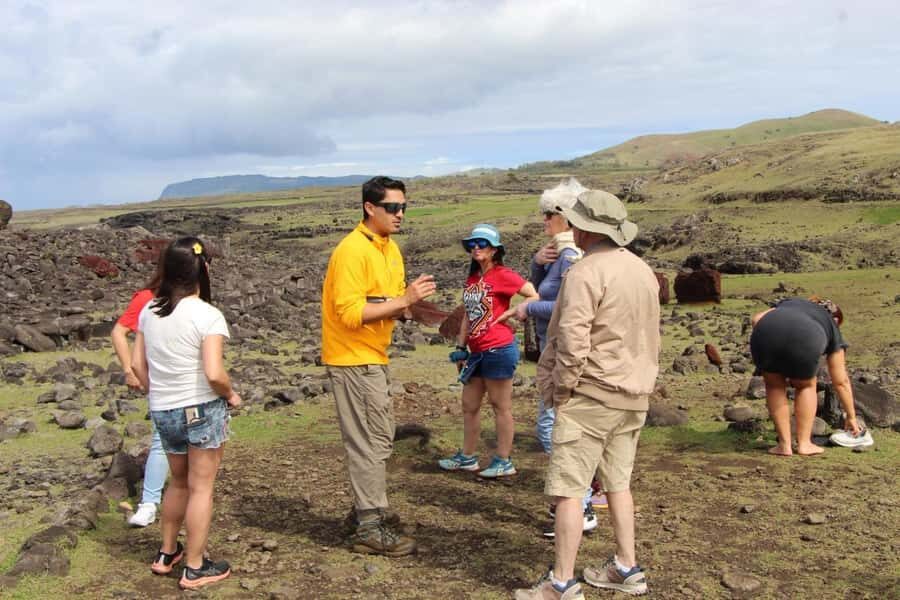
- Orongo at the edge of Rano Kau: you see a major ceremonial site tied to the volcanic setting
- Puna Pau Quarry for the headdress stone: the tour connects moai to where key materials came from
- Ahu Akivi’s seven moai: a great way to learn the meaning behind a specific ahu, not just spot random statues
- Rano Raraku Quarry and lunch nearby: you pause to eat right where the stone story takes center stage
- Anakena Beach with free time: you end with a breather—white sand, palms, and a calmer pace than the cliffs and platforms
How the Rapa Nui Days Work From Hanga Roa
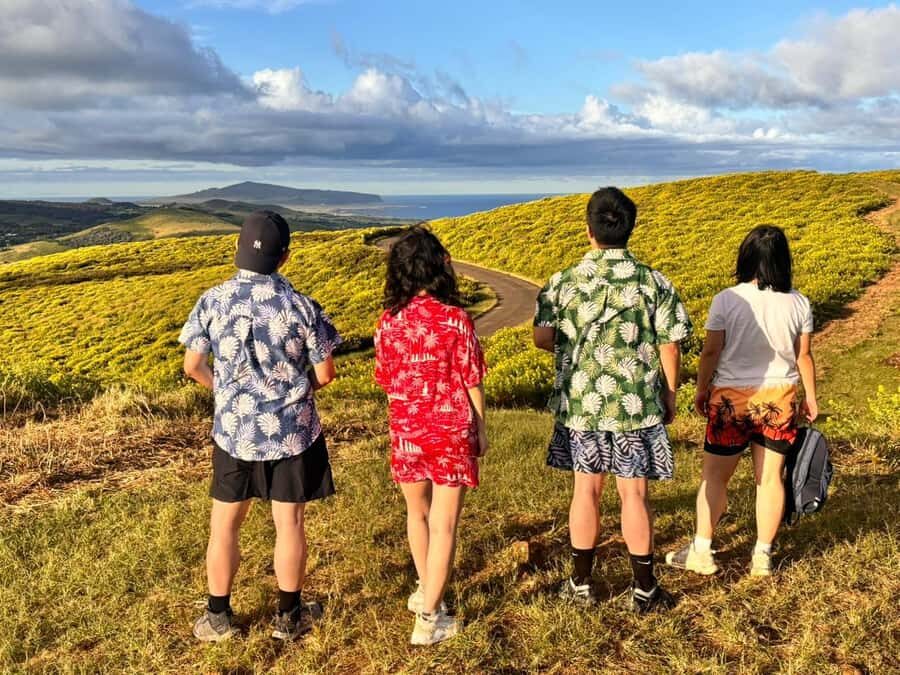
This package is built for people staying in Hanga Roa. You start with hotel pickup and drop-off, so you don’t need to figure out local transport for two half-day outings and one full-day circuit. That matters on Rapa Nui, because distances are big and the island can feel more tiring than it looks on a map.
Another practical plus: the guide is English/Spanish-speaking, and the group can run in two languages at once. In the best moments, you’re hearing the same key ideas with just enough translation support to keep everyone on track. If you’re visiting with mixed-language friends, this format is useful.
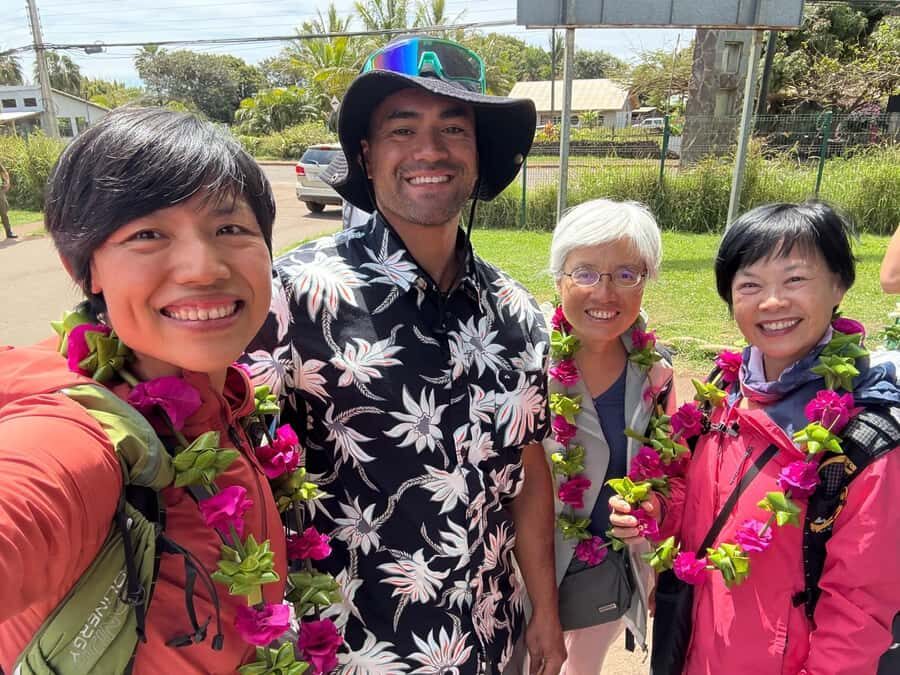
One more detail I appreciate: you’re given an airport reception with a flower necklace. It’s small, but it sets a welcoming tone right away, especially if your flight lands and you’re still waking up.
You can also read our reviews of more tours and experiences in Hanga Roa.

Half-Day 1: Orongo, Rano Kau Crater, and the ceremonial side of the island
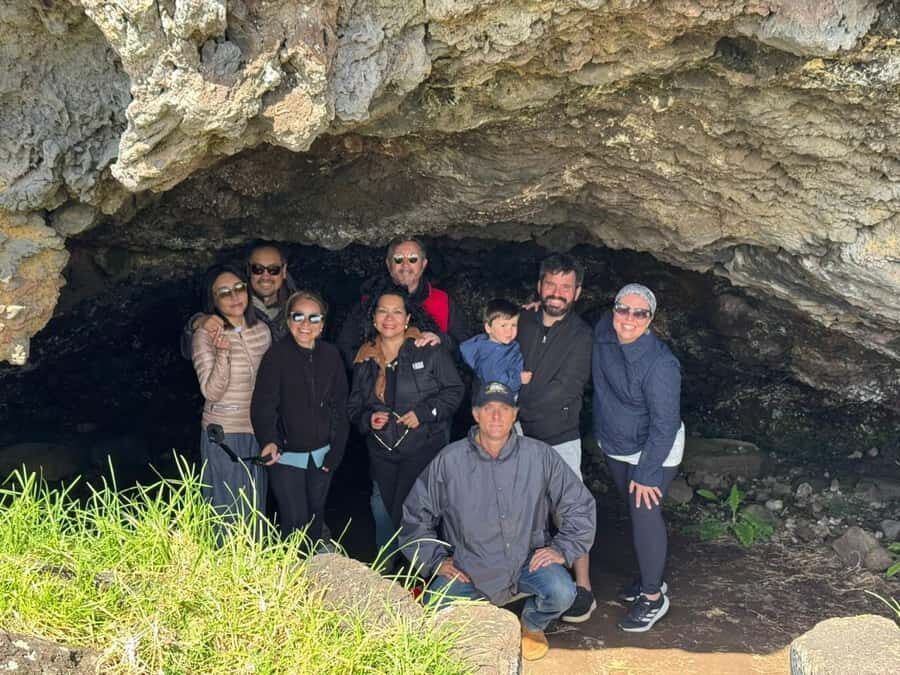
Your first half-day leans into Rapa Nui’s sacred geography. After pickup in Hanga Roa, you head to the south peninsula and build your day around the Orongo Ceremonial Village, which sits right at the edge of Rano Kau Crater. You’ll feel the place in your body: volcanic rock, open air, and that sense that the site was meant for people to gather and watch.
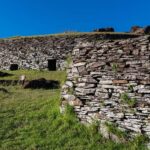
From there, you also visit Ahu Vinapu, which keeps the focus on ceremonial platforms and the island’s stonework traditions. This is a smart early choice because it orients you fast. Instead of starting with only giant moai faces, you start with the places where rituals happened and the coastline setting that shaped the island’s beliefs.
What I like about starting here is that it sets the theme for the whole trip. Later, when you’re at quarries and statue platforms, the stops don’t feel random. They feel connected.
The main consideration is the time of day and the weather. With open views and exposed paths, you’ll want to be ready for sun and wind. That’s not a “maybe” situation on Rapa Nui; it’s part of the deal.
Half-Day 2: Puna Pau headdress stone, Ahu Akivi, and Tahai Village
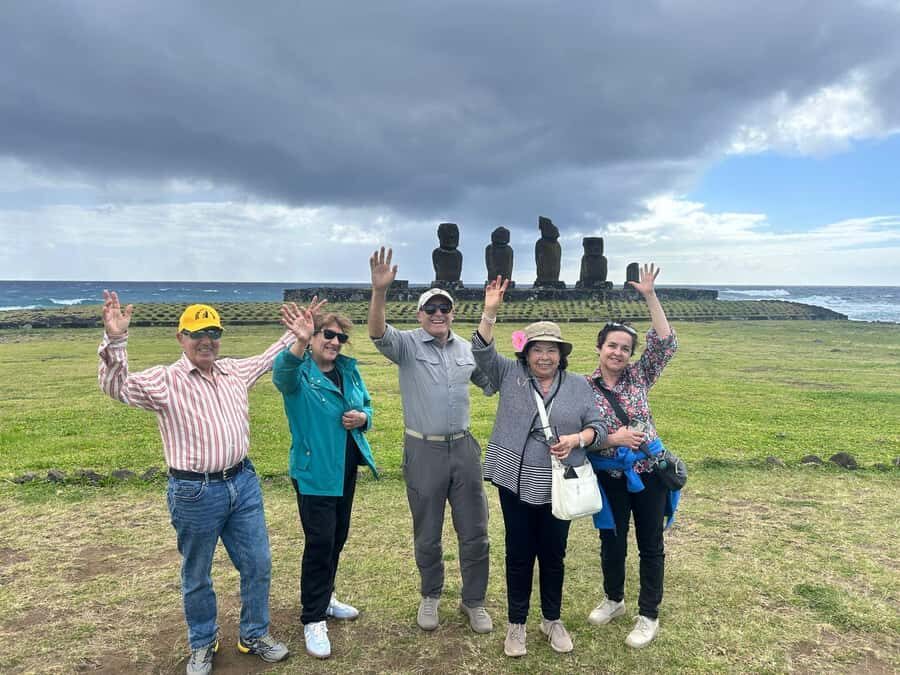
The second half-day shifts you toward the northwest side of the island, and it’s the moai-material day. You visit the Puna Pau Quarry, the place where islanders sourced stone for the headdresses. This is one of those stops that changes how you look at the statues. Instead of only appreciating the faces, you start noticing the design choices and the story of what different parts were made from.
Then you head to Ahu Akivi, where you can take in seven moai. It’s also tied to an important point in the island’s tradition: you see the spot associated with where the first king of Rapa Nui was entombed, as represented at Akhahanga Village (you’ll learn that further as the full day unfolds). Even if you don’t know the names before you arrive, the guide framing helps you keep the cultural meaning straight.
The half-day also includes Tahai Village, which rounds things out with another perspective on the island’s ceremonial landscape. I like this stop because it helps you shift from “look at the big landmarks” to “understand how these sites form a network around the island.”
Tip: if you’re the kind of traveler who likes photos, this is a strong day for shots that show both moai and context. The quarry and platform combination is hard to beat for giving your pictures real meaning.
Full Day Overview: Southeast and Northeast, plus the stoneworks backbone
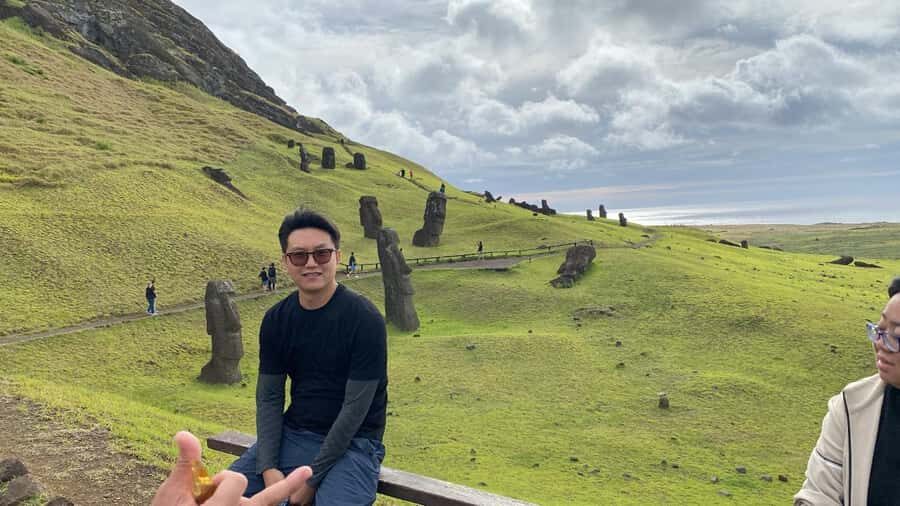
The full-day tour expands the story and gives you more time at the biggest names. You get hotel pickup again in Hanga Roa and then travel around both the southeast and northeast parts of the island.
One of the most interesting early stops is the Vaihu Complex, followed by Akhahanga Village, tied to the tradition around the first king. Then the day hits the heart of the “how the statues were made” theme: the Rano Raraku Quarry.
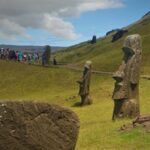
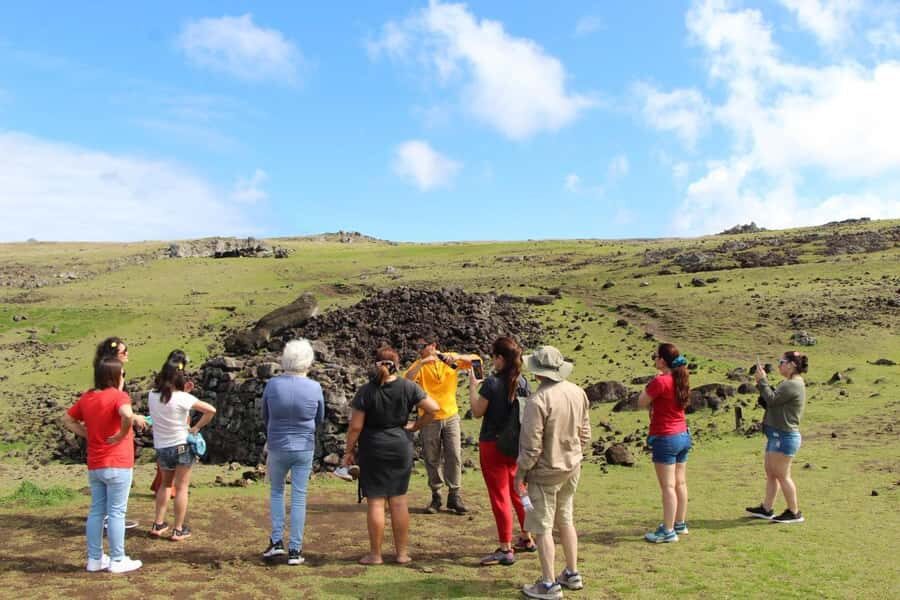
This is where the tour becomes more than a checklist. Quarry visits give you scale and reality. You’re seeing the workshop area where the stone supply came from, which makes later stops at moai platforms easier to understand, not just admire.
And yes, there’s a practical break baked into the schedule: lunch is at a restaurant in front of the quarry. It’s a smart move because it keeps you from losing time to shuttling back and forth while you’re already in the right place. When you’re on Rapa Nui, time is everything.
Rano Raraku Quarry: The statue “source” stop you’ll remember
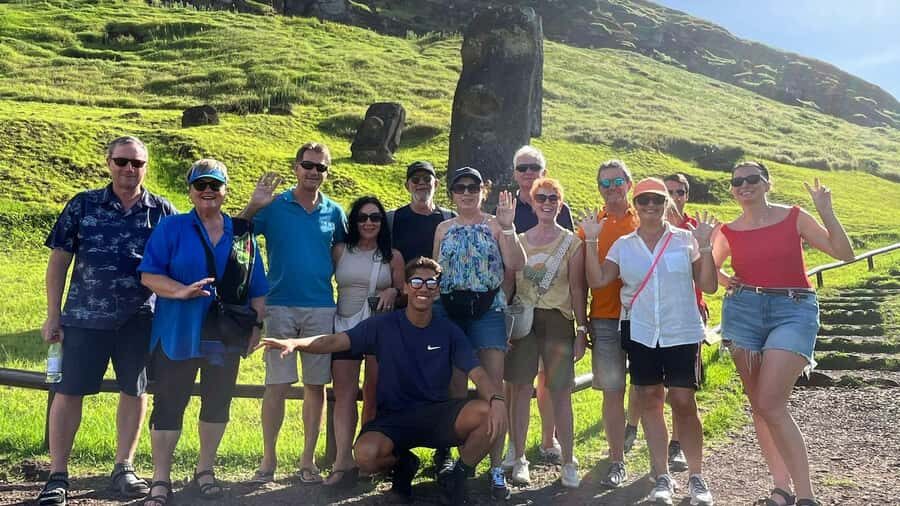
At Rano Raraku, you see the quarry that supplied much of the stone for the island’s statues. Even if you only catch a few details, the quarry viewpoint makes the moai feel more human and logistical. Someone had to cut, shape, and move heavy stone over rough ground, so the statues are also a story about work, not just art.
This stop works well on a full day because you aren’t rushed. You can look at the shapes, scan the area, and let the explanations land. If you’re the sort of traveler who likes to ask questions, a quarry day is when your guide’s explanations usually click.
One consideration: quarries can mean uneven ground and sun exposure. The provided advice to bring comfortable shoes, plus a hat and sunscreen, is not overkill. You’ll thank yourself for it.


Ahu Tongariki and Te Pito Kura: the biggest moai moments
After lunch, the day shifts to the famous platform sequence.
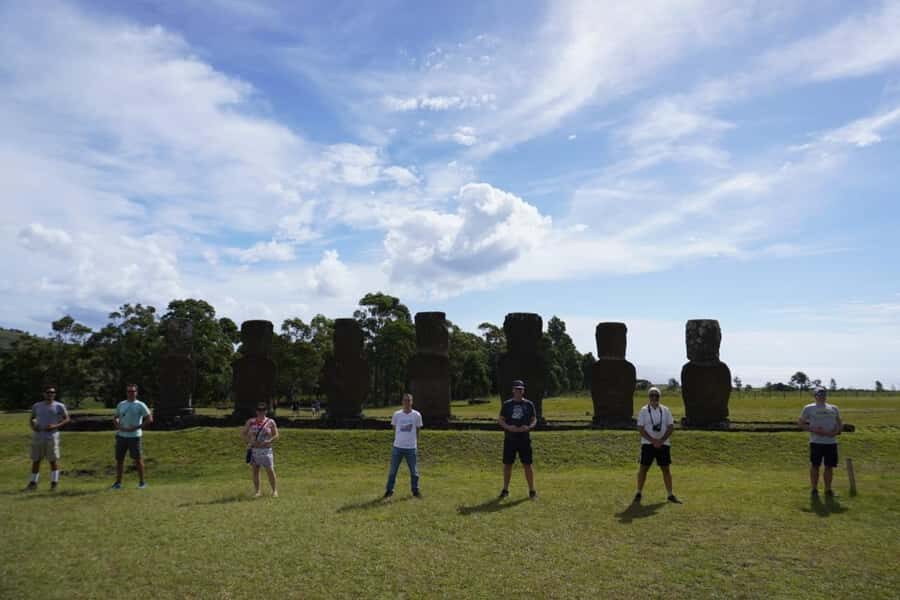
First up is Ahu Tongariki, where you admire 15 moai statues. This is a classic “wow” stop, but the value here is the sheer number plus the guided framing. It’s not only about counting faces; it’s about seeing how these platforms look like they were built to be seen from a distance and from sea-level perspectives.
Then comes Te Pito Kura, where you can check out the largest moai statue ever built, measuring 10 meters tall. This number is what makes the stop so memorable: it gives you a measurable anchor. When you hear it and then stand in front of the piece, you get a much clearer sense of scale.
These two stops together work as a “big-statue arc.” Tongariki gives you concentration and repetition. Te Pito Kura gives you extreme size. If you’re trying to understand why moai feel so powerful, this pairing helps.
Anakena Beach: the hour of free time that makes the tour feel complete
The full-day tour ends with a strong reset: about one hour of free time at Anakena Beach. You get white sand and a palm grove setting, which is a nice counterbalance to crater edges, rock paths, and platform stone.
This is also a practical win. After a long day of moai and quarry stops, having a timed buffer means you can actually relax rather than racing for one more viewpoint. Bring beachwear and a towel if you want to make the most of it. You can also use this time for water breaks and photo breaks without worrying about losing the group.
If you’re sensitive to heat, this is the moment to slow down. The beach time is where you’ll feel the trip as more than a tour schedule.
Why the Price Makes Sense for a Transfer-Heavy Island
At $177 per person, you’re paying for more than guiding. You’re paying for the structure that matters on Rapa Nui: hotel pickup and drop-off, guided time across two half-days and a full-day circuit, and transportation between sites.
Food isn’t included, and that’s worth knowing up front. National park entry is also not included, so you’ll want to plan that cost separately. But even with those add-ons, the value is strong if you want the itinerary to run smoothly with minimal logistics stress.
The biggest value is this: you’re not figuring out how to stitch together multiple site days on your own. If you’ve visited islands where transport is the hard part, you’ll appreciate how much energy transfers save.
Who This Tour Fits Best (and who might not love it)
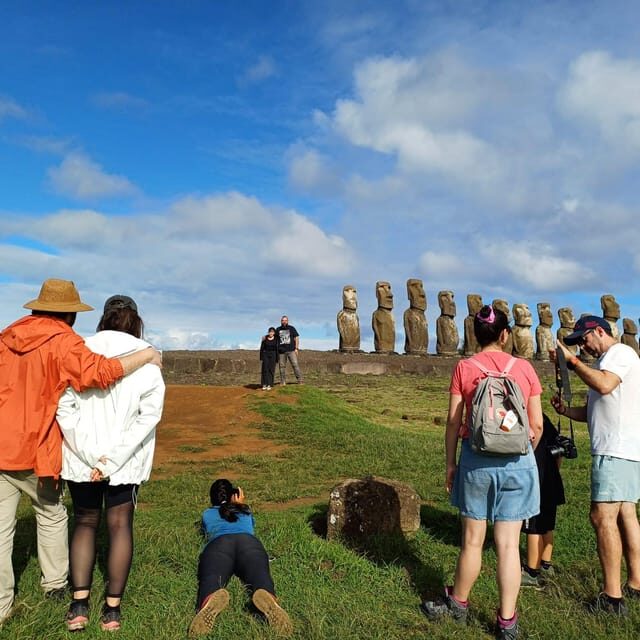
This tour is a good fit if you:
- want moai plus the sites that explain the moai
- prefer guided structure with clear site-to-site connections
- like photos but also want context so your pictures mean something
- are comfortable walking outdoors and dealing with sun
It may be less ideal if you:
- need wheelchair access (it’s not suitable for wheelchair users based on the activity info)
- dislike long days outdoors, since the full-day portion is active and exposed
If you’re traveling as a couple, a small group, or even solo, the language format (English/Spanish) can be a comfort too. You’ll still get the core explanations, regardless of what language you’re following most of the day.
Practical Tips Before You Go (so the day feels easier)
The activity list is already tuned to Rapa Nui reality. Pack:
- comfortable shoes (outdoor paths and rock areas are common)
- hat, sunscreen, and water
- camera (this is a photo-forward trip)
- towel and beachwear for Anakena
- breathable outdoor clothing (the sun can be relentless)
Also bring a passport. A copy is accepted. That’s useful if you don’t want to carry the full document everywhere.
One more tip: no smoking, no alcohol, and no drugs are listed as not allowed. If you like to keep things relaxed on vacation, plan to keep it simple during the tour hours.
Should You Book This Rapa Nui Package?
If you want a smart way to see Rapa Nui without turning your trip into a transport puzzle, I’d book it. The combination of crater ceremonial sites, quarry “source” stops, and the moai platform highlights is exactly what you need for a first solid visit.
I’d hesitate only if you hate long outdoor days or you’re looking for a slow, unstructured trip. This isn’t that. It’s a guided, site-focused plan with transfers and a timed beach finish.
If your priority is moai with real context—and you want an itinerary that hits the biggest story beats across multiple days—this one is an easy yes.
FAQ
How many excursions are included in this Rapa Nui experience?
You get two half-day tours and one full-day excursion.
Is hotel pickup included?
Yes. Pickup and drop-off are included, and the bus boards outside your hotel in Hanga Roa.
What sites will I see on the tours?
You’ll visit places like Orongo Ceremonial Village, Rano Kau, Ahu Vinapu, Puna Pau Quarry, Ahu Akivi, Tahai Village, Vaihu Complex, Akahanga Village, Rano Raraku Quarry, Ahu Tongariki, Te Pito Kura, and Anakena Beach.
Are meals included?
No. Food and drinks are not included. Lunch is mentioned as a stop at a restaurant in front of the quarry, but the cost of meals is not listed as included.
Do I need a national park ticket?
Yes. National park ticket access is not included in this activity.
What languages are the guides?
The guide provides English and Spanish.
Is the tour suitable for wheelchair users?
No. It is not suitable for wheelchair users.
What should I bring for the trip?
Bring comfortable shoes, a hat, towel, camera, sunscreen, water, beachwear (for Anakena), breathable clothing, and a passport (a copy is accepted).
What is the cancellation policy?
You can cancel up to 24 hours in advance for a full refund.
How long is the experience valid once activated?
It’s listed as valid for 6 hours from the first activation.