REVIEW · HANGA ROA
Easter Island: Half-Day Archaeology Tour
Book on GetYourGuide →Operated by GRAY LINE CHILE · Bookable on GetYourGuide
Moai with real stories in only three hours. This small-group Rapa Nui tour gives you a focused hit of the island’s best-known ceremonial sites, and I especially liked the mystery of Ahu Akivi and the striking red pukao at Puna Pau. One thing to plan for: the Rapa Nui National Park entrance fee (USD 100) is not included in the $91 price.
You’ll roll from your hotel in Hanga Roa, then work your way through parts of Rapa Nui National Park, a UNESCO World Heritage site and wildlife sanctuary. The pacing is friendly for a half day, with an English or Spanish guide and time at multiple ahu—ceremonial platforms where the moai stand.
In This Review
- Key Points to Know Before You Go
- Half-Day Means You Hit the Best Ahu Fast
- Getting From Hanga Roa: Pickup, Pace, and a Friendly Group Size
- Rapa Nui National Park 101: Moai, Ahu, and Why Placement Matters
- Ahu Tahai: A Lone Moai Feeling Like a Twist in the Script
- Puna Pau Quarry and the Red Pukao Topknots
- Ahu Vianpu: Ceremonial Space You’ll Want to Learn to Read
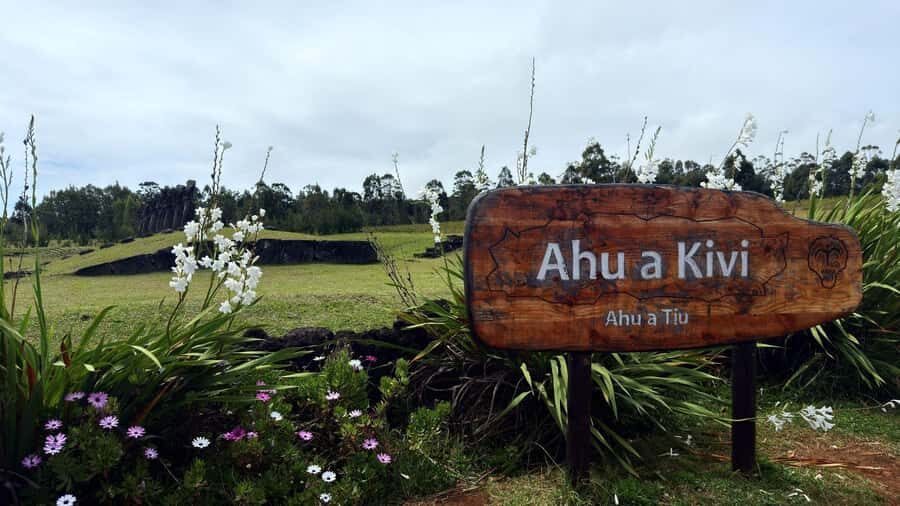
- Ahu Akivi: Seven Ocean-Facing Moai and the Big Mystery
- Ahu Huri a Urenga: When the Moai Move Inland
- Guide Impact: English or Spanish, and Learning That Sticks
- Price and Value: How $91 Adds Up (and How the Park Fee Changes It)
- What to Bring, What’s Not Allowed, and Small Comfort Wins
- Who This Tour Suits Best
- Should You Book This Half-Day Archaeology Tour?
- FAQ
- How long is the Easter Island half-day archaeology tour?
- What’s included in the price?
- Is the Rapa Nui National Park entrance fee included?
- Where do you get picked up?
- What’s the maximum group size?
- What languages are the guides?
- What should I bring?
- Is the tour suitable for wheelchair users?
- Can cruise ship guests join this tour?
- What’s the cancellation policy?
Key Points to Know Before You Go
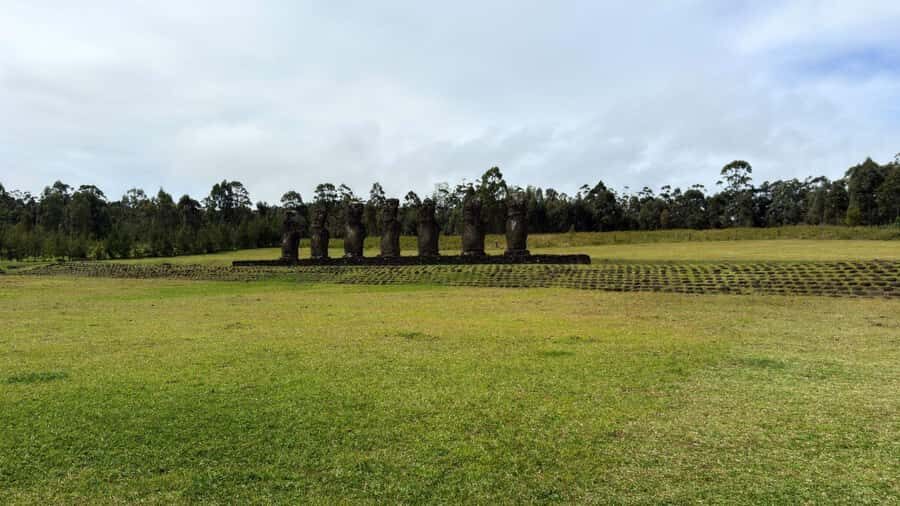
- Ahu Akivi’s seven moai face the ocean, and that odd orientation comes with theories you’ll actually be able to remember.
- Puna Pau’s pukao are red topknots made from red scoria, with the quarry as part of the story.
- Rapa Nui National Park holds about 900 moai and roughly 300 ahu, so you’re not just seeing one monument—you’re learning how the island “works.”
- Small group size (max 15) keeps the tour conversational, not lecture-style.
- Hotel pickup and drop-off from Easter Island hotels saves time on a car-and-parking heavy island.
Half-Day Means You Hit the Best Ahu Fast
This tour is built for people who don’t want to spend their only half day hunting locations on their own. With a 3-hour runtime, you’ll move between a cluster of key sites that show different sides of moai culture: orientation, materials, and how ceremonial space connects to daily life.
The smart move here is the order. You’re not just “checking boxes.” The route sets up a theme: moai placement and topknots weren’t random. They’re part of a system—myth, status, and community memory—played out in stone.
If you’re short on time, that matters. Easter Island rewards deep wandering, but not everyone has a full day. This tour gives you a high-impact overview you can build on later with your own exploring.
A few more Hanga Roa tours and experiences worth a look

Getting From Hanga Roa: Pickup, Pace, and a Friendly Group Size
The experience starts with hotel pickup in Hanga Roa, then you head into the park with your guide. Expect a small group capped at 15 people, which changes the vibe. Instead of staring at a wall of history, you can actually ask questions and get straight answers while you’re standing in front of the stone.
Timing is tight in a good way. You’ll be out for about 3 hours total, and the guide keeps you moving between stops without turning it into a sprint. The pickup detail is practical: be ready in the hotel lobby about 10 minutes before your scheduled time, and drivers wait no longer than 5 minutes after pickup time.
This kind of pacing is ideal if you’re mixing tours during your stay. It’s also good if you don’t want to manage a private car, parking, and routes on your own.
Rapa Nui National Park 101: Moai, Ahu, and Why Placement Matters
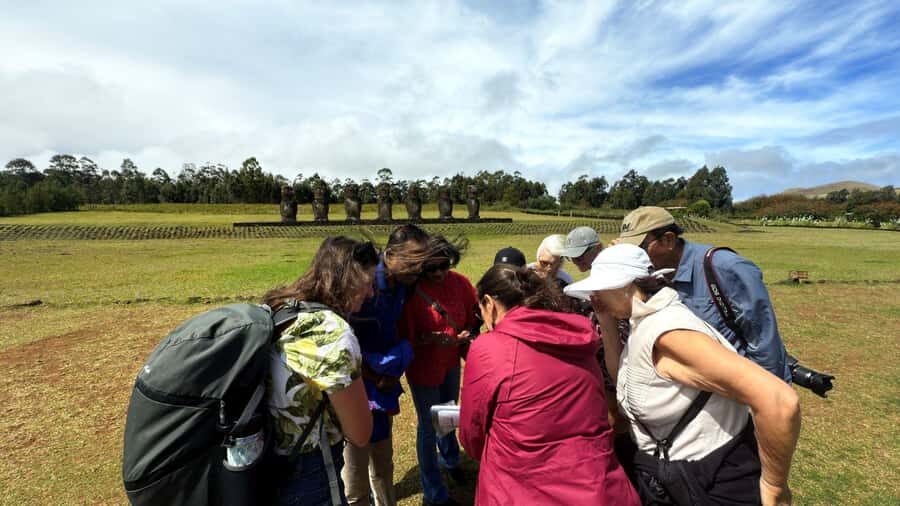
Before you start snapping photos, you get the “what am I looking at” foundation. Rapa Nui National Park covers most of the island and is a UNESCO World Heritage site. It’s also a wildlife sanctuary, so you’re not only in archaeology mode.
Inside the park, you’ll hear how many moai there are in total—about 900 sculptures—and that they’re found on ceremonial platforms called ahu. The ahu are the stone bases that carry the moai and frame the ritual space.
The tour also explains moai materials and meaning. The statues were carved from solidified volcanic ash. They’re believed to represent ancestors and high-ranking members of each tribe. That matters because it changes how you interpret what you see. You start looking for status cues, not just face-and-giant-stone vibes.
Then comes the biggest lesson: orientation. One of the most memorable parts of this tour is realizing that moai placement—facing directions, facing the sea or not—can be part of the story, not just an aesthetic choice.
Ahu Tahai: A Lone Moai Feeling Like a Twist in the Script
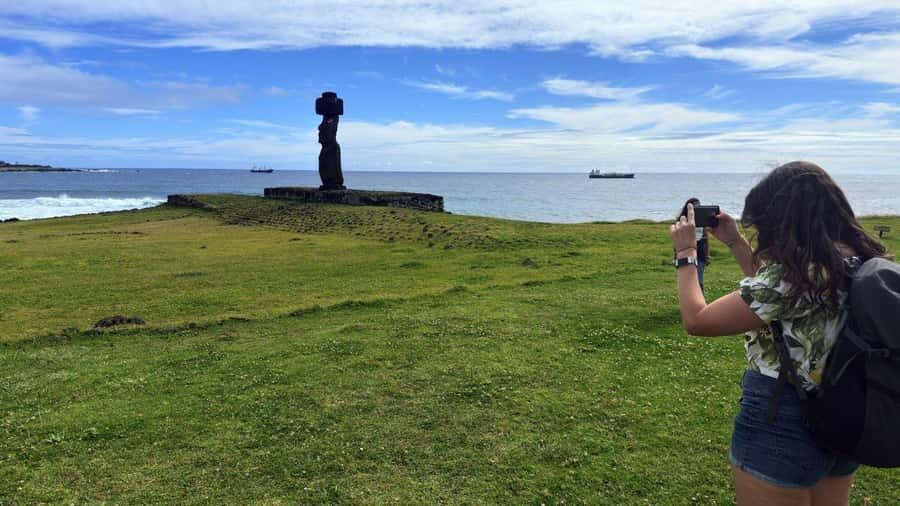
Your first stop goes to Ahu Tahai, a ceremonial platform with a distinctive arrangement. Here, you’ll see a unique moai—described as a lone stone giant that stands apart, protected by an imposing figure taller than 13 feet.
What I like about this stop is the way it breaks the expectation you might have from photos. Moai can seem like a uniform look at first. Ahu Tahai gives you an early reminder that each site has its own layout and drama, and that the platform structure is part of the message.
Even though you’re only at each place briefly, this is the kind of stop that helps your brain “click.” You start noticing platform edges, how the stone mass is organized, and how the arrangement changes the mood of the figure.
Puna Pau Quarry and the Red Pukao Topknots
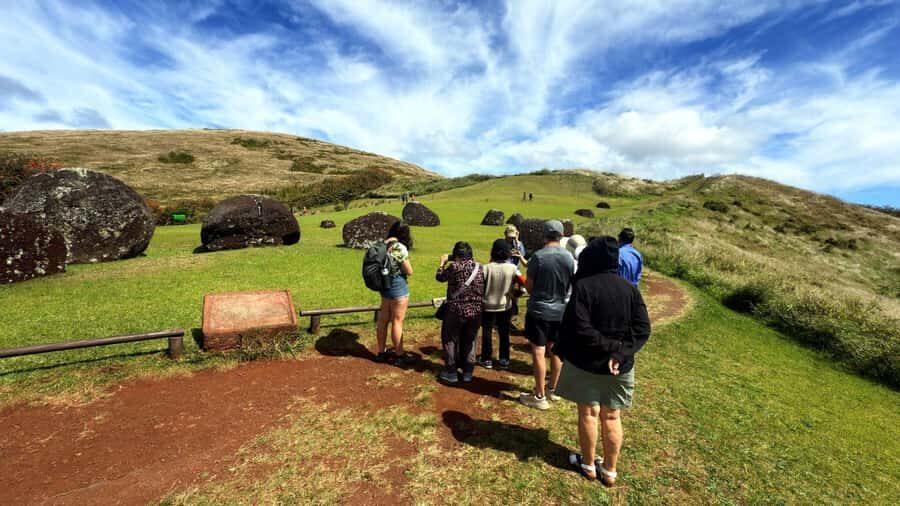
Next you head to Puna Pau, where you’ll see how some moai wear different-looking tops: the pukao, or red topknots. These were made from red scoria, a volcanic rock tied to the island’s quarrying story.
This stop gives you a visual answer to a question people often have: why are some moai topped in red? The guide explains the idea that the volcanic rock may have been used to impress rival groups. That’s a useful framing because it turns the topknots from “random color” into a social signal.
You’ll also learn that roughly 30 pukao are located in or near the Puna Pau quarry area. Standing there, that fact helps you imagine the scale of material sourcing and the effort behind finishing pieces like the topknots.
It’s also a strong photo stop, but don’t treat it like a photo-only stop. Look at the topknots as part of a larger production and symbolism chain—stone, labor, and status all connected.


Ahu Vianpu: Ceremonial Space You’ll Want to Learn to Read
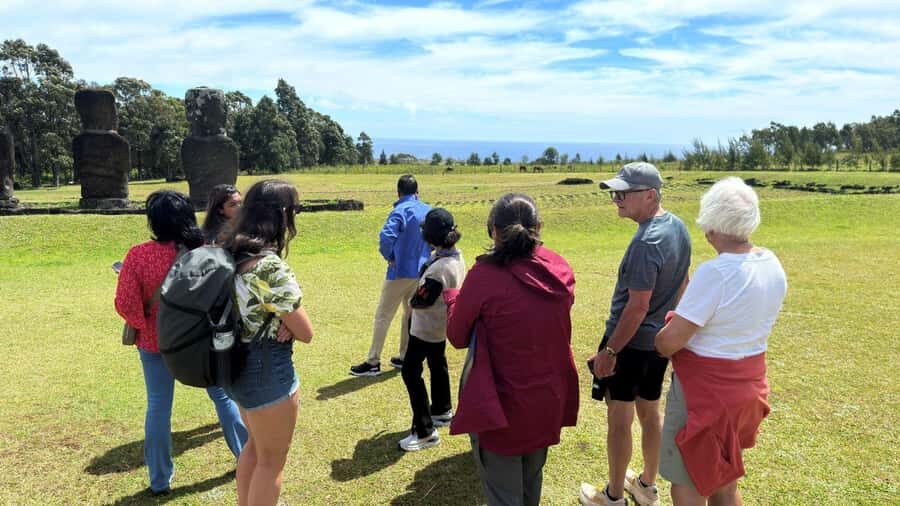
The highlights for this tour include the ceremonial site of Ahu Vianpu, and it’s one more example of how ahu are more than bases. They’re the stage for how the community placed meaning into stone.
Even if you’re not studying archaeology terminology, you can still read these spaces. Notice where you stand in relation to the platform and the moai. Notice how the arrangement guides your attention. Ahu Vianpu helps reinforce that “ceremony” on Rapa Nui is built into architecture and placement.
This stop is especially valuable if you tend to move fast through destinations. It slows your thinking down just enough to appreciate that each ahu has a different purpose in the island’s network of sites.
Ahu Akivi: Seven Ocean-Facing Moai and the Big Mystery
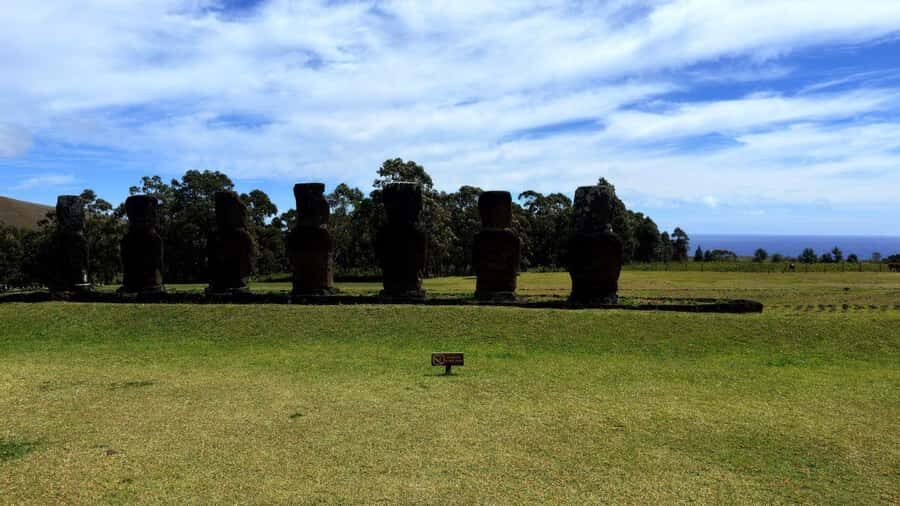
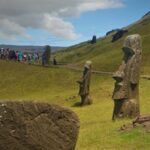
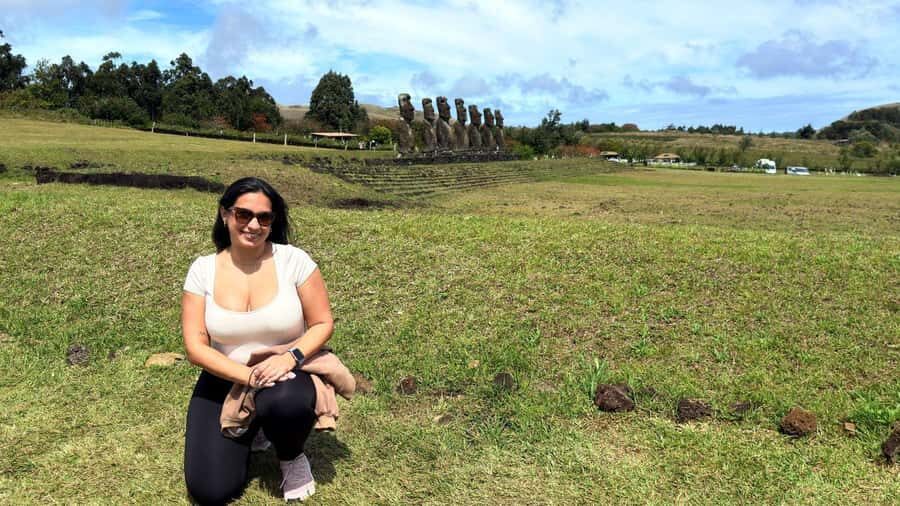
Then you reach Ahu Akivi, one of the tour’s anchor moments. This is the place with a line of seven moai looking out toward the ocean. Each moai stands about 16 feet tall and is estimated to weigh around 18 tons.
Here’s what makes it memorable: the ocean-facing orientation is unusual. The tour explains that many other moai on ahu typically stand with their backs against the water, so Ahu Akivi’s direction creates a question.
One theory you’ll hear is that these moai symbolize seven explorers from the Polynesian homeland of Hiva, sent by a chief to find Rapa Nui. In that idea, the statues face the ocean in the direction the explorers came from.
You don’t need to “solve” the mystery to get value from the stop. The tour’s strength is helping you notice the evidence the island itself offers—the orientation you can see with your own eyes, and the way guides connect that to oral tradition and theories.
If you want one location that gives you context you can carry into the rest of your Rapa Nui exploring, it’s this one.
Ahu Huri a Urenga: When the Moai Move Inland
Your final archaeology stop is Ahu Huri a Urenga, a platform that isn’t on the coast. Instead, it’s in the interior of the island and connects to an agricultural area.
This is a great counterpoint to the sea-facing drama. Most people arrive on Easter Island expecting coastline moai and ocean viewpoints. Ahu Huri a Urenga adds a different layer: ceremonial space wasn’t only for the shoreline. It was part of inland life too.
The tour explains that Ahu Huri a Urenga is one of 25 platforms not located on the coast. That detail matters because it expands your mental map of what “important space” means on the island.
By the time you reach this stop, the earlier lessons about orientation and symbolism pay off. You’re more likely to see the platform as a link between ritual and the island’s working landscape.
Guide Impact: English or Spanish, and Learning That Sticks
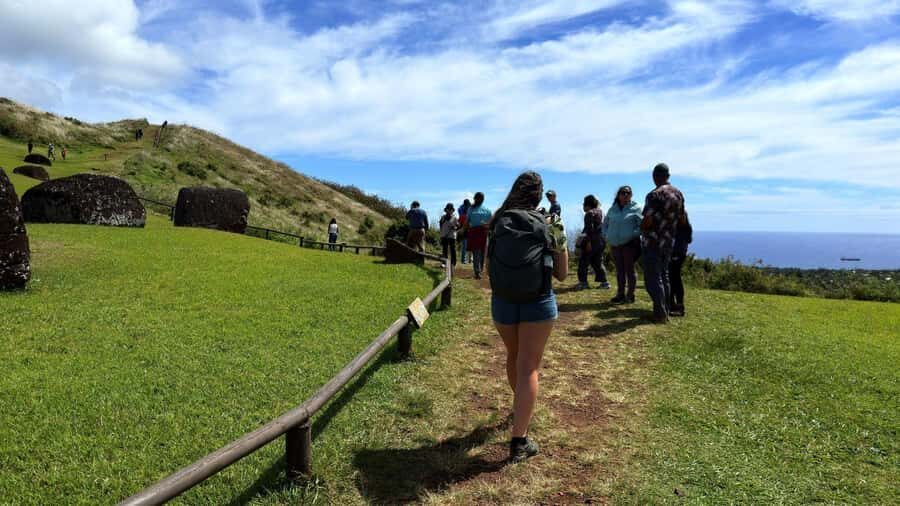
A strong part of this tour is how the guide communicates the sites. The experience is offered in English and Spanish, so you can pick what feels easiest for you and still keep up with the stories behind each ahu.
Some guides bring the history to life in a way that’s easy to follow. A good example from the guide lineup is Daniela, who’s noted for explaining the history clearly and keeping the tour engaging.
Even if you’re not an archaeology nerd, you’ll get more out of the tour if you ask one simple thing at each stop: what detail should I pay attention to right now? With moai and ahu, a single prompt can turn a short visit into real learning.
If your Spanish or English is still a little rusty, don’t worry. The basic structure is straightforward, and the guide is guiding your eyes as much as your ears.
Price and Value: How $91 Adds Up (and How the Park Fee Changes It)
At $91 per person for a 3-hour half-day, this is priced like an organized archaeology orientation with hotel pickup and a guide included. For many people on Easter Island, the value isn’t just the stops—it’s the convenience.
You’re saving yourself the hassle of planning routes and figuring out how to sequence sites efficiently. You’re also getting guided context, which is hard to replicate with a basic drive-by visit.
The key cost detail: the Rapa Nui National Park entrance fee (USD 100) is not included. So your real budget for this activity is closer to about $191 total per person once that fee is added.
That’s still reasonable if you:
- want a curated, time-efficient overview
- like learning on-site from a guide
- don’t want to spend your morning figuring out logistics
It’s less ideal if you already have a car, prefer total freedom, and are comfortable navigating and interpreting sites without a guide.
What to Bring, What’s Not Allowed, and Small Comfort Wins
Keep it simple. Wear comfortable shoes. That’s the main instruction, because you’ll be walking on uneven park surfaces and moving between viewpoints.
For what not to bring, the tour specifies:
- no baby strollers
- no luggage or large bags
- no alcohol or drugs
These restrictions affect what you pack for the day. If you’re traveling with a lot of gear, plan to keep it light so you can move smoothly and avoid any last-minute hassle.
The tour also isn’t suitable for wheelchair users, and it’s specifically noted as not appropriate for cruise ship guests. If either of those apply, you’ll want to look for a different option that matches your needs.
Who This Tour Suits Best
This half-day archaeology tour is a strong fit if you:
- want a fast but meaningful introduction to moai culture
- prefer a small group pace
- like guided interpretation more than self-guided wandering
- are staying in a hotel in Hanga Roa and want pickup
It’s also a good choice for first-timers who feel overwhelmed by the number of sites on the island. You get key stops with context, then you can decide what to revisit later with your own time.
If you’re the type who needs hours at one location to really soak in a view, this might feel short. Three hours goes by quickly on Rapa Nui, even when the pace is relaxed.
Should You Book This Half-Day Archaeology Tour?
Book it if you want a guided, high-impact introduction to Rapa Nui’s ceremonial sites without dedicating a full day. The combination of Ahu Akivi, the Puna Pau pukao story, and the contrast of inland Ahu Huri a Urenga makes the tour feel more “connected” than a random checklist.
Skip or reconsider if the park entrance fee would strain your budget, you want long solo time at each site, or you’re traveling in a way that doesn’t match the stated fit (wheelchair users or cruise ship guests).
If you’re in Hanga Roa and looking for a smart way to understand what you’re seeing, this tour is easy to recommend.
FAQ
How long is the Easter Island half-day archaeology tour?
The tour duration is 3 hours.
What’s included in the price?
The price includes hotel pickup and drop-off from Easter Island hotels, plus a guided tour in English and Spanish.
Is the Rapa Nui National Park entrance fee included?
No. The Rapa Nui National Park entrance fee is not included, and it’s listed as USD 100.
Where do you get picked up?
Pickup is from Easter Island hotels in Hanga Roa.
What’s the maximum group size?
The tour is limited to 15 participants.
What languages are the guides?
The guided tour is available in Spanish and English.
What should I bring?
Bring comfortable shoes.
Is the tour suitable for wheelchair users?
No, it is not suitable for wheelchair users.
Can cruise ship guests join this tour?
No. The tour is not suitable for cruise ship guests.
What’s the cancellation policy?
Free cancellation is available up to 24 hours in advance for a full refund.